
Prime Minister Modi Reviews National Progress Amid New Year Celebrations
As the nation celebrated the New Year, Prime Minister Narendra Modi conducted a significant review of India's progress, highlighting achievements and setting a clear roadmap for future governance. The 'Pro-Active Governance and Timely Implementation' platform has expedited over ₹85 lakh crore in projects, showcasing a shift in the governance culture. Modi emphasized the importance of timely decision-making and accountability, particularly in education. This review not only reflects the government's commitment to development but also serves as a response to critics, demonstrating that effective governance can coexist with sensitivity. Discover how this approach is shaping a new India.
| Jan 1, 2026, 13:06 IST
A Deep Dive into National Development
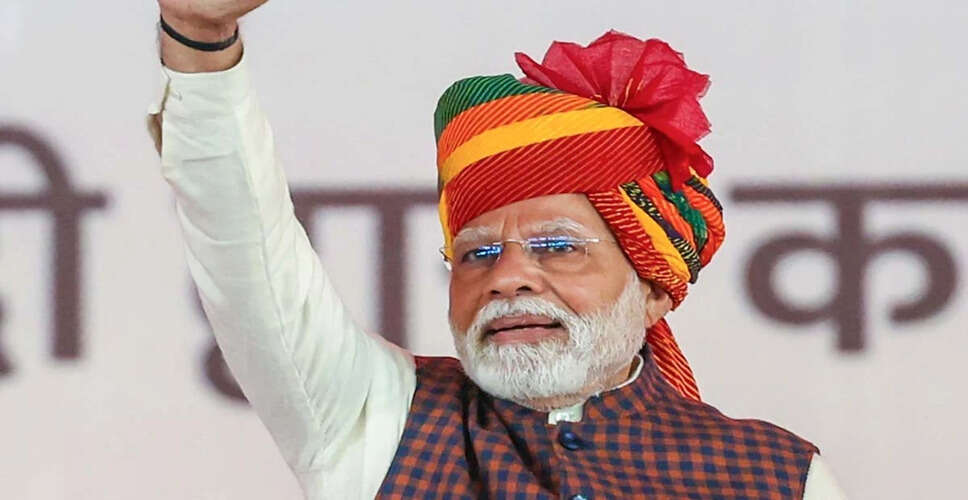
While the nation was immersed in New Year celebrations filled with fireworks and festivities, Prime Minister Narendra Modi was engaged in a thorough evaluation of the country's progress. On Wednesday, he chaired the 50th meeting of the 'Pro-Active Governance and Timely Implementation' platform, where he not only reviewed the achievements of the past decade but also laid out a clear roadmap for governance and development in the coming years.
Significant Investments and Achievements
During his address, the Prime Minister highlighted that over ₹85 lakh crore worth of projects have been expedited through the 'Pro-Active' platform in the last ten years. This platform has evolved beyond a mere review system; it symbolizes a historic transformation in the governance culture of the country. The meeting focused on five major infrastructure projects in sectors such as roads, railways, power, water resources, and coal, which span across five states and involve investments exceeding ₹40,000 crore.
A New Definition of Governance
Prime Minister Modi emphasized that governance is no longer about merely pushing files forward; it now entails timely decision-making, precise coordination, and established accountability. He asserted that when decisions are made promptly and responsibilities are clear, the direct beneficiaries are the citizens of the country.
Focus on Educational Outcomes
While reviewing the 'PM Shri Scheme', the Prime Minister cautioned officials that the initiative should not be limited to merely constructing buildings. He stressed the importance of outcomes, advocating for an education system that is holistic, future-ready, and sets standards for other schools. He instructed all chief secretaries to personally oversee and assess the actual conditions of schools on the ground.
Inspiration Behind 'Pro-Active'
Recalling the core idea of 'Pro-Active', the Prime Minister noted that its inspiration came from the 'Swagat' mechanism initiated during his tenure as Chief Minister of Gujarat, which utilized technology to resolve public grievances in a timely manner. This model was expanded nationally and implemented as the 'Pro-Active' platform, integrating project monitoring, program implementation, and grievance redressal into a single framework.
Impressive Statistics Reflecting Change
Statistics testify to this transformation. Since 2014, 377 projects have been reviewed under 'Pro-Active', with resolutions achieved for 2,958 out of 3,162 issues—approximately 94%. This has led to the advancement of long-stalled projects, prevented cost overruns, and improved inter-departmental coordination. Notable examples include the Bogibeel rail-road bridge in Assam, the Jammu-Udhampur-Srinagar-Baramulla rail link, the Navi Mumbai International Airport, the expansion of the Bhilai Steel Plant, and the Gadwarara and Lara Super Thermal Power Projects.
A Model of Cooperative Federalism
The Prime Minister described 'Pro-Active' as a living model of cooperative federalism, where the center, states, ministries, and departments collaborate on problem-solving. To date, nearly 500 central secretaries and state chief secretaries have participated in this initiative. For the next phase, he reiterated his mantra: “Reform to simplify, Perform to deliver, Transform to impact,” linking it to the vision of 'Developed India @2047'.
Symbolism of Leadership
This scene is both symbolic and deeply meaningful. While the nation counted down to the New Year, Prime Minister Modi was reviewing progress. This distinction highlights the difference between superficial leadership and responsible governance. It is evident that Modi's political approach has shifted from celebratory to one of accountability.
A Consistent Commitment to Duty
This is not the first instance. While the country celebrates Diwali, Prime Minister Modi often shares joy with soldiers stationed at the borders, whether in the snow of Siachen, the scorching sands of Rajasthan, or the heights of Arunachal. Furthermore, the 'Pro-Active' platform embodies a mindset that has eradicated the 'chalta hai' culture. For decades, projects languished, files gathered dust, and accountability was passed around. Modi has broken this cycle by asking questions, setting deadlines, and demanding accountability. As a result, projects that had consumed the lifespan of governments are now being realized.
A Response to Critics
This serves as a rebuttal to critics who claim that the government is solely focused on publicity. Accelerating ₹85 lakh crore worth of projects is not just a slogan; it is a testament to solid administrative capability. The resolution of 94% of issues is not merely a statistic; it reflects the will to act. Modi's governance model demonstrates that development and sensitivity are not mutually exclusive. Celebrating festivals with soldiers on one hand and conducting late-night review meetings with secretaries on the other exemplifies the balance that elevates leadership. Thus, 'Pro-Active' is not just a digital platform; it signifies a mental shift.
India's Emergence as a Global Power
As the world views India as an emerging power, this continuous, disciplined, and results-oriented governance is the driving force behind it. Celebrating is not wrong, but working amidst celebrations is not something everyone can manage. Perhaps this is why, when the country sleeps, the government remains awake. This is the new India, and this is 'Pro-Active'.