
Prime Minister Modi Discusses Regional Tensions with Iran's President Amid Escalating Military Strain
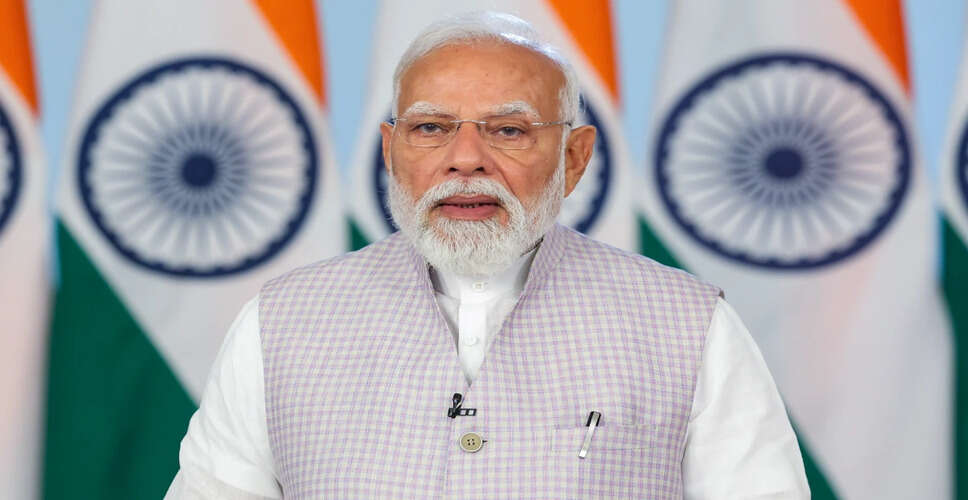
Discussion on Regional Security and Civilian Safety
In light of escalating military tensions in West Asia, Prime Minister Narendra Modi engaged in a detailed phone conversation with Iranian President Masoud Pezeshkian on Thursday night. The primary focus of their discussion revolved around the "serious situation" in the region, the safety of civilians, and the potential impact on global supply chains. Modi expressed his deep concerns regarding the rising tensions, the loss of innocent lives, and damage to civilian infrastructure through a post on the social media platform 'X'.
During the call, Modi reiterated India's commitment to ensuring the safety of its citizens and the uninterrupted transport of goods and fuel as top priorities. He stated, "I spoke with President Dr. Masoud Pezeshkian to discuss the serious situation in the region. I expressed my grave concerns about the escalating tensions, the loss of civilian lives, and the damage to non-military infrastructure."
Commitment to Peace and Ongoing Communication
The Prime Minister reaffirmed India's dedication to peace and stability, advocating for dialogue and diplomacy to resolve the crisis. According to an official statement, Pezeshkian updated Modi on the current situation in Iran and shared his perspective on recent developments in the region. Both leaders agreed to maintain communication moving forward.
Iran has closed the Strait of Hormuz, a crucial route for India's energy imports. Recently, the Iranian military fired upon an oil tanker heading to India as it attempted to navigate through the strait. In the past ten days, following coordinated attacks by the United States and Israel against Iran, Modi has spoken with leaders from several West Asian nations.
Regional Attacks and Indian Community Welfare
In the wake of the attacks, Iran's Supreme Leader Ayatollah Ali Khamenei was reportedly killed. In retaliation, Iran launched drone and missile strikes on Israeli and U.S. military bases in the Gulf region, including major global trade and aviation hubs like Dubai and Doha. Modi has previously expressed concerns to leaders from Oman, Kuwait, Bahrain, Saudi Arabia, the UAE, Jordan, Israel, and Qatar regarding the attacks on their nations, condemning violations of sovereignty and regional integrity.
Additionally, he discussed the welfare and safety of the Indian community residing in these countries, which numbers around ten million, with approximately 10,000 Indians living in Iran and over 40,000 in Israel.