
Prime Minister Modi Congratulates Lula on Brazilian Election Victory
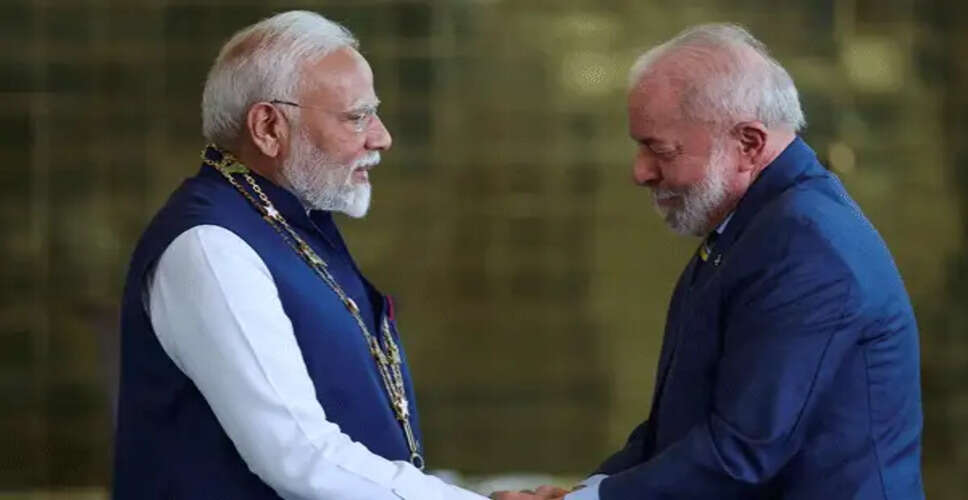

Modi's Warm Congratulations to Lula
In New Delhi, Prime Minister Narendra Modi extended his heartfelt congratulations to Luiz Inácio Lula da Silva following his impressive victory in the second round of Brazil's presidential elections on Monday. Modi expressed eagerness to collaborate on the priorities of the Global South and to foster a more inclusive global order.
This victory paves the way for Lula's fourth non-consecutive term as president, just days before he turns 81. It ensures continuity for a nation that has emerged as a key partner in India's efforts to revitalize multilateralism and global governance institutions like the United Nations.
In a message shared on social media, Modi highlighted Lula's remarkable comeback and expressed his enthusiasm for deepening and broadening the bilateral strategic partnership. He emphasized the commitment to strengthen cooperation across various sectors, advance shared priorities of the Global South, and work towards a more inclusive, equitable, and sustainable world.
Lula, who opted out of last month's BRICS summit in India to focus on his election campaign, remarked on social media that the Brazilian populace made history at the polls, marking the beginning of a long journey ahead. After defeating right-wing senator Flávio Bolsonaro, he declared a victory for democracy, renewed hope, and a progressive path for Brazil. The defeat of the former president's son is also viewed as a rejection of Donald Trump's policies by the Brazilian electorate.
Lula's win positions him to play a significant role in leftist politics in the region, even as right-wing forces gain traction in several South American countries. Following Trump's imposition of hefty tariffs on both India and Brazil in 2025, which were among the most severe penalties by the U.S. administration, Lula promptly reached out to Modi to discuss measures to mitigate the impact. At that time, both leaders committed to enhancing bilateral cooperation across sectors such as trade, energy, defense, and technology.
Trump's tariffs on Brazil were linked to demands for the cessation of legal actions against Bolsonaro, while those on India were associated with its purchases of Russian oil. Lula had emphasized the commitment of both nations to uphold multilateralism. Subsequently, he visited India with a large trade delegation, signaling a desire for deeper economic integration between the two countries. Both sides expressed eagerness to advance recent momentum in commercial relations, agreeing to increase bilateral trade to $30 billion by 2030, which includes a 25% rise by 2025 compared to the previous year.
This aligns with India's efforts to explore new markets in Latin America, a region that has not been a focus for New Delhi in recent decades. Both nations have also collaborated on platforms like BRICS and G20 to build a fairer new order, with Brazil playing a crucial role in securing a unanimous joint declaration at the recent BRICS summit, despite significant differences between Iran and the UAE.
Agreements have also been reached on rare minerals and mining, which are deemed vital for India's energy transition, infrastructure development, and efforts to counter China's dominance in critical mineral supplies. Brazil is estimated to hold the world's third-largest reserves of rare minerals, positioning it as a major source for these commodities. Conversely, Brazil stands to benefit from India's expertise in defense manufacturing, space, and digitization.