
President Trump Honors Korean War Veteran with Medal of Honor
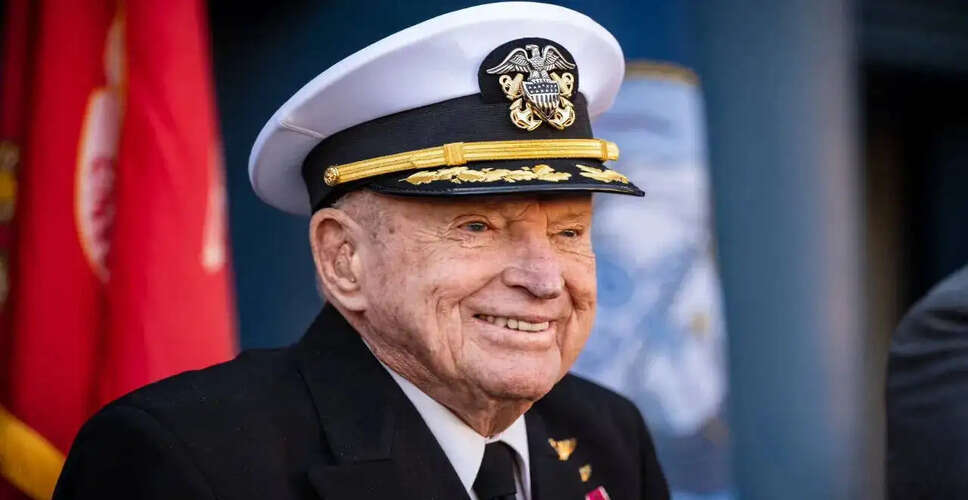
A Historic Recognition
During his State of the Union address on Tuesday night, President Donald Trump took a moment to honor retired US Navy Captain E. Royce Williams, a Korean War pilot whose heroic mission remained classified for over fifty years. At the age of 100, Williams was awarded the Medal of Honor, the highest military accolade in the United States, during a ceremony held in the House chamber. Trump remarked, “Tonight, at 100 years old, this brave Navy captain is finally getting the recognition he deserves. He was a legend long before this evening,” which prompted a standing ovation from both sides of the aisle. First Lady Melania Trump presented the medal as Congress members stood in tribute.
The 1952 Aerial Battle
The 1952 Dogfight Over Korea
On November 18, 1952, then-Lieutenant Royce Williams took off from the USS Oriskany in an F9F-5 Panther fighter jet during the Korean War. Shortly after his departure, he faced seven Soviet-built MiG-15 aircraft, leading to one of the longest dogfights in US Navy history. Despite being outnumbered, Williams engaged in a 35-minute aerial battle, successfully shooting down four MiGs and damaging several others. His aircraft suffered significant damage, with 263 bullet and cannon holes counted in the fuselage. Although wounded, Williams managed to return to his carrier. The mission was classified by President-elect Dwight Eisenhower to prevent escalating tensions with the Soviet Union during the Cold War, and Williams kept the details secret for many years, even from his family. “You’d be surprised, it was almost like a training mission,” he recalled, reflecting on the engagement.
From Silver Star to Medal of Honor
From Silver Star To Medal Of Honor
Initially, Williams received the Silver Star in 1953 for his bravery. In 2023, this was upgraded to the Navy Cross after the mission was declassified and reviewed. The Medal of Honor awarded during the State of the Union marks the pinnacle of recognition for his valor. Representative Darrell Issa, who advocated for Williams, described the engagement as “the most unique US-Soviet aerial combat dogfight in the history of the Cold War.” Issa previously supported the “Valor Has No Expiration Act,” which eliminated the five-year limit for Medal of Honor consideration, allowing long-classified acts of bravery to be reassessed. Williams now joins over 3,500 recipients of the Congressional Medal of Honor in US history, and his story will be preserved at the National Medal of Honor Museum, ensuring his legacy is remembered. This presentation provided a rare moment of bipartisan unity during a typically divided State of the Union address, as members from both parties honored a veteran whose courageous actions date back more than seventy years.