
Preserving the Legacy of Tezpur Government Boys' School
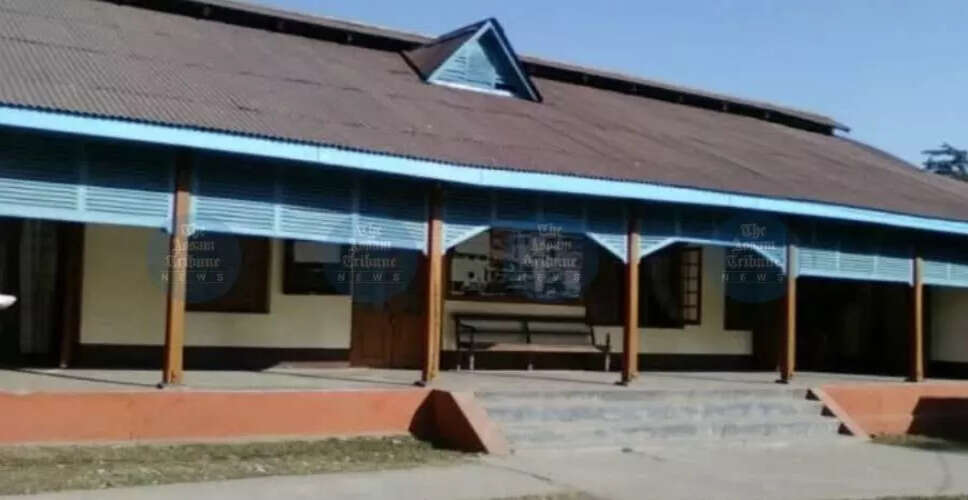
A Historical Treasure in Tezpur
Tezpur Government Boys' School in Assam is more than just an educational institution; it is a historical landmark. Established in the 1800s, during a period of colonial upheaval and cultural awakening in Assam, this school has been a nurturing ground for some of the most influential figures in Assamese literature, music, and theatre.
Notable alumni include Bhupen Hazarika, whose songs resonate with the essence of Assamese life; Phani Sarma, a theatrical pioneer; Lakshminath Bezbaroa, often hailed as the father of modern Assamese literature; and Bishnu Rabha, a multifaceted artist and freedom fighter. Attending this school instilled a sense of pride and a connection to a rich cultural heritage.
However, a recent visit revealed a disheartening transformation. The traditional Assam-style homes that once characterized the area have been replaced by modern concrete structures, devoid of the historical significance that once filled the space. While modernization is necessary, the complete erasure of the past raises questions about preserving cultural identity.
Cities worldwide have successfully balanced heritage with modernity. For instance, Fontainhas in Goa retains its Portuguese charm, while Kyoto in Japan preserves its Edo-period streets. These examples highlight the importance of maintaining a connection to history.
In contrast, Tezpur seems to overlook its cultural roots. The vibrant spirit that once thrived in this town is fading, replaced by a generic small-town atmosphere that lacks character.
The school itself was a hub of creativity, where students were encouraged to dream and express themselves. The walls could tell countless stories of artistic endeavors and intellectual growth.
A museum dedicated to the school's history could serve as a repository of memories, featuring photographs, manuscripts, and recordings of performances. Such an initiative would honor the legacy of the school and its alumni.
Heritage is crucial for connecting generations. By preserving our history, we provide future generations with a sense of identity and belonging. Conversely, neglecting our heritage leads to a loss of meaning.
To the alumni of Tezpur Government Boys' School, let us unite to form a Heritage Committee. Together, we can gather memorabilia, create archives, and advocate for the recognition of our school's legacy.
We owe it to Tezpur, a place that has shaped the dreams and aspirations of many. Let us ensure that its rich history is not forgotten.