
Potential US-Iran Agreement Could Impact Global Oil Prices

Overview of the Proposed Agreement
Analysts suggest that a potential deal between the United States and Iran to reopen the Strait of Hormuz for commercial shipping may lead to a decrease in oil prices and alleviate pressures on global transport, manufacturing, and fuel expenses. This strait is a crucial energy passage, responsible for approximately 20% of the world's petroleum supply. The ongoing conflict in the region has significantly disrupted shipping activities for the past three months. A US official announced that there is a preliminary agreement for Iran to reopen the strait, although President Trump indicated that finalizing the deal may take additional time.
Challenges in Clearing Shipping Backlogs
When Will the Shipping Backlog Clear?
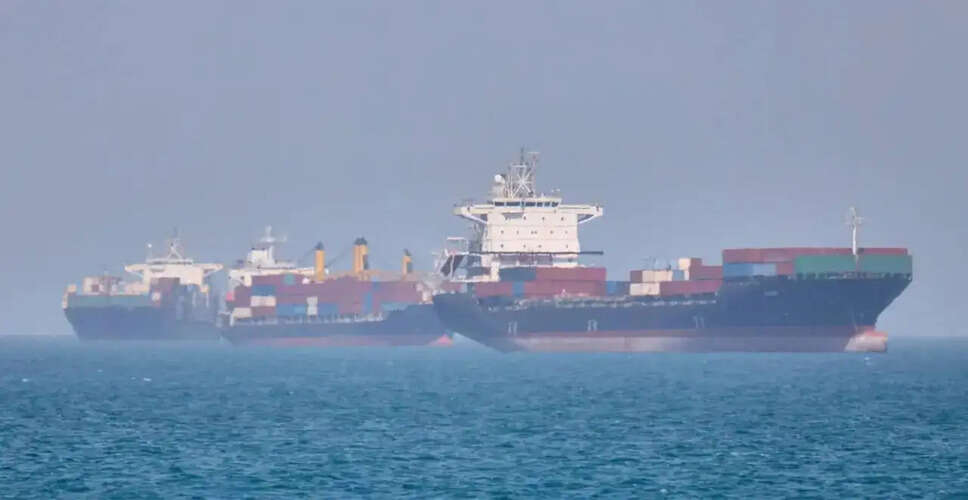
Industry experts highlight that the immediate challenge lies in addressing the backlog of vessels currently stranded in the Persian Gulf. Matt Smith noted that around 166 tankers, holding approximately 170 million barrels of oil, are awaiting passage through Hormuz. This process could extend over several months due to the slow movement of oil tankers and the time required for ports to resume normal loading and unloading operations.
Victoria Grabenwöger mentioned that it might take up to three months to restore full tanker transit capacity. Some vessels have already started moving towards the strait, anticipating the reopening of the route.
Future of Oil Prices
Will Oil Prices Come Down?
Economists caution that oil and fuel prices may not decrease swiftly, despite optimism surrounding a diplomatic resolution. Hamad Hussain explained that significant damage to infrastructure, disrupted production, and ongoing shipping challenges will continue to impact supply levels. He stated, "These factors will keep oil prices elevated for a while—only when the supply-demand balance in the oil market improves significantly, which may not happen until 2027, will prices begin to decline." Additionally, fuel prices could remain high due to severely depleted global inventories during the conflict. The International Energy Agency reported a drop of 250 million barrels in global stockpiles during March and April as governments utilized reserves to address shortages from the Middle East.
Analysts believe that while any agreement could halt further depletion, rebuilding reserves will require substantial time. The anticipated reopening of the strait has already influenced market expectations. The US Energy Information Administration recently projected that if shipping resumes through Hormuz by June, Brent crude could average around $89 per barrel by year-end and $79 by 2027. Brent crude closed at $103.54 per barrel on Friday, having started the year near $60. On the cryptocurrency exchange Hyperliquid, a perpetual oil-futures contract linked to US benchmark West Texas Intermediate crude reportedly dipped to $88 per barrel over the weekend before rebounding to approximately $93 on Sunday.
Remaining Uncertainties
Uncertainties Remain
Some analysts believe that the broader implications will hinge on whether the agreement evolves into a lasting resolution or merely extends the current ceasefire. Rachel Ziemba remarked that a framework agreement "reduces the risk of escalation and enhances the likelihood of conflict resolution, potentially paving the way for rebuilding and reopening key supply chains." However, she warned that "much depends on the specifics of the terms." Reports indicate that the emerging deal would prolong the existing ceasefire while reopening Hormuz and initiating discussions regarding Iran's nuclear program. Even if the conflict concludes swiftly, significant disruptions are anticipated to persist across regional energy infrastructure. Shipping companies and insurers are likely to remain cautious until waterways are fully secured, mines are cleared, and the threat of attacks is eliminated. The CEO of ADNOC recently stated that flows through Hormuz could take at least four months to recover to 80% of prewar levels, with full recovery potentially not occurring until early next year. Research firm Rystad Energy estimates that the costs associated with repair and restoration due to the conflict could reach up to $58 billion.