
Positive Outlook for Indian Stock Market: Expert Predictions
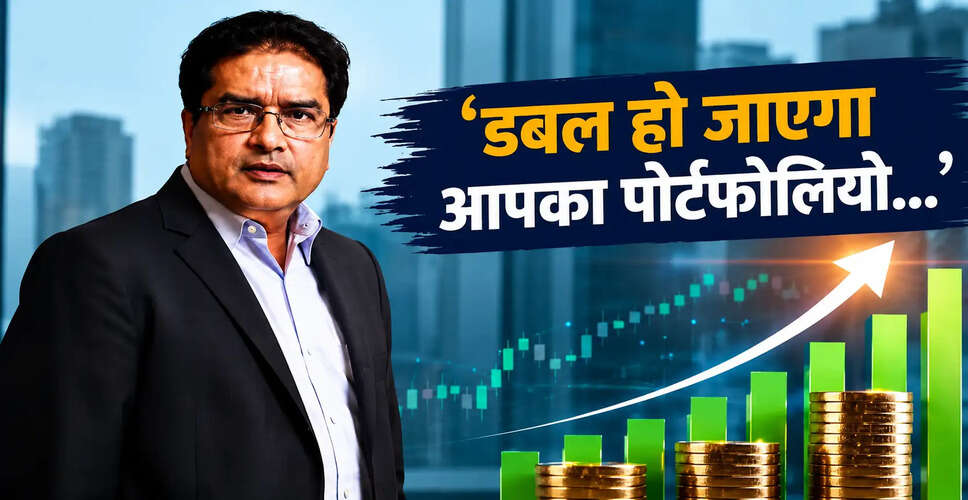

Optimistic Forecast for Indian Equity Market
Renowned investor Ramdev Agrawal, who chairs Motilal Oswal Financial Services, has expressed an optimistic view regarding the Indian stock market. He predicts that over the next five years, the Indian equity market could yield an annual return of approximately 15%. If this forecast materializes, investors' portfolios could potentially double on a compound basis. However, it is important to note that this is merely a market estimate and does not guarantee any specific returns.
Anticipating Growth After a Two-Year Stagnation
Agrawal believes that the Indian stock market is poised to enter a significant growth phase after experiencing two years of stagnation. He anticipates that the growth rate of the Indian economy will remain between 7.5% and 8.5%. Additionally, a projected increase of 13-14% in corporate earnings could serve as a positive indicator for the market.
Confidence in the Banking Sector
Agrawal has shown particular confidence in the banking sector, stating that banks are in a robust financial position with healthy credit growth. His preferred banking stocks include ICICI Bank, SBI, AU Small Finance Bank, Federal Bank, and Karur Vysya Bank. He also holds a favorable view of HDFC Bank, describing its current valuation as attractive compared to historical levels. However, he advises that investment decisions should not be based solely on the opinions of any investment expert.
Improvement Expected in the IT Sector
Regarding the IT sector, Agrawal shared his perspective, noting that despite concerns surrounding the impact of AI on tech companies, he believes conditions in this sector may gradually improve. However, he cautioned that a significant recovery in IT stocks may take time. He downplayed fears related to AI, suggesting that the increasing expenditure on AI infrastructure could benefit not only tech companies but also sectors like cement, cables, and construction.
Foreign Institutional Investors' Selling Trends
Agrawal also commented on the activities of Foreign Institutional Investors (FIIs), indicating that the weakness of the rupee poses a major concern for foreign investors in the Indian market. The potential impact on returns when viewed in dollar terms could alter their investment strategies. Nevertheless, he noted signs of a decrease in aggressive selling by FIIs.
Understanding the Implications of Doubling Portfolios
To comprehend the notion of a 15% annual return, one must consider compound returns. If an investment achieves a consistent 15% CAGR over five years, the initial investment could theoretically double. For instance, an investment of ₹1 lakh could grow to approximately ₹2 lakh over five years, assuming a steady 15% return each year. However, actual returns in the stock market can vary significantly from year to year, with some years experiencing substantial gains and others facing declines. Thus, the 15% figure is an estimate rather than a guaranteed outcome.
Key Takeaways for Investors
Agrawal's current market outlook is primarily based on India's economic growth, corporate earnings, and the strength of leading companies. He believes that long-term opportunities may persist in the Indian equity market. However, investing in the market carries inherent risks, and past performance of any company or sector does not guarantee future returns. Therefore, it is crucial for investors to understand a company's financial health, valuation, and associated risks before making investment decisions.