
Political Turmoil in Tamil Nadu: AIADMK Faces Internal Crisis
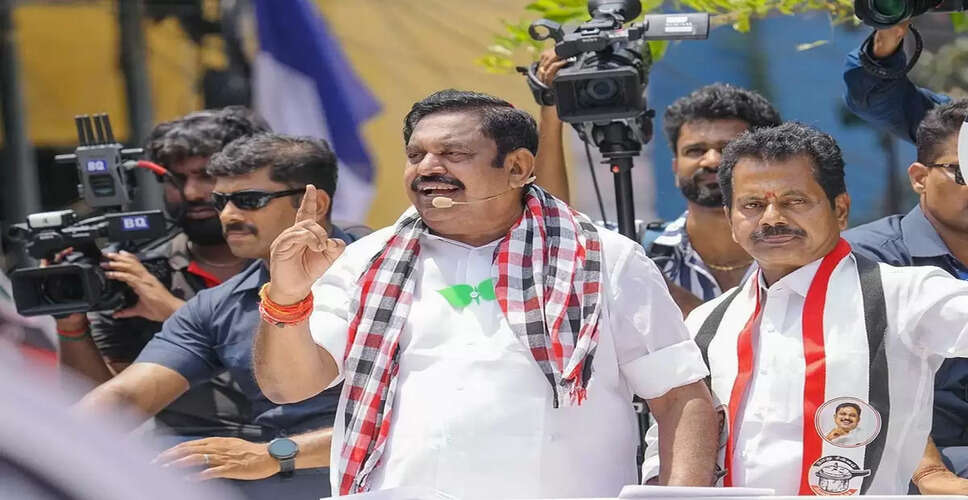

AIADMK's Struggles Post-Election
The recent assembly elections in Tamil Nadu have triggered a significant political upheaval. Following the election results, a growing rebellion within the AIADMK has placed the party at a critical juncture, raising concerns about its very existence. Once regarded as one of the most influential forces in Tamil Nadu, the AIADMK is now grappling with internal strife, leadership challenges, and fears of fragmentation.
A Day of Political Crisis
May 12 marked the birthday of party leader and former Chief Minister Edappadi Palaniswami, but it turned out to be a day filled with political turmoil. Approximately thirty members of the AIADMK legislative party sided with SP Velumani and CV Shanmugam, refusing to support Palaniswami. This faction subsequently announced their backing for the government led by actor and Tamilga Vetri Kazhagam leader Joseph Vijay. In the assembly, Palaniswami and Velumani were assigned separate seating, indicating a clear division within the party.
Weakening Control
Despite Palaniswami managing to regain the support of five legislators, the overall situation remains unfavorable for him. A total of twenty-five legislators voted in favor of Vijay, while only twenty-two opposed the TVK government. This outcome clearly illustrates that Palaniswami's grip on the legislative party has weakened, and his majority appears to be dwindling.
Widespread Discontent
Political analysts suggest that this rebellion is unlikely to be confined to just the legislative party. There is a growing discontent among party workers and leaders due to a series of electoral defeats. This marks the fourth significant electoral loss for the AIADMK since 2019. There is a prevailing sentiment within the party that under Palaniswami's leadership, the AIADMK has been consistently weakening, necessitating new leadership.
Allegations Against Palaniswami
Palaniswami faces serious allegations of prioritizing personal ambition over the party's ideology. Following the election results, he attempted to become Chief Minister with external support from the DMK. Rebel leaders argue that this move contradicted the core ideology of the AIADMK, as its founders, M.G. Ramachandran and J. Jayalalithaa, always viewed the DMK as their primary political adversary. This has sent a message among party workers that the AIADMK, which finished third, is willing to ally with the second-placed party for power.
Double Standards Accusations
Palaniswami is also criticized for previously accusing O. Panneerselvam of aligning with the DMK. Panneerselvam was not allowed to return to the party, leading him to turn to the DMK. At that time, Palaniswami labeled him as the DMK's B team. However, now Palaniswami appears ready to accept DMK's support for power, leading to accusations of double standards.
New Political Strategy from Rebels
Meanwhile, the rebel faction has adopted a new political strategy, claiming that the public mandate is for TVK, not for Chief Minister Vijay. This statement hints that the rebel legislators of the AIADMK should also be included in the Vijay government. However, Vijay seems to be distancing himself from such arrangements, as including these leaders could jeopardize his anti-corruption image.
Corruption Allegations Loom
Several leaders within the rebel faction are already facing investigations related to corruption. SP Velumani is embroiled in a case involving approximately ₹98 crores, while former Health Minister C. Vijayabhaskar is under scrutiny for a gutkha scam. Thus, including these leaders could pose significant political risks for Vijay.
AIADMK's Position in NDA
Another pressing question is whether the AIADMK remains a part of the National Democratic Alliance. Rebel leaders claim that the party has exited this coalition, but there has been no clear response from Palaniswami's camp. During the election campaign, many rebel leaders were seen close to BJP leadership, raising questions about whether Vijay, who has labeled BJP as an ideological opponent, would be comfortable with them.
Legal Challenges Ahead
Additionally, the anti-defection law poses a threat to the rebel legislators. The faction has not yet reached the necessary numbers, which could lead to legal challenges regarding their membership. If by-elections arise, it will be crucial to see whether TVK supports them.
AIADMK's Declining Influence
Historically, the AIADMK has been a central power in Tamil Nadu politics, but it now appears to be on a rapid decline. The traditional female voter base has shifted towards Vijay, and Palaniswami has failed to position himself as a viable alternative to M.K. Stalin. While Vijay and Stalin represent relatively younger leadership in the assembly, questions are being raised about the 72-year-old Palaniswami's leadership.
Impending Division
Political observers believe that if Palaniswami does not step down, a split within the AIADMK seems inevitable. A significant division occurred between 1987 and 1989 after M.G. Ramachandran's death, and a similar situation appears to be emerging again. The party's symbol, the two leaves, may also find itself embroiled in legal battles once more.
Vijay's Rising Position
In this unfolding scenario, Vijay seems to be the biggest beneficiary. While the AIADMK teeters on the brink of collapse, the DMK is also facing moral dilemmas due to its attempts to form a government with Palaniswami. During the election campaign, Vijay framed the contest as primarily between TVK and DMK, largely sidelining the AIADMK. The post-election circumstances now indicate that the future of the AIADMK is more uncertain than ever.