
Political Turmoil in Bangladesh: Hadi's Murder Sparks Outrage and Accusations
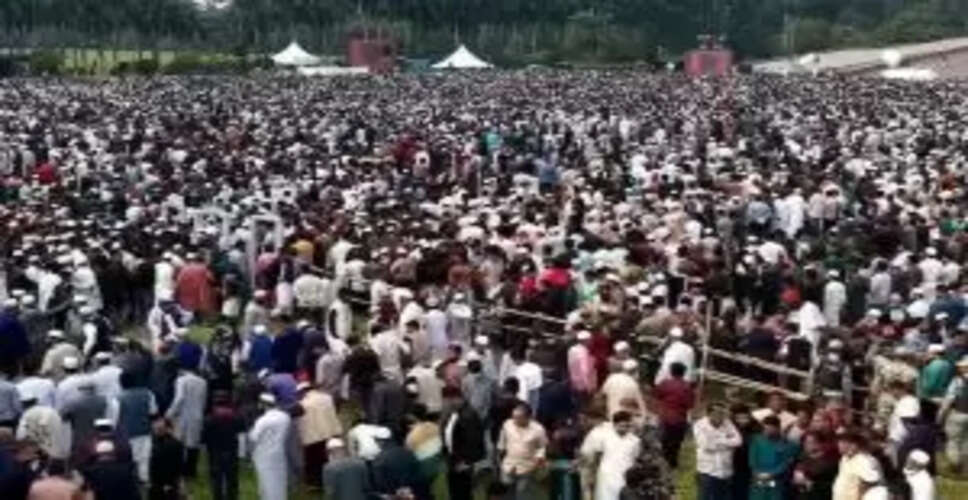
Dhaka's Political Landscape Shaken by Hadi's Murder
Dhaka: The political party of the murdered student leader Sharif Osman Hadi has dismissed the police's chargesheet regarding his death, alleging state involvement in the incident.
On Tuesday, Inquilab Moncho issued a warning that those responsible for the violence might face retaliation if justice is not served, as reported by the Bengali daily Prothom Alo.
The Detective Branch of the Dhaka Metropolitan Police has formally charged 17 individuals, including the main suspect Faisal Karim Masud, claiming that Hadi's murder was politically motivated and orchestrated by Awami League-affiliated ward councillor Taizul Islam Chowdhury Bappi.
Abdullah al Jaber, the member secretary of Inquilab Moncho, expressed disbelief at the notion that Hadi's murder was merely the result of a ward councillor's orders, insisting that the police's chargesheet is unacceptable.
He alleged that a broader criminal network, along with state apparatus, played a role in Hadi's assassination.
"Our fight for justice will continue until those responsible are held accountable. Any chargesheet that omits their names is unacceptable to us," Jaber stated following the party's 'March for Justice' event.
He criticized the government for disregarding public sentiment and treating citizens with contempt, emphasizing that peaceful protests have been met with indifference.
Jaber warned that if justice for Hadi's murder is not achieved and what he termed 'Indian hegemony' persists, the public would determine the repercussions.
"Those who have spilled blood may also take blood if necessary," he cautioned.
Hadi, 32, gained national attention during the mass protests in July-August 2024 that led to the downfall of the Hasina administration. He was shot in the head on December 12 while campaigning in Dhaka.
Despite being airlifted to Singapore for medical treatment, Hadi succumbed to his injuries on December 18.
During a press conference in Dhaka, Additional Commissioner Md Shafiqul Islam of the DMP Detective Branch stated that the alleged shooter, Masud, had ties to the Awami League's student wing, Chhatra League.
He indicated that Hadi's murder was carried out under Bappi's direction, who allegedly assisted Masud and another suspect, Alamgir Sheikh, in escaping after the crime.
Bappi previously held the position of president of Pallabi Thana Chhatra League.
Last year, the interim government led by Muhammad Yunus imposed a ban on both the Awami League and its student faction.
Hadi's assassination has reignited political unrest in Bangladesh and strained relations with India, as some factions have suggested an Indian connection to the murder.
India has firmly rejected these allegations, labeling them as a 'false narrative.'
"We have dismissed the misleading narrative being circulated in Bangladesh. The law and order situation is the responsibility of the Bangladeshi government. Any portrayal suggesting otherwise is entirely false, and we reject it," stated Randhir Jaiswal, spokesperson for the Ministry of External Affairs, last month in New Delhi.
He reiterated India's commitment to fostering strong ties with the Bangladeshi populace and promoting peace and stability in the region.
India has also called for a comprehensive investigation into Hadi's murder amidst a significant decline in bilateral relations.
On December 28, the Dhaka Metropolitan Police claimed that suspects Masud and Sheikh had crossed into Meghalaya, India, with assistance from local contacts.
However, security agencies in Meghalaya have dismissed these assertions as baseless and misleading.
"There is no evidence to support claims of any individual crossing the international border from the Haluaghat sector into Meghalaya. The Border Security Force has neither detected nor received reports of such an incident," stated Inspector General O P Opadhyay of the BSF in Meghalaya.
The Meghalaya Police also confirmed that there was no intelligence to support the presence of the suspects in the Garo Hills area, which is part of Meghalaya's western sector bordering Bangladesh and monitored by the BSF.