
Political Turmoil in Assam: Congressman Resigns Amid Controversy
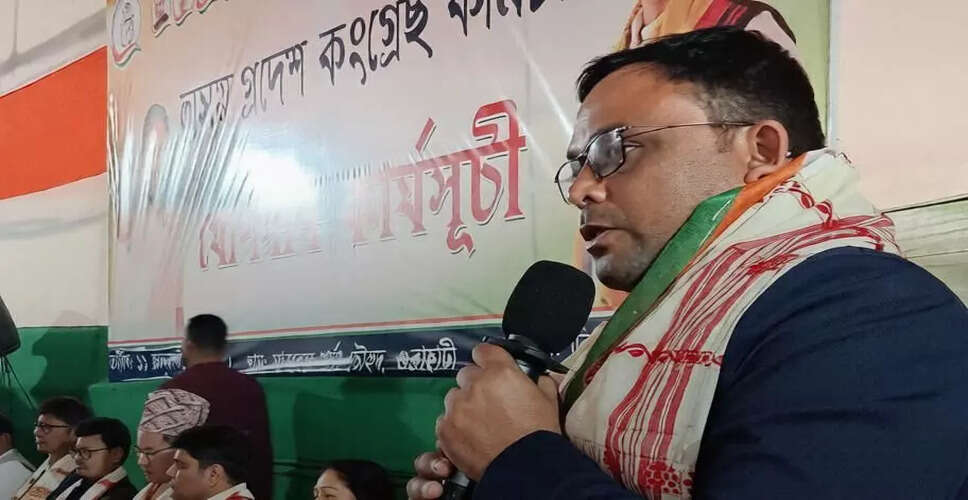
Resignation of Rejaul Karim Sarkar
Guwahati, Jan 14: Following two days of intense political scrutiny and significant backlash regarding his remarks about the Sivasagar and Dhubri districts, Rejaul Karim Sarkar, a newly joined member of the Congress party, announced his resignation on Wednesday.
In his resignation letter directed to APCC president Gaurav Gogoi, Sarkar expressed profound ideological disagreements and disappointment with the party's leadership.
He mentioned that he was initially attracted to the Congress due to its commitment to secularism, inclusivity, and constitutional principles, but recent events made it untenable for him to remain.
Heightening the situation, Sarkar accused Debabrata Saikia, the Leader of Opposition, and Nagaon MP Pradyut Bordoloi of acting as 'BJP agents' within the party.
He stated that the actions and statements from these senior figures caused him significant 'moral and ideological distress,' prompting his decision to resign.
This resignation unfolded amidst a backdrop of sharp exchanges within the party. On Tuesday, Saikia publicly questioned Sarkar's political relevance and his alleged closeness to Chief Minister Himanta Biswa Sarma.
“Who exactly is Rejaul Karim? What contributions has he made? I understand he has a good rapport with CM Himanta Biswa Sarma. Karim has previously criticized Congress. The CM often claims that his agents are embedded within Congress. Perhaps an old agent has been replaced by a new one. This situation warrants investigation,” Saikia remarked.
Previously, Saikia had characterized Sarkar's controversial statements as 'poorly articulated' and emphasized that they did not represent the party's official stance.
The controversy ignited after Sarkar's comments were interpreted as implying that the identity of Upper Assam districts could shift similarly to Dhubri, a region often associated with alleged demographic changes due to the influx of Bangladeshi nationals.
These remarks faced severe backlash from political opponents, civil society organizations, and even factions within the Congress.
Although Sarkar later apologized and clarified that his comments aimed to promote unity and equitable development across regions, the damage was already done.
The ongoing backlash, combined with rising internal dissent, ultimately led to his resignation.
This incident has revealed new divisions within the Assam Congress at a critical time when the party is attempting to regroup and strengthen itself ahead of the Assembly elections, highlighting the difficulties of managing dissent and communication in a politically fragmented environment.