
Political Tug-of-War Over Supreme Court Ruling on Himachal's Power Rights

Political Reactions to the Supreme Court Verdict
Munish Sood
Shimla
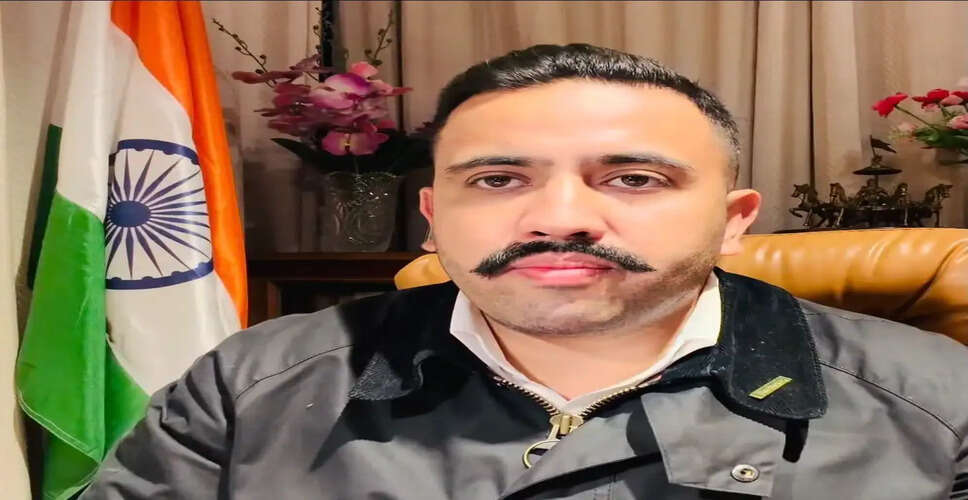
The recent Supreme Court ruling regarding the Bhakra Beas Management Board (BBMB) power-sharing dispute has ignited a political controversy over credit for Himachal Pradesh's long-sought rights. The Congress government, led by Sukhvinder Singh Sukhu, is heralding the decision as a significant victory stemming from its legal and political efforts. However, Public Works Minister Vikramaditya Singh attributes the origins of this struggle to former Chief Minister Virbhadra Singh. In contrast, BJP leader Jai Ram Thakur argues that the ruling is the culmination of decades of persistent efforts by various administrations and the Central Government's involvement.
The competing narratives surrounding the ruling have added a complex layer to what is broadly celebrated as a significant achievement for Himachal Pradesh. The discussion has evolved beyond the verdict itself to encompass the political legacy of the struggle and the contributions of various governments in reaching this point.
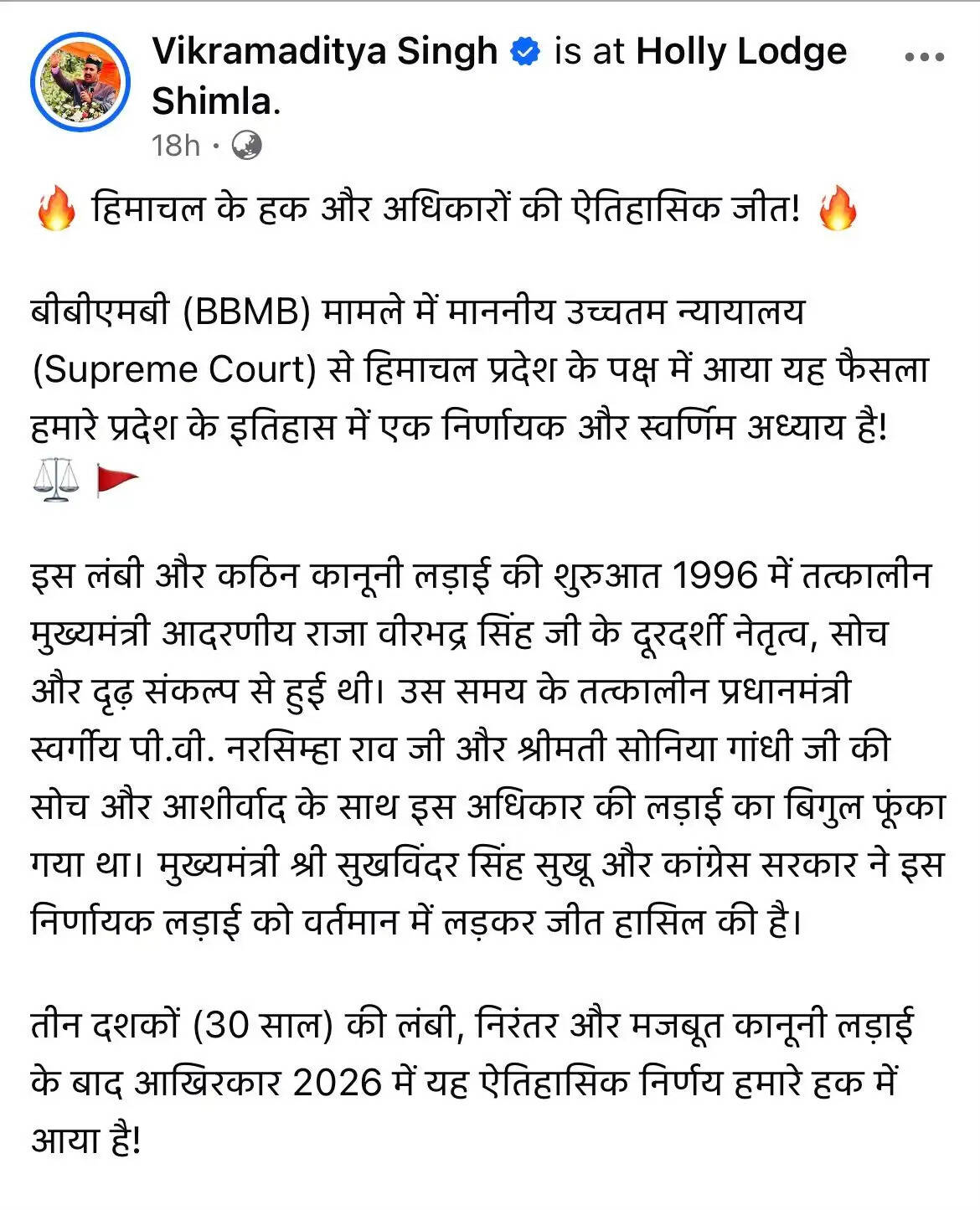
Vikramaditya Singh emphasized that the fight for Himachal Pradesh's rightful share in BBMB projects began in 1996 under the leadership of his father, Virbhadra Singh. He noted that Singh had engaged with then-Prime Minister P.V. Narasimha Rao and senior Congress leader Sonia Gandhi to lay the groundwork for the state's long legal battle.
While acknowledging the current government's efforts in advocating for Himachal's position before the Supreme Court, Vikramaditya's comments also highlight the historical roots of this achievement, suggesting that the current administration's portrayal of the verdict as solely its success overlooks the contributions of past leaders.
Jai Ram Thakur welcomed the Supreme Court's decision but criticized the Congress government for attempting to claim it as a singular achievement. He argued that the ruling is the result of nearly 30 years of legal and political efforts from various state governments, along with the Central Government's intervention, particularly its cashless energy settlement formula introduced during the proceedings in July 2026.
Thakur expressed gratitude to Prime Minister Narendra Modi and the Central Government for their role in facilitating a resolution to a long-standing dispute. He accused Chief Minister Sukhu of trying to take undue credit for an accomplishment that arose from a collective struggle.
The origins of this dispute date back to the reorganization of Punjab in 1966, with Himachal Pradesh claiming a 7.19 percent share in BBMB projects. In September 2011, the Supreme Court recognized this entitlement, but the actual settlement of energy dues and the mechanism for transferring the state's share remained contentious.
The latest ruling mandates Punjab and Haryana to supply 11,973 million units (MUs) of electricity to Himachal Pradesh over 20 years under a cashless energy settlement framework. This decision is anticipated to provide significant financial relief to the state, with Chief Minister Sukhu estimating potential annual revenue between Rs 500 crore and Rs 1,000 crore, depending on usage and market conditions.
While the BBMB verdict represents a crucial opportunity for Himachal Pradesh to secure its long-awaited power entitlements, the political discourse surrounding it reveals competing claims over credit for this achievement. The Congress government views the ruling as a result of its current legal efforts, while Vikramaditya Singh emphasizes Virbhadra Singh's historical contributions, and the BJP underscores the importance of past administrations and the Central Government's role.
In conclusion, while the state stands to gain from the Supreme Court's decision, the debate over who laid the groundwork, who sustained the legal battle, and whose intervention was pivotal in resolving the dispute is likely to persist.