
Political Tensions Rise Over US-Iran Agreement Amid Criticism of Modi Government

Political Reactions to the US-Iran Agreement
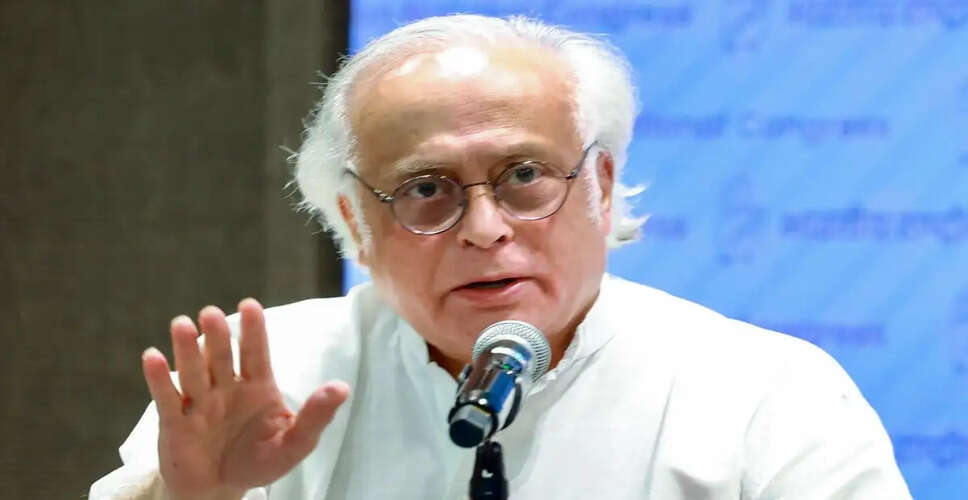
The recent signing of a historic 14-point agreement between the United States and Iran has sparked intense political discourse in India. The main opposition party, Congress, has launched a sharp critique of the foreign policy of Prime Minister Narendra Modi's government regarding this deal. Congress claims that Pakistan's involvement in this agreement represents a significant diplomatic setback for the Modi administration. Furthermore, the party has condemned Modi's approach towards U.S. President Donald Trump as one of 'appeasement'. Congress General Secretary Jairam Ramesh took to social media platform X to express that this development could be detrimental to India's interests.
Concerns Over Pakistan's Role
Ramesh noted in his post that the Islamabad Memorandum of Understanding (MoU) has now been officially released. He emphasized that the naming of the agreement after Islamabad indicates a resurgence of Pakistan's regional standing and global influence. He pointed out that Pakistan was nearly isolated on the global stage following the Mumbai terrorist attacks in November 2008, under the leadership of former Prime Minister Manmohan Singh. Ramesh asserted that this development poses a serious blow to both the direction and style of Modi's foreign policy.
Implications for Regional Politics
The Congress leader further stated that Pakistan has become more deeply entrenched in the geopolitical and security framework of West Asia, which could have serious and long-lasting implications for India. He remarked that if the MoU is implemented in accordance with its spirit and wording, it could signify a major advancement. However, there is also a risk that it could devolve into a 'Memorandum of Misunderstanding'. Ramesh indicated that the next 60 days would be crucial in determining the outcome of this agreement.
Iran's Position and Regional Reactions
Ramesh highlighted that this MoU brings significant and somewhat unexpected achievements for Iran, showcasing its resilience and patience. The Gulf Cooperation Council (GCC) nations, which have borne the brunt of Iran's retaliatory actions, have cautiously welcomed the MoU but are likely to reassess their relations with other countries. He noted that this agreement represents a clear defeat for Israeli Prime Minister Benjamin Netanyahu, although he may still attempt to undermine it through various means. Ramesh pointed out that Netanyahu has become increasingly isolated internationally, with even President Trump publicly expressing his frustration and disappointment towards him.
Critique of Modi's Foreign Policy
Ramesh criticized Modi's unwavering support for Israel, suggesting that it is costing India dearly. He described the MoU as a significant setback for the U.S., which had previously collaborated with Israel to initiate military actions against Iran with maximum objectives by February 28, 2026, but failed to achieve those goals. He asserted that the limitations of military power have once again been exposed. Ramesh cited the recent official statement from the Indian Ministry of External Affairs regarding the Trump-Modi bilateral meeting as a fresh example of Modi's ongoing policy of appeasement, labeling it as shameful and potentially anti-national.