
Political Tensions Rise in Uttar Pradesh Over Controversial Mosque Meeting
Tensions in Uttar Pradesh politics have surged following the emergence of images showing Akhilesh Yadav and Dimple Yadav meeting inside a mosque. The BJP has criticized this event as a misuse of religious spaces for political gain, while the SP defends it as a gesture of communal harmony. The incident has sparked a debate on the intersection of religion and politics in India, with varied reactions from the Muslim community. As the political landscape evolves, the implications of this meeting could have significant repercussions for upcoming elections.
| Jul 23, 2025, 17:26 IST
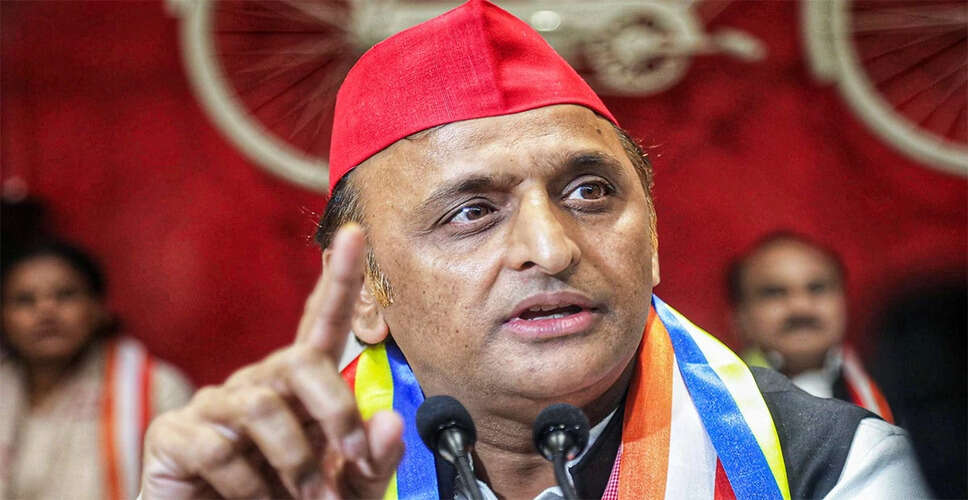
Controversy Erupts Over Meeting in Mosque
Political tensions in Uttar Pradesh escalated when images surfaced of Samajwadi Party leader Akhilesh Yadav and his wife Dimple Yadav holding a meeting inside a mosque. This gathering took place at a mosque located on Parliament Street in Delhi, attended by several SP leaders. The Bharatiya Janata Party (BJP) has launched a strong critique against the SP, labeling this event as an extreme case of 'political exploitation of religious sites.'
Following the viral spread of these images on social media, BJP leaders, including the head of the minority front, Jamal Siddiqui, expressed outrage. He accused Dimple Yadav of violating the mosque's decorum and principles, pointing out that she neither covered her head nor wore appropriate attire, which he deemed disrespectful to the sanctity of an Islamic worship place.
Former Union Minister Mukhtar Abbas Naqvi also condemned the incident, claiming it hurt Islamic sentiments and accused the SP of using religious sites as a 'vote bank.'
In response, Dimple Yadav dismissed the BJP's allegations, asserting that no 'meeting' was occurring and accused the BJP of misleading the public. She emphasized that the BJP avoids discussing pressing issues like the SIR, the Pahalgam terror attack, and Operation Sindoor. Meanwhile, Akhilesh Yadav accused the BJP of weaponizing religion, asserting that the SP respects all faiths. He stated, 'Faith unites; the BJP divides. We honor everyone, while the BJP only knows how to politicize religion.'
The Samajwadi Party has long faced accusations of appeasing the Muslim community. Since the era of Mulayam Singh Yadav, the SP has garnered substantial support from the Muslim populace, which is considered a crucial part of its electoral base. Analysts suggest that such activities in mosques may be a strategic move by the SP to consolidate Muslim support ahead of upcoming elections, although the party claims it exemplifies 'communal harmony.'
This incident can be interpreted in various ways: as a matter of religious respect or disrespect, dialogue or conspiracy, or a political strategy. However, it undoubtedly signals a potential resurgence of minority politics and communal polarization in Uttar Pradesh. Akhilesh Yadav's actions reflect an attempt to connect with the Muslim community, but the ultimate impact remains to be seen.
Nonetheless, organizing political meetings in mosques or any religious venue is a sensitive issue in Indian politics. The Constitution advocates for a separation between religion and politics. However, the use of religious sites for political purposes has historically been contentious in India's electoral landscape. Reactions within the Muslim community regarding this meeting have been mixed. Some praised the initiative, noting that while other parties ignore their concerns, the SP has taken a step forward. Conversely, others argued that the politics of viewing the Muslim community merely as a 'vote bank' must come to an end.