
Political Tensions Rise in Jammu and Kashmir on Martyrs' Day
Every July 13, Jammu and Kashmir witnesses heightened discussions around Martyrs' Day, marking the tragic events of 1931 when 22 protesters were killed. This day has become a focal point for political parties like the PDP and NC, who honor the martyrs while calling for its recognition as a public holiday. However, the central government and BJP view it differently, seeing it as a glorification of a one-sided historical narrative. The observance of this day continues to stir cultural and emotional conflicts within the region, reflecting the complex dynamics of identity and politics in Jammu and Kashmir.
| Jul 11, 2025, 14:53 IST
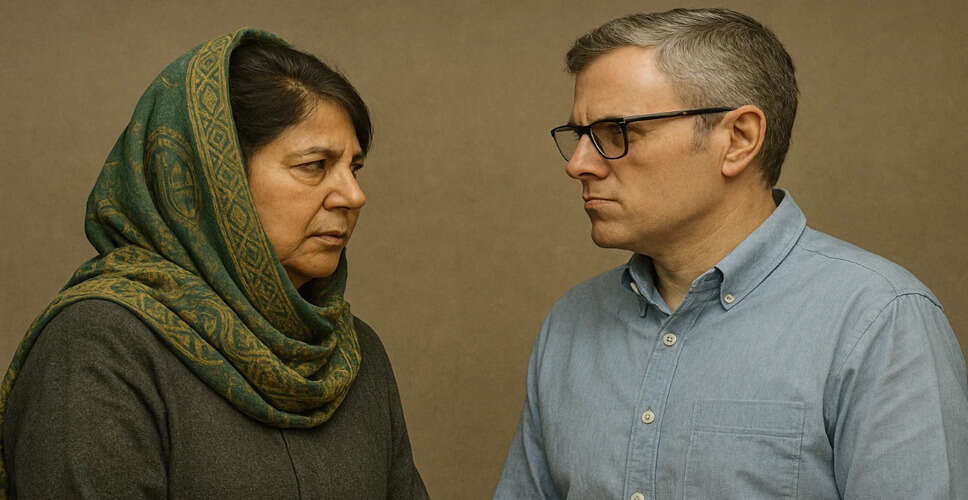
Overview of Martyrs' Day Observance
Every year on July 13, discussions surrounding "Martyrs' Day" intensify in Jammu and Kashmir. This year is no exception, as various political factions engage in heated debates over the significance of the day. It was on this date in 1931 that the forces of Dogra ruler Maharaja Hari Singh opened fire on protesters outside the Jammu jail, resulting in the deaths of 22 individuals. These individuals are commemorated as "martyrs" by certain parties in Kashmir, particularly the People's Democratic Party (PDP) and the National Conference (NC), who have consistently paid tribute on this day. However, in recent years, the observance of this day has sparked considerable political discord within the state.
Historical Context of the July 13 Incident
On July 13, 1931, a crowd gathered outside the Srinagar Central Jail in support of an individual facing charges of sedition for allegedly challenging Maharaja Hari Singh's rule. During the court proceedings, the military opened fire on the crowd, leading to the tragic loss of 22 lives. The National Conference and later the PDP have referred to these individuals as "martyrs for freedom" and have symbolized this date as a representation of the Kashmiri struggle.
Political Implications and Demands
Sheikh Abdullah, the founder of the National Conference, referred to these 22 individuals as the "foundation of Kashmir's freedom." The PDP has continued this tradition by annually honoring their memory. Currently, there are renewed calls to declare July 13 a public holiday, a demand that both the PDP and NC are leveraging as a political tool.
Contrasting Views from the Central Government
Conversely, the central government and the BJP view this day as associated with "communal frenzy." They argue that it glorifies a one-sided historical narrative that misrepresents the Dogra rule and contradicts Kashmir's diverse cultural heritage. It is noteworthy that after the abrogation of Article 370, Martyrs' Day was removed from the official holiday list.
Cultural and Emotional Conflicts
While the events of July 13 are seen as a symbol of "resistance" in the Kashmir Valley, they are perceived as an affront to Dogra pride in the Jammu region, where the Dogra community is significantly present. Thus, the demand for a holiday or public memorial events can lead to cultural and emotional clashes within Jammu and Kashmir. The PDP and NC advocate for the preservation of their 'Kashmiriyat' and 'core identity,' while the BJP views this as contrary to the agenda of a 'new Kashmir.'