
Political Tensions Rise as Supreme Court Questions October 12 March Led by Rahul Gandhi

Political Controversy Surrounding the October 12 March
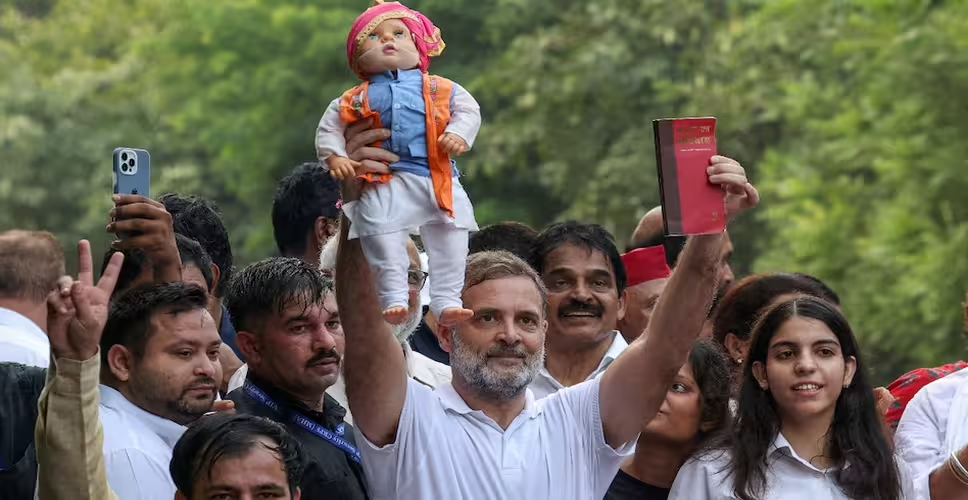
The march to the Supreme Court on October 12, led by Congress leader Rahul Gandhi and several opposition figures, has sparked significant controversy. This demonstration was aimed at protesting the Election Commission and the Special Intensive Review (SIR) of the voter list, leading to a legal debate regarding political protests within court premises. Reports indicate that notices have been issued to opposition leaders, including Rahul Gandhi, Congress President Mallikarjun Kharge, Samajwadi Party Chief Akhilesh Yadav, and Trinamool Congress MP Mahua Moitra. The focus now shifts to the responses from the involved parties and the upcoming hearings.
Reasons Behind the Controversy of the October 12 March
On October 12, 2026, a coalition of leaders from the INDIA alliance, under Rahul Gandhi's leadership, marched to the Supreme Court in Delhi. The opposition parties expressed their concerns regarding the functioning of the Election Commission, the special intensive review of the voter list, and allegations of vote theft. They also raised questions about the role of Chief Election Commissioner Gyanesh Kumar.
Request for Meeting with Chief Justice Denied
Prior to the march, opposition leaders sought an appointment with Chief Justice of India, Justice Suryakant, to discuss issues related to the electoral process and recent protests. However, the Chief Justice declined the request, stating that discussing pending cases in such meetings would violate the principle of separation of powers between the judiciary and other constitutional bodies. He emphasized that any citizen or representative has the right to approach the court as per the law.
Legal Questions Arise Over Political Protests in Court Premises
Following the opposition's march, legal questions emerged regarding political demonstrations within the Supreme Court and High Court premises. There have been calls to prohibit political rallies, sit-ins, and the use of banners and slogans in court areas. Petitioners argue that clear regulations are necessary to maintain the dignity, security, and normal judicial operations of the courts.
Balancing Political Protest Rights and Court Dignity
The court faces the challenge of balancing the right to political dissent with the decorum of court premises. While peaceful protest is a vital right in a democracy, adherence to laws and regulations governing public activities is equally important.
Notices Issued to Opposition Leaders
The issuance of notices to Rahul Gandhi, Mallikarjun Kharge, Akhilesh Yadav, and Mahua Moitra has sparked discussions in political circles. The issuance of a notice indicates that the parties involved may be required to present their stance or response regarding the matter. However, this does not imply any guilt or final decision.
Opposition Questions Election Commission's Functioning
Rahul Gandhi and other opposition leaders have called for transparency in the verification and review process of the voter list. They allege irregularities concerning voter names in certain areas and demand accountability and a fair investigation from the Election Commission.
Future Implications for Rahul Gandhi and Opposition Leaders
The issuance of notices may provide Rahul Gandhi and other opposition leaders an opportunity to present their case. However, it would be premature to conclude that final actions against any leader are imminent based solely on the notices. The outcome will depend on court hearings, responses from the involved parties, and applicable legal provisions.
Ongoing Political and Legal Debate
Currently, the political and legal discourse surrounding the October 12 march continues. On one side, the opposition raises questions about the Election Commission's functioning, while on the other, discussions about the limits of political activities within court premises are underway. The upcoming hearings may clarify the court's legal perspective on this controversy and the expected responses from the involved parties.