
Political Tensions Rise Ahead of FIFA World Cup 2026 Amid Boycott Calls
Political Climate Surrounding the Upcoming World Cup
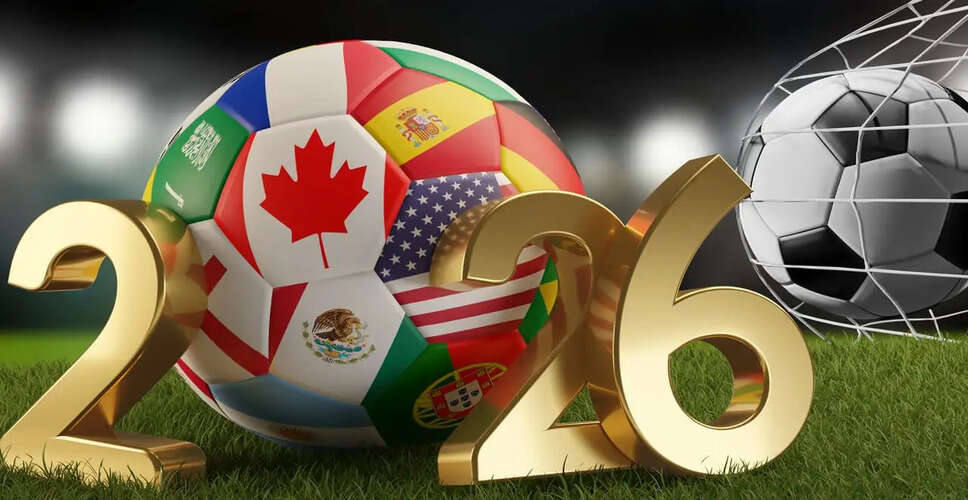
As the countdown to football's premier event continues, discussions have taken a surprising political twist. With the tournament approaching in North America, there is a growing movement advocating for a boycott of the FIFA World Cup 2026.
The United States will host the majority of the matches, alongside Canada and Mexico. However, global political issues, immigration policies, and security concerns are influencing a debate that typically celebrates unity through sport.
Increasing Calls for a Boycott
The push for a boycott gained traction following comments made by US President Donald Trump regarding the potential annexation of Greenland. This sparked conversations among football officials in Germany and France about the possibility of their nations abstaining from the tournament.
Currently, both countries' football federations have rejected the boycott idea, but the discussions highlight how political issues are infiltrating the realm of sports.
Concerns have escalated due to recent events in Minneapolis and ongoing discussions about immigration enforcement in the US. Many international fans depend on tourist visas to attend major events, making immigration a sensitive topic during the World Cup.
Security measures are expected to involve US Immigration and Customs Enforcement (ICE), whose director has not committed to halting operations during the tournament. Human rights advocates worry that visitors who protest or criticize the US government may face detention.
FIFA's Response to Concerns
Former FIFA president Sepp Blatter has expressed his worries about the political climate surrounding the tournament, particularly regarding the treatment of political dissenters and the harsh immigration policies in the US.
Also read: FIFA Reassures Fans After Cartel Violence Sparks Concerns Over Mexico’s World Cup Hosting Safety
Tournament Preparations Amid Controversy
Despite the controversies, FIFA officials remain optimistic. President Gianni Infantino recently stated that preparations are progressing well and that interest in the tournament is at an all-time high.
Infantino noted that ticket demand has been extraordinary, with 508 million requests for approximately seven million available tickets within just four weeks. This interest spans over 200 countries, indicating strong global enthusiasm for the event despite the surrounding political debates.
He also mentioned that the expanded 48-team tournament could generate over $11 billion in revenue for global football and have an economic impact of around $30 billion in the US.
Security Concerns in Host Nations
While discussions about boycotts have primarily focused on US politics, security issues have also arisen in Mexico, another host nation.
Recent violence linked to the death of Mexico's most wanted criminal has raised alarms in areas near World Cup host cities. Infantino, however, sought to reassure fans, stating, "Everything's good. It's going to be spectacular."
The violence followed the army's operation against Nemesio "El Mencho" Oseguera, the leader of the Jalisco New Generation Cartel, resulting in widespread attacks and chaos in several regions.
Disturbing Discoveries Near Host Venues
In January, calls for a boycott intensified following the discovery of over 500 bags containing human remains in Guadalajara, a host city for the tournament. These findings are particularly alarming as some sites are located just miles from Estadio Akron, one of the venues for World Cup matches.
Authorities have identified at least 20 suspected grave locations, with investigations ongoing. Jaime Aguilar from the Guerreros Buscadores de Jalisco highlighted the grim reality of disappearances in the state, stating, "In Jalisco, the missing are made to vanish."
Assurances from Officials
Despite the concerns, Mexican authorities assert that the tournament can be held safely. President Claudia Sheinbaum has guaranteed that there is "no risk" for fans and tourists attending the event.
Infantino echoed this sentiment, expressing FIFA's complete confidence in Mexico and its officials to ensure a successful tournament. Preparations are on track, including the upcoming inauguration of the renovated Estadio Azteca.
Historical Context of Boycotts in Sports
While calls for a boycott of the 2026 FIFA World Cup are gaining traction, historical precedents show that such actions are rare in international sports. Typically, governing bodies opt for bans or disqualifications rather than voluntary withdrawals.
Notable examples include the exclusion of several countries from the 1920 Summer Olympics due to their involvement in World War I and the long-standing ban on South Africa during the apartheid era.
The Likelihood of a Boycott
Despite the rising rhetoric, a coordinated boycott of the World Cup 2026 seems unlikely at this stage. No major football federation has officially supported the idea, and significant political backing would be necessary for a boycott to materialize.
Additionally, the close relationship between Infantino and Trump may limit the impact of boycott threats on policy decisions or tournament logistics.
Navigating Between Football and Politics
For years, the World Cup has been promoted as a unifying global event that transcends geopolitical issues. However, the lead-up to the 2026 tournament illustrates the challenges of separating sports from the political landscape.
As tensions continue to rise, calls for a boycott may become more pronounced. Nevertheless, the world's most-watched sporting event appears poised to proceed as planned, amidst intense scrutiny and ongoing debates about the intersection of football and global politics.