
Political Tensions Erupt at JNU Following Supreme Court Ruling
Political tensions flared at Jawaharlal Nehru University after the Supreme Court denied bail to Umar Khalid and Sharjeel Imam. This led to provocative chants against Prime Minister Modi, drawing reactions from political leaders and student organizations. The incident highlights ongoing debates about campus politics and the implications of judicial decisions. As the situation unfolds, calls for accountability and discussions on free expression intensify within the university community.
| Jan 6, 2026, 23:41 IST
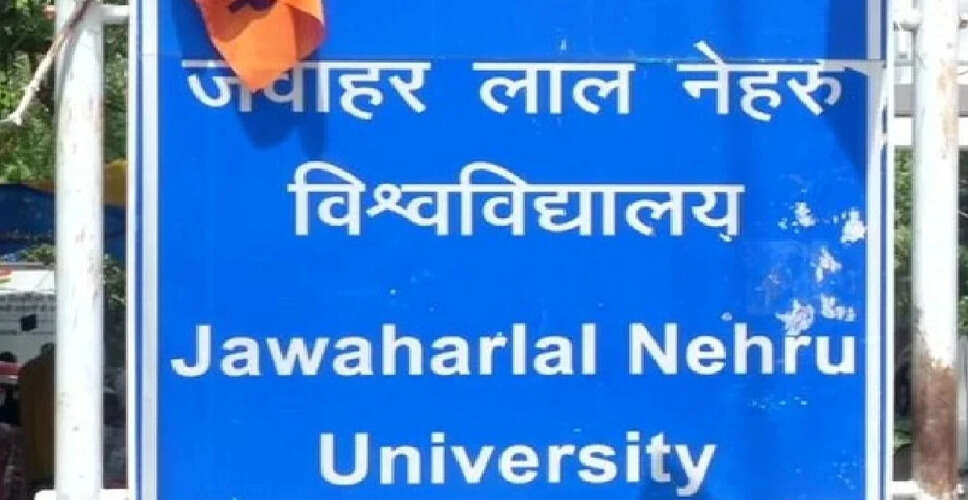
Political Unrest at Jawaharlal Nehru University
On Monday night, the campus of Jawaharlal Nehru University (JNU) in Delhi became a hotspot for political slogans and controversy once again. This unrest followed the Supreme Court's decision to deny bail to student activists Umar Khalid and Sharjeel Imam, leading to provocative chants against Prime Minister Narendra Modi in the Sabarmati hostel area.
Reports indicate that these slogans were raised between 9 PM and 10 PM. Notably, Danish, the joint secretary of the left-leaning JNU student union, and secretary Sunil were present at the scene. Sources suggest that members from other leftist student organizations also participated in the chanting, which included threatening phrases associated with the Prime Minister's name.
In response to the incident, Delhi government minister and BJP leader Manjinder Singh Sirsa remarked that if protests arise against the Supreme Court's ruling, it indicates a troubling mindset. He accused those involved of harboring anti-national sentiments and using derogatory language against the Prime Minister, revealing their true intentions.
It is important to note that Umar Khalid and Sharjeel Imam have been incarcerated for the past five years, facing allegations of being part of a 'larger conspiracy' behind the Delhi riots of 2020. The Supreme Court bench, comprising Justices Arvind Kumar and Prasanna B. Varale, stated on Monday that the evidence presented by the prosecution establishes a prima facie case, thus invoking legal restrictions on bail under Section 43D(5) of the Unlawful Activities (Prevention) Act (UAPA).
The court further clarified that the evidence available at this stage does not support granting bail, indicating that both individuals played significant roles in planning, organizing, and providing strategic direction. However, five other accused individuals—Gulfisha Fatima, Meera Haider, Shifa Ur Rahman, Mohammad Salim Khan, and Shadab Ahmed—were granted bail by the Supreme Court in the same case.
The court emphasized that the roles of all accused cannot be considered identical. The bench noted that the circumstances surrounding Umar Khalid and Sharjeel Imam differ from those of the other accused, necessitating a distinct evaluation of each individual's role when considering bail.
Meanwhile, the Akhil Bharatiya Vidyarthi Parishad (ABVP) has taken a strong stance against the chanting. Praveen K. Piyush, the secretary of ABVP at JNU, stated that leftist students have directed slogans against the RSS, ABVP, and the Prime Minister. The organization has called for the university administration and relevant authorities to file complaints and take action against those responsible.
JNU has historically been a center for political and ideological clashes. This recent incident has reignited discussions about campus politics, the limits of free expression, and the atmosphere following judicial decisions.