
Political Stalemate in Israel: Opposition Parties Unite to Challenge Netanyahu
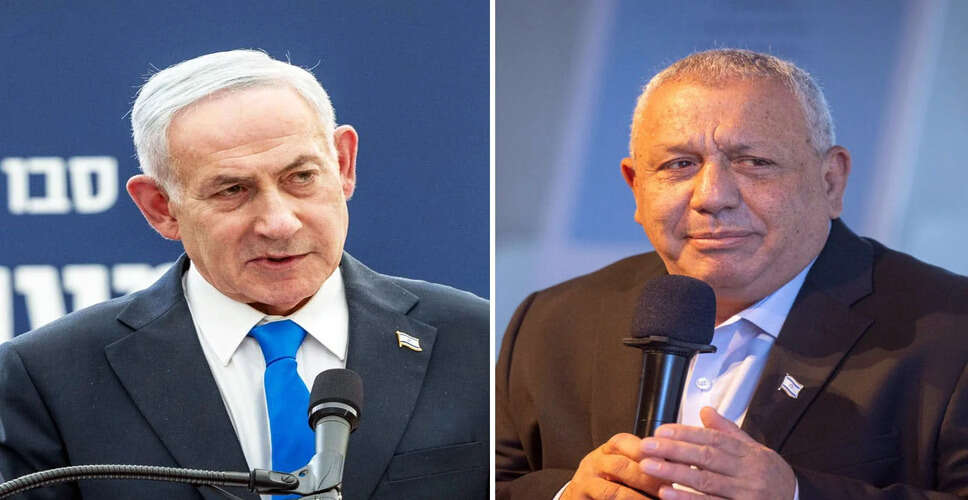

Political Landscape Post-Election
Jerusalem: In a significant development following last week's elections, leaders from various Israeli political parties opposing Prime Minister Benjamin Netanyahu convened for their inaugural meeting. The nation currently faces a political impasse, as the election results did not yield a decisive victory for any faction.
During this meeting, the opposition coalition reached a consensus to endorse former general Gadi Eisenkot, who heads the Yashar party, as their candidate to initiate coalition negotiations.
In Israel, the president, who primarily serves a ceremonial role, is responsible for selecting which party will be tasked with forming a majority coalition of 61 seats in the Knesset following the elections.
Preliminary results disclosed by election authorities on Friday indicated that Netanyahu's coalition secured 53 seats in the 120-member Knesset, a significant drop from the 68 seats it held at the height of the previous parliament. Meanwhile, the main opposition garnered 48 seats, and parties led by Arab representatives obtained the remaining 19.