
Political Funding Controversy Surrounds Gujarat's Registered Parties

Political Donations Spark Debate in Gujarat
A political controversy has emerged regarding six registered but unrecognized political parties (RUPPs) in Gujarat, which reportedly received substantial donations. According to a recent media investigation, these parties amassed approximately ₹1,700 crores in funding during the fiscal year 2023-24. Concerns have been raised about the significant donations received by certain parties in previous years as well.
Discrepancies in Donations and Electoral Participation
The issue has gained traction as these six parties fielded only 15 candidates in the upcoming 2024 Lok Sabha elections. In contrast, five national parties, excluding the BJP, presented 893 candidates during the same period.
The six Gujarat-based RUPPs include the Aam Janmat Party, Bharatiya National Janadal, Garib Kalyan Party, New India United Party, Satyavadi Rakshak Party, and the Freedom of Expression Party. Four of these parties are reported to have their registered offices in the Naroda area of Ahmedabad.
Questions Raised About Funding Sources
Media reports have highlighted discrepancies between the electoral activities of these parties and their declared financial figures. There is particular concern regarding how parties that nominated so few candidates could receive such large sums in donations and how these funds were utilized.
Sanjay Singh Questions Funding Justifications
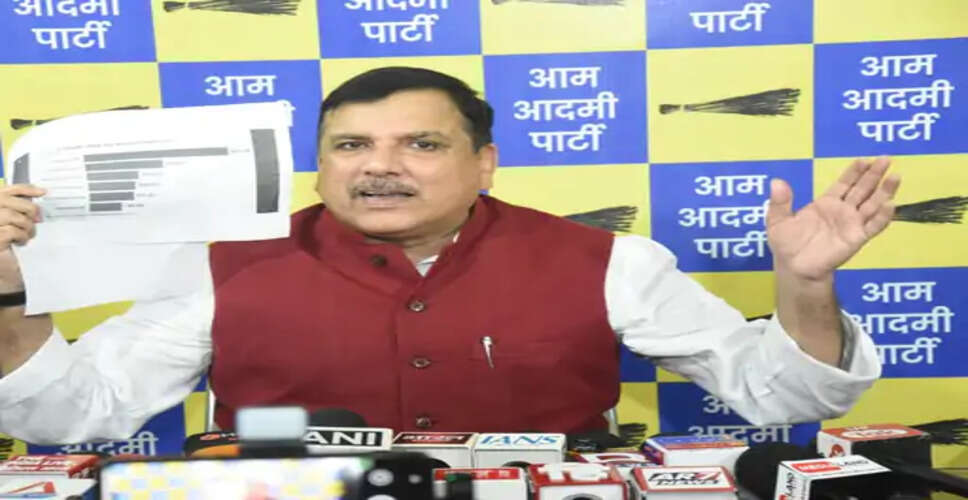
Sanjay Singh, a Member of Parliament from the Aam Aadmi Party, has also raised questions about this issue. He inquires how these parties justified receiving such substantial donations when they only fielded 15 candidates in the Lok Sabha elections.
Transparency in Political Funding Under Scrutiny
While receiving large donations is not inherently illegal, the financial disclosures of political parties can be scrutinized by relevant authorities under the rules governing political funding and expenditures.
Aam Janmat Party at the Center of Attention
Among the six parties, the Aam Janmat Party reportedly received the highest donations in the fiscal year 2023-24, despite having fielded only one candidate in the Lok Sabha elections. This has intensified public debate regarding the relationship between the amount of donations and the parties' electoral activities.
Tax Benefits Fueling Controversy
The legal tax benefits afforded to registered political parties have also contributed to the ongoing discussion. The media investigation noted that some parties received significant donations while maintaining a limited electoral presence.
Calls for Greater Transparency in Political Funding
Experts emphasize the need for transparency in political funding, questioning how information regarding donations and their usage can be made clearer to the public.
Future Implications for Political Funding Oversight
The donation figures associated with these six parties have sparked a renewed debate about monitoring political funding. Following Sanjay Singh's inquiries, this issue may gain further political traction.
Currently, it is inaccurate to claim that these six parties collectively received ₹5,500 crores in donations during the same period. The latest BBC investigation indicates that the figure for the fiscal year 2023-24 is around ₹1,700 crores. Therefore, any claims of a larger total should be based on aggregated data from different years and parties.
Ultimately, the core issue extends beyond the donation amounts; it involves understanding the connections between political party funding, electoral activities, and financial transparency. The responses from political parties and electoral bodies in the coming days will be crucial.