
Political Dynasties Spark Controversy Across Indian States
The Ongoing Debate on Political Nepotism
Political nepotism is not a new phenomenon in India. It is common to see politicians promoting their family members within the political arena. Occasionally, disputes arise within families over claims to political legacies. Recently, incidents in several states have reignited discussions about nepotism in democracy. For instance, allegations have surfaced against Jammu and Kashmir's Chief Minister Omar Abdullah, claiming he is grooming his sons for political roles. Meanwhile, in Telangana, a power struggle has erupted within the family of BRS leader KCR over control of the main opposition party.
Dynasty Politics in Jammu and Kashmir
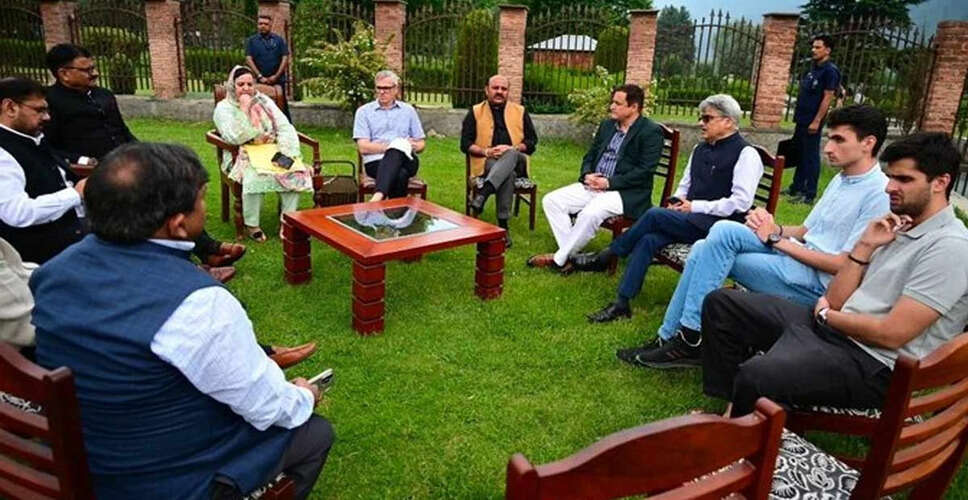
In Jammu and Kashmir, a viral image of Chief Minister Omar Abdullah with his sons, Zamir and Zahir, alongside top state officials has stirred political circles. The opposition party, PDP (People's Democratic Party), has accused the National Conference of "openly promoting nepotism." PDP spokesperson Mohit Bhan stated, "What we are witnessing is not democracy; it is blatant nepotism. A royal family treats governance as a personal estate while institutions meant to uphold democratic values remain silent." This photo was taken during a cabinet meeting in Pahalgam, although Abdullah's sons were not part of any official discussions.
Family Conflicts in Telangana's BRS
In Telangana, K. Kavitha, a member of the Legislative Council from BRS, has publicly criticized internal party critics, alleging attempts to merge the party with the BJP. She indirectly targeted her brother, K.T. Rama Rao, suggesting that a merger proposal was presented to her while she was imprisoned last year in connection with a money laundering case, which she firmly rejected. During informal discussions with reporters, Kavitha questioned why party leaders did not defend her when her name was tarnished in social media and local newspapers. She emphasized that the BRS should not be handed over to the BJP, which she accused of attempting to exploit Telangana's resources.
Political Turmoil in Tamil Nadu
In Tamil Nadu, Dr. S. Ramadas, founder of the Pattali Makkal Katchi (PMK), shocked many by admitting he made a mistake by helping his son, Dr. Ambumani Ramadas, become a central minister, going against his principles. This statement followed Ambumani's recent comments questioning why his father removed him from the party presidency. Ramadas announced that he would take full control of the party, leaving Ambumani stunned, prompting protests from some supporters demanding his reinstatement. Despite attempts to reconcile, Ramadas remained firm in his decision, claiming Ambumani hindered the party's growth.
The Broader Implications of Political Dynasties
The ongoing conflicts between Ramadas and his son echo similar power struggles seen in Uttar Pradesh, where Akhilesh Yadav ousted his father, Mulayam Singh Yadav, to become the national president of the Samajwadi Party. Similar battles for political legacy have also been observed within the Thackeray and Pawar families in Maharashtra. While democracy ideally should not accommodate nepotism, it remains a stark reality in Indian politics.