
Political Dynamics Surrounding Delimitation in India's Parliament

Delimitation Takes Center Stage in Parliament
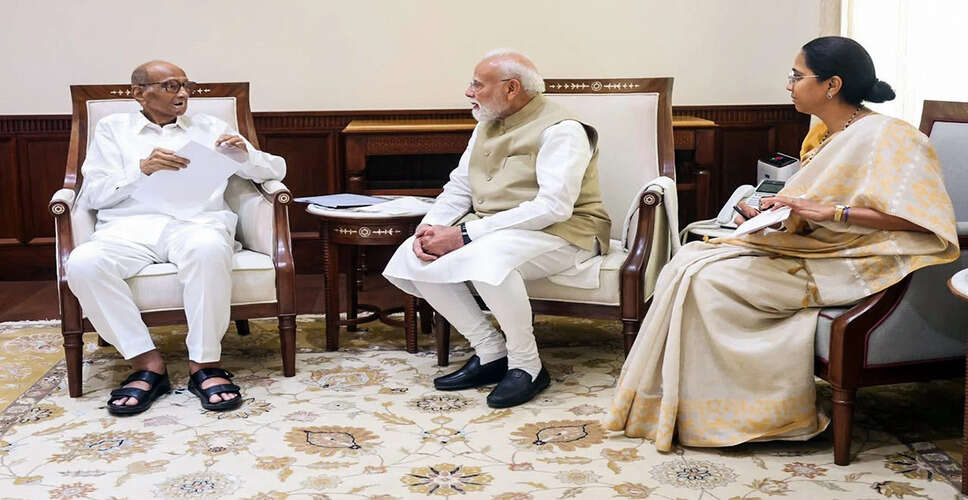
As the monsoon session of Parliament approaches its conclusion, the topic of delimitation has resurfaced as a focal point in Indian politics. The meeting between MPs from Sharad Pawar's faction, led by Supriya Sule, and Prime Minister Narendra Modi at his residence is perceived as more than just a discussion about Maharashtra's drought, irrigation, and regional demands. Although direct discussions regarding the delimitation bill were denied post-meeting, political implications are being scrutinized. There have been prior indications that Pawar's faction might support the government's proposal based on the final form of the bill and conditions such as a 50% increase in Lok Sabha seats across all states.
Strategic Political Maneuvering by the Modi Government
This scenario reveals the underlying political strategy of the Modi administration. For the government, delimitation is not merely a legislative matter; it poses a significant constitutional question that could shape future electoral representation. Efforts to soften the stance on the FCRA amendment bill and to build broad consensus on delimitation are being viewed as part of a larger political equation rather than isolated events. Sources indicate that parties opposing the current form of the FCRA bill include DMK and NCP(SP), both of which are seen as potential dialogue partners regarding delimitation.
FCRA Bill's Absence from the Agenda
The decision not to include the FCRA bill in today's Lok Sabha agenda further supports this strategic calculus. Reports suggest that the government aims to avoid immediate confrontation over contentious FCRA provisions while keeping open lines of political dialogue with parties that may be crucial for addressing significant constitutional issues like delimitation. However, another possibility is that the government desires a thorough debate on the bill, making it premature to interpret this as evidence of a definitive political deal.
DMK's Position on Delimitation
The DMK's stance is particularly noteworthy. The party has consistently raised concerns about representation for southern states in the context of delimitation. Recently, DMK MP Kanimozhi reiterated the party's commitment to protecting Tamil Nadu's representation and its demand for 'Fair Delimitation.' The party also pointed out that the government has not made any official announcement regarding the introduction of the bill in the current session, nor has a revised draft been presented.
Political Calculations and Future Implications
Thus, it would be premature to conclude that the MK Stalin government has aligned itself with the center. However, there is a significant difference between closing doors in politics and leaving room for dialogue. Given that the delimitation issue is tied to the politics of the north versus the south, DMK's position could be crucial. If the central government can devise a formula that addresses the concerns of Tamil Nadu and other southern states while maintaining a balance in representation, it could potentially fracture the current political opposition.
Pawar's Faction's Support Remains Uncertain
The situation with Sharad Pawar's faction also requires careful interpretation. While political speculation has intensified regarding the meeting with the Prime Minister, Sule has clarified that the party will determine its position only after the bill is presented. This indicates that Pawar's support is not yet confirmed but remains a possibility.
Opposition Unity Under Scrutiny
Nonetheless, this development poses a test for the BJP regarding opposition unity. Conversations between Rahul Gandhi and Union Parliamentary Affairs Minister Kiren Rijiju about the stalemate, including delimitation, have been described by the government as 'constructive,' signaling that despite political differences, avenues for dialogue remain open.
Increasing Political Activity in Parliament
Today, the proceedings in both houses of Parliament were disrupted due to uproar, yet political activities surrounding delimitation appear to be intensifying as the session nears its end. If the government can garner sufficient political consensus for the bill during this session, it would mark a significant parliamentary achievement. However, a more pressing question remains: can it create an agreement that alleviates the north-south representation dispute?
Modi Government's Broader Political Strategy
It is evident that the Modi administration has transformed delimitation from a mere question of seat numbers into a focal point for extensive political dialogue. Efforts to engage with Sharad Pawar's faction and address DMK's concerns are indicative of this larger equation. Should the BJP successfully navigate this political landscape, the opposition will face challenges not only in opposing a bill but also in responding to shifting political and electoral dynamics. Ultimately, the key takeaway is that the Modi government has integrated the art of maneuvering through political crises into its strategy, favoring dialogue over confrontation and seeking potential allies within opposing factions.