
Political Debate Intensifies Over Vande Mataram's Historical Context
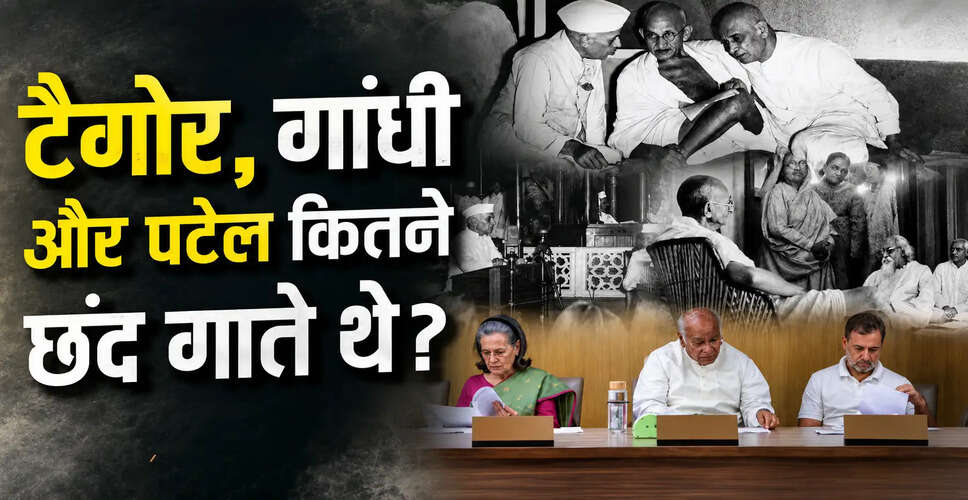

Political Tensions Surround Vande Mataram
The political discourse between Congress and the BJP regarding the singing of Vande Mataram has gained momentum once again. The Congress Working Committee has reaffirmed its commitment to the 1937 decision to sing the first two stanzas of the song at its events. The party argues that this is not a new decision but a historical one made during the freedom struggle.
What Happened in 1937?
In 1937, Congress faced the question of which part of Vande Mataram should be sung at public and national events. The initial two stanzas describe the natural beauty of the motherland and reverence for it, while the later stanzas contain explicit references to Hindu deities. Consequently, the Congress leadership deemed the first two stanzas appropriate for public national events.
This decision was not made in secrecy but was the result of formal discussions within the Congress Working Committee. Documents from Jawaharlal Nehru also reference the 1937 decision.
What Role Did Gandhi Play?
Mahatma Gandhi acknowledged the significance of Vande Mataram but advocated for inclusivity regarding national symbols. During the discussions in 1937, Gandhi supported the public singing of the initial two stanzas.
Thus, Gandhi's stance was not to reject the song but to select a part that could garner broad consensus for national events.
What Was Nehru's Contribution?
At that time, Jawaharlal Nehru was one of the prominent leaders of Congress and played an active role in discussions about the national use of Vande Mataram. He recognized the song's historical importance in the freedom movement but also emphasized the need for a national song that could be accepted by various communities in the country.
Nehru sought the opinion of Rabindranath Tagore in this context.
What Advice Did Tagore Offer?
Rabindranath Tagore had a long-standing connection with Vande Mataram, having sung it at the Congress session in Calcutta in 1896. In 1937, he deemed the first two stanzas suitable for national use, believing they depicted the beauty of the motherland and nature, making them appropriate for use as a national song.
What Was Patel's Role?
Sardar Vallabhbhai Patel was also among the key leaders involved in the 1937 Congress Working Committee discussions. Historical records indicate that prominent leaders such as Nehru, Patel, Rajendra Prasad, Maulana Azad, and others were present at that time. According to available details, the proposal was advanced with broad consensus.
Therefore, stating that only one leader determined the two stanzas of Vande Mataram in 1937 oversimplifies the entire event.
Why Is the Controversy Resurfacing Now?
In 2026, following discussions initiated by the central government regarding the complete form and historical significance of Vande Mataram, Congress has reiterated its previous stance. The party asserts that only the first two stanzas will be sung at its events, as per the tradition established in 1937.
Meanwhile, the BJP has criticized Congress's decision, linking it to the party's attitude towards the national song. As a result, Vande Mataram has transformed from merely a cultural issue to once again becoming a center of political debate.
What Was the Situation in 1950?
After independence, on January 24, 1950, Rajendra Prasad, the President of the Constituent Assembly, acknowledged the historical significance of Vande Mataram, stating it should be given equal respect alongside Jana Gana Mana. Thus, Vande Mataram received a special status as part of the historical legacy of the freedom movement.
This means that the 1937 decision was not a rejection of Vande Mataram. It was a consensus decision regarding the use of its first two stanzas at national events—an agreement that involved Gandhi, Nehru, Patel, Tagore, and many other Congress leaders. Today, this historical decision has reignited political debate.