
Political Debate Erupts Over Emergency Content in NCERT Textbooks
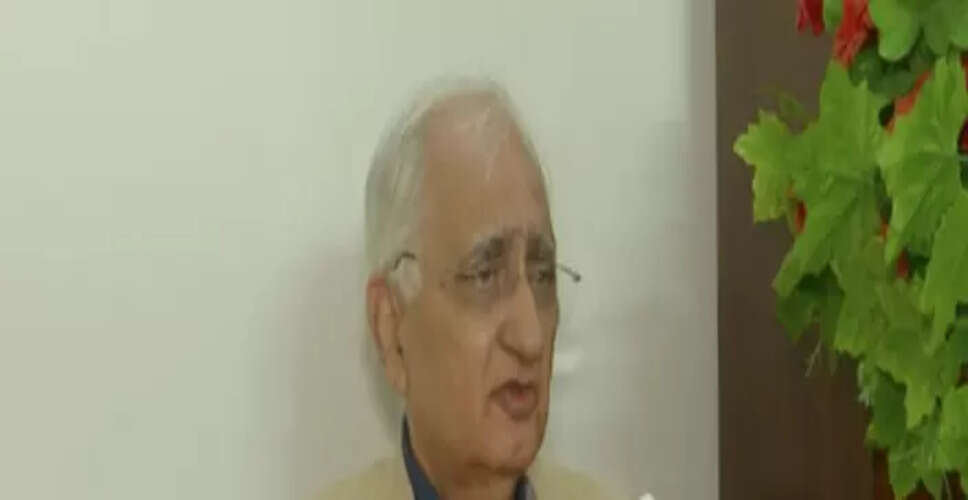

Controversy Surrounds NCERT Textbook Changes
Photo: @ians_india/X
New Delhi, June 25: The recent addition of a section on the Emergency in the Class 9 NCERT textbook has sparked a significant political discussion. Opposition leaders expressed their views on Thursday, asserting that while they support the inclusion of this topic, it is crucial to present the full historical context.
In contrast, the ruling party praised this decision, emphasizing the importance of educating future generations about what they term a dark period in India's democratic journey.
Senior Congress figure Salman Khurshid acknowledged the government's right to determine NCERT textbook content but insisted that historical events must be depicted comprehensively.
"Indeed, they possess the authority to include chapters and questions in NCERT textbooks. The core issue lies not in the inclusion itself but in how the information is presented and the accompanying commentary. The historical fact of the Emergency cannot be denied, and that reality must be acknowledged," Khurshid stated.
He further questioned whether the reasons for the Emergency and its consequences were being adequately addressed.
"Are we discussing its outcomes? Is there any mention of the elections that followed the Emergency, the Congress party's defeat in those elections, and its subsequent return to power with a two-thirds majority? If we are teaching historical facts, the complete narrative should be shared, avoiding selective emphasis or 'cherry-picking'," he added.
NCP-SP national spokesperson Anish Gawande also supported the inclusion of the Emergency in educational materials but raised concerns about the removal of other significant topics from the curriculum.
"The Emergency should certainly be part of NCERT textbooks, but why are other subjects being excluded? Chapters about individuals who sacrificed their lives for the nation should also remain in the curriculum," he remarked.
Congress MLA Vijay Wadettiwar accused the government of attempting to distort history and misrepresent facts. He noted that the Emergency was officially declared and not enacted through any covert agenda.
"What we are witnessing today resembles an undeclared Emergency. Citizens are unable to freely criticize the government or voice dissent. This is a strategy by the BJP government to mislead the younger generation," Wadettiwar asserted.
He emphasized that today's youth have access to artificial intelligence and various information sources, enabling them to verify facts independently.
RJD MP Sudhakar Singh offered a pragmatic perspective, suggesting that governments often tailor educational content to reflect their viewpoints.
"The ruling government will present history from its perspective; this is not unusual. When we assume power, we will also implement changes. That is the nature of governance," he stated.
Conversely, leaders from the ruling coalition defended the NCERT's decision.
Shiv Sena spokesperson Shaina N.C. characterized the Emergency as a dark chapter in Indian history, stressing the importance of educating young people about how democratic rights were compromised during that time.
"The Emergency was a grim period in India's history. Understanding how freedom of expression, fundamental rights, press censorship, and other civil liberties were undermined is crucial for today's youth. Many individuals sacrificed their lives for India to evolve into a developed democracy, and it is vital for the younger generation to be aware of this," she explained.
Union Education Minister Dharmendra Pradhan endorsed the chapter's inclusion, asserting that the NCERT made the right choice.
"This is the correct approach. NCERT has made a commendable decision. Future generations should learn about and comprehend the dark chapter of the Emergency to prevent such circumstances from recurring," he stated.
BJP Jammu President Sat Paul Sharma echoed similar sentiments, emphasizing the need for the younger generation to grasp both India's post-Independence progress and the challenges it encountered.
"This was a dark mark on our democracy. The suppression of free speech was deeply concerning. The film industry faced severe oppression, with movies being banned and censored. For instance, the film 'Aandhi' was prohibited simply because its lead actress resembled a prominent national figure, and it was believed that the story was based on her. Additionally, Kishore Kumar's songs were banned merely because he declined to perform at certain government-sponsored events."