
Political Controversy Arises Over Temporary Portfolio Redistribution During Minister's Brazil Visit
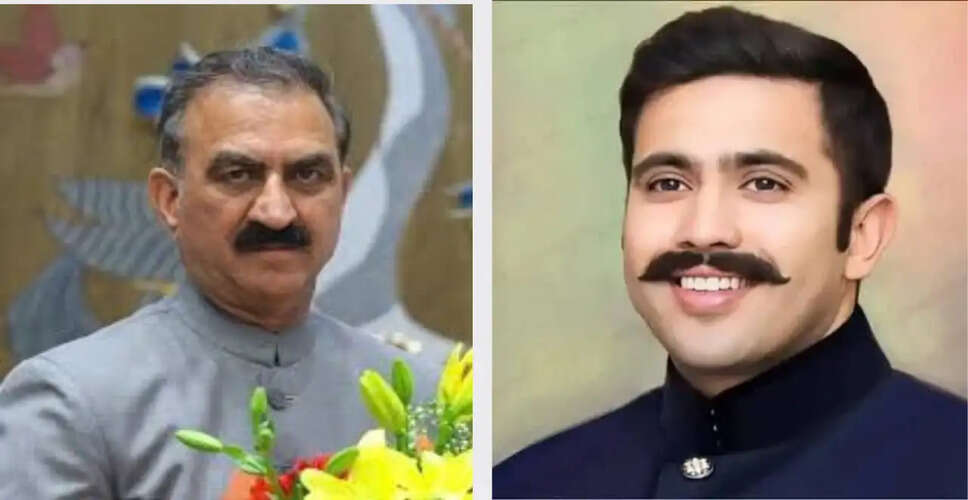

Political Questions Emerge from Minister's Foreign Trip
Shimla: The recent temporary reassignment of two significant portfolios held by Himachal Pradesh minister Vikramaditya Singh during his trip to Brazil has sparked a political debate that the government may find challenging to navigate: Why is this happening now?
As Vikramaditya Singh departed for Brazil on September 20 for an eight-day engagement, the state government designated Rural Development Minister Anirudh Singh to oversee the Public Works Department and Rajesh Dharmani to manage Urban Development until Singh's return on September 28.
The government has defended this decision as a necessary administrative step to ensure that essential tasks and files do not remain unresolved during the minister's absence.
However, the political implications extend beyond this temporary arrangement.
A central question being raised in political circles is whether this has been the standard protocol of the Sukhu administration whenever a Cabinet minister is abroad.
Was this practice consistently applied in previous instances?
Several ministers from Himachal Pradesh have traveled internationally for official duties, conferences, and other engagements in the past.
This leads to a straightforward inquiry for Chief Minister Sukhvinder Singh Sukhu:
When other ministers traveled overseas, were their departments also formally assigned to other Cabinet members during their absence?
If the answer is affirmative, the government can point to a consistent administrative practice.
Conversely, if the answer is negative, another question arises:
What distinguishes this situation from previous ones?
The government could clarify the matter by providing records of arrangements made during prior foreign trips by ministers.
This issue is particularly pertinent as the current arrangement involves two of the state's most crucial departments.
Importance of PWD and Urban Development
The Public Works Department plays a vital role in a hilly state, managing roads, bridges, and major infrastructure projects. Urban Development addresses essential matters related to urban planning, civic infrastructure, and local governance.
Thus, the temporary reassignment of these departments has garnered significantly more political scrutiny than a typical administrative decision.
The government order does not imply any permanent changes to these portfolios; the additional responsibilities are strictly linked to Vikramaditya Singh's absence.
Nevertheless, the timing has raised eyebrows, especially since the departments have been assigned to ministers who have previously engaged in public political disputes with Singh.
While this history does not inherently suggest that the current decision was politically motivated, it does provide context for the political dimension of the order.
Focus on Precedent, Not Personalities
The controversy could be resolved without resorting to political rhetoric.
The government simply needs to address three key questions:
Was the responsibility of a Cabinet minister's departments transferred to other ministers during previous foreign trips?
If so, was this procedure consistently applied?
If not, what specific administrative rationale necessitated the transfer of Vikramaditya Singh's portfolios this time?
These inquiries gain importance given that the visit lasts only eight days.
If the goal was merely to maintain continuity in government operations, the administration must clarify whether similar measures were deemed necessary in comparable situations in the past.
A Potential New Administrative Precedent?
This recent development could potentially set a new precedent for the functioning of the state Cabinet.
If ministers traveling outside the state or country are routinely relieved of their departmental responsibilities during their absence, this decision may mark the beginning of a formal administrative practice.
However, if such a mechanism has not been consistently applied in the past, the government faces a clear political question regarding why it was deemed necessary in this instance.
Currently, the government asserts that the arrangement is temporary and aimed at ensuring the uninterrupted handling of official duties.
Nonetheless, the political discourse surrounding this issue is unlikely to dissipate soon.
Looking Ahead to September 28
Vikramaditya Singh is expected to return to Himachal Pradesh on September 28. The developments following his return will reveal whether this controversy remains confined to an eight-day administrative arrangement or escalates into further friction within the ruling Congress party.
At this point, the most pressing question is not who has taken over Vikramaditya Singh's departments.
It is much simpler:
Why was this arrangement deemed necessary now, and was the same protocol followed when other ministers traveled abroad?
The answer lies with the Chief Minister and the government.