
Political Controversy Arises as Modi Government Allows Chinese Firms in Power Projects
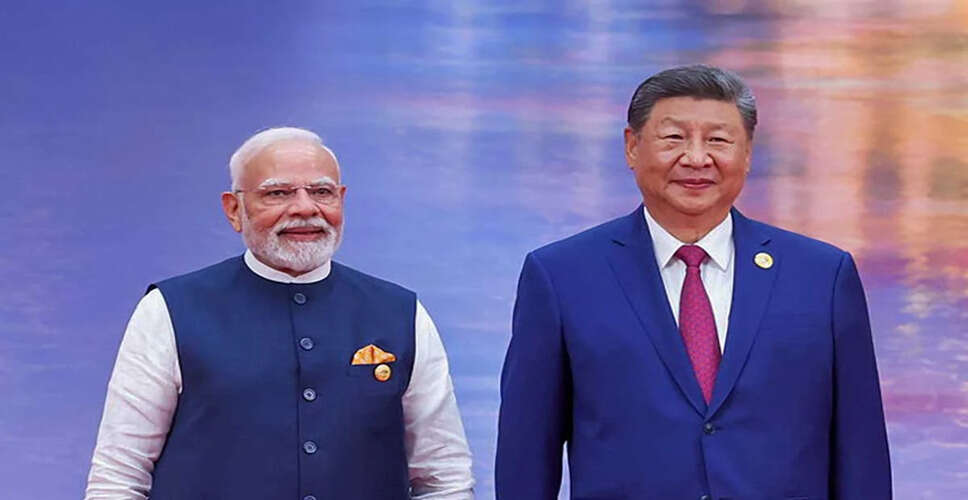

Modi Government's Controversial Decision
The Modi administration has ignited a political debate by permitting four Chinese electric equipment companies to participate in government tenders for significant power projects in India. Under an order from the Finance Ministry dated June 24, TBEA Energy, Nanjing Electric India, New Northeast Electric India, and Taikai Electric India have been granted a special exemption for two years. The government argues that this decision is essential to meet the rapidly increasing electricity demand and to expedite renewable energy projects. However, the Congress party has raised concerns, labeling it a serious issue related to national security and China's policy, questioning the central government's approach towards China despite ongoing border disputes and security issues.
Energy Ministry's Request and Government's Justification
According to reports, the Energy Ministry had requested the Finance Ministry in January to provide relief to companies that have established production units in India and are involved in critical power infrastructure projects. Following this request, the special exemption was granted. The order specifies that this permission will remain effective for two years from the date of issuance and will not set a precedent for other companies.
Political Backlash from Congress
This decision has sparked political controversy, with Congress strongly criticizing the government's move. Party General Secretary Jairam Ramesh accused the central government of gradually showing favoritism towards China. He pointed out that this decision comes at a time when the border dispute between India and China remains unresolved, and the trade deficit with China continues to grow. He also highlighted security concerns.
Concerns Over China's Stance
In a statement on social media, Jairam Ramesh remarked that China's attitude regarding issues related to Arunachal Pradesh, the Brahmaputra River, and Eastern Ladakh has not changed. He referenced the violent clashes in the Galwan Valley in 2020, questioning the government's policy towards China. Congress insists that greater caution should be exercised in such decisions, considering national security and strategic interests.
Historical Context of Tensions
It is worth noting that following the violent clashes between Indian and Chinese troops in Eastern Ladakh in 2020, the Indian government imposed several stringent conditions on Chinese companies. These included mandatory government registration, political approval, and security clearance for any participation in government procurement processes. The aim of these regulations was to mitigate security risks in sensitive areas.
Recent Changes in Investment Rules
However, the central government also relaxed certain foreign direct investment rules in May this year, which is being viewed in conjunction with this decision. Starting May 1, 2026, foreign companies with up to 10% stake from China or Hong Kong, not controlled by Chinese entities, will be allowed to invest in India through an automatic route. The Modi government argues that significant investment is needed in infrastructure, manufacturing, and services, making it essential to facilitate investment flows for economic growth and job creation. The government clarified that strict regulations for companies from India's seven neighboring countries remain in place, and government approval is still mandatory for sensitive matters.
Balancing Economic Needs and Security Concerns
Following the Galwan Valley conflict, investment rules were tightened under Press Note 3 for companies from countries sharing borders with India, including China. Any investment from these nations required government approval. The government later recognized that these rules were also affecting global investors with minor stakes, causing delays in investment proposals. Consequently, in March 2026, the cabinet decided to provide limited relief. However, the opposition claims that the Modi government is softening its stance on China under the guise of economic necessity, while the government maintains that it is a practical step related to investment and industrial development.
Ongoing Diplomatic Engagements
In recent months, diplomatic discussions between India and China have continued. Last month, the 35th meeting of the India-China Border Affairs Consultation and Coordination Mechanism was held in Beijing, where officials from both countries reviewed the situation along the Line of Actual Control and expressed satisfaction with efforts to maintain peace and stability in border areas.
Expert Opinions on the Decision
Experts believe that the Indian government's decision attempts to strike a balance between economic and strategic needs. On one hand, there is a pressing requirement for equipment to meet the growing energy demands and infrastructure projects, while on the other hand, security and border sensitivities with China persist. It will be crucial to observe how the government maintains this balance in the future and whether this decision impacts India-China relations and domestic politics.