
PM Modi Leads Key Cabinet Meeting on Administrative Reforms and Economic Strengthening
In a significant cabinet meeting led by Prime Minister Narendra Modi, key discussions revolved around administrative reforms, economic resilience, and public welfare initiatives aimed at achieving a developed India by 2047. The meeting emphasized the need for simplifying governance and expediting decision-making processes across various ministries. Additionally, the Prime Minister addressed the ongoing crisis in West Asia and its impact on energy supplies, while promoting sustainable energy solutions. The meeting also highlighted recent diplomatic successes from Modi's foreign tours, reinforcing India's strategic partnerships. Overall, the cabinet's commitment to enhancing citizens' lives and facilitating business operations was a central theme.
| May 22, 2026, 11:45 IST
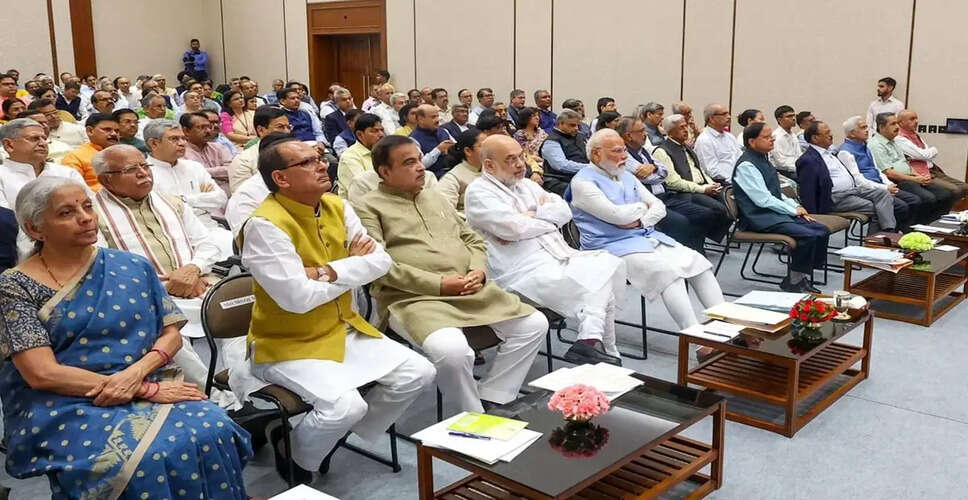

Significant Cabinet Meeting in New Delhi
On Thursday, Prime Minister Narendra Modi chaired a crucial cabinet meeting at Seva Teerth in New Delhi, which lasted for approximately four and a half hours. The discussions focused on administrative reforms, public services, economic resilience, and the vision for a developed India by 2047. The meeting also reviewed recommendations from a committee led by NITI Aayog member Rajiv Gauba, aimed at simplifying governance by reducing unnecessary regulations and procedures.
Focus on Public Welfare
During the meeting, PM Modi emphasized that the government's role should not be to interfere in people's lives unnecessarily but to assist them when needed. He urged ministers and senior officials to concentrate on reforms that would ease the lives of citizens and reduce business hurdles. He reiterated that the vision of a developed India by 2047 is not just a slogan but a commitment that must be pursued with a mission-oriented approach.
Ministries Present Their Plans
Nine key ministries, including Agriculture, Environment, Commerce, Labor, Energy, Road Transport, Health, External Affairs, and Corporate Affairs, presented their reform initiatives and future action plans. Cabinet Secretary T.V. Somanathan provided an overview of the reforms undertaken by various ministries. The Prime Minister instructed ministries to expedite file processing and eliminate unnecessary delays in decision-making. He also stressed the importance of completing pending projects promptly and avoiding unnecessary disputes.
Addressing Performance and Challenges
Sources indicate that the meeting highlighted ministries that excelled in file processing and administrative tasks, while those with weaker performances were directed to improve and strengthen their implementation mechanisms. PM Modi stated that the primary goal of reforms should be public welfare, ensuring that governance is designed to provide greater convenience to the general populace.
Discussion on Global Issues
The ongoing crisis in West Asia was also a significant topic during the meeting. This crisis has increased pressure on energy supplies and affected gas availability, leading to rising prices in the international market, which is impacting the Indian economy and the value of the rupee. The government is working on measures to enhance supply and strengthen the economy in response to this situation, with expectations of further economic reforms to boost domestic manufacturing and restore confidence among foreign investors.
Promoting Sustainable Energy
PM Modi highlighted the domestic cooking gas crisis and stressed the need to promote biogas production. He pointed out that enhancing indigenous and sustainable energy sources is essential for strengthening the rural economy and reducing dependence on imported fuels. The Prime Minister also emphasized the importance of communicating the government's achievements over the past 12 years to the public, urging ministers to engage with citizens to share information about government schemes and accomplishments. The government believes that significant progress has been made in infrastructure, digital services, foreign policy, energy, trade, and social welfare in recent years.
Updates on Recent Foreign Visits
During the meeting, External Affairs Minister S. Jaishankar provided insights into PM Modi's recent successful visits to five countries. He detailed the agreements and diplomatic achievements made during these trips. Ministers congratulated the Prime Minister on this successful tour and the significant victory of the Bharatiya Janata Party in the West Bengal elections.
Highlights from the Prime Minister's Foreign Tour
PM Modi returned to New Delhi on Thursday after completing his five-nation tour, which began on May 15, aimed at strengthening India's relations in energy, defense, trade, and critical minerals. In Abu Dhabi, several agreements were signed between India and the UAE regarding strategic petroleum reserves, long-term cooking gas supply, defense, and navigation. The Gulf nation also announced a $5 billion investment in India. PM Modi discussed various issues, including the situation in West Asia, with UAE President Mohammed bin Zayed Al Nahyan.
Strengthening Ties with the Netherlands and Sweden
During his visit to the Netherlands, India signed 17 agreements related to defense, critical minerals, and other sectors. PM Modi and Dutch Prime Minister Mark Rutte elevated bilateral relations to a strategic partnership and discussed disruptions in global oil supply. In Sweden, after talks with Swedish Prime Minister Ulf Kristersson, both nations upgraded their relations to a strategic partnership and announced a comprehensive action plan focused on artificial intelligence, innovation, trade, and cultural cooperation.
Nordic Summit and Honors Received
At the India-Nordic Summit held in Oslo, PM Modi met with leaders from Iceland, Finland, and Denmark. India and Norway initiated a green strategic partnership focusing on clean energy, digital technology, navigation, and Arctic research. In Rome, PM Modi and Italian Prime Minister Giorgia Meloni decided to elevate bilateral relations to a special strategic partnership. During this foreign tour, PM Modi received several international honors, including Sweden's Royal Order of the Polar Star, Norway's Grand Cross of the Royal Norwegian Order of Merit, and the Agricola Medal from the Food and Agriculture Organization in Italy.
Commitment to Reforms and Governance
It has been reported that during the cabinet meeting, PM Modi reiterated the government's commitment to accelerating reforms aimed at simplifying citizens' lives and enhancing business facilitation. He shared on social media that the cabinet meeting was highly productive, focusing on measures to achieve life facilitation, business ease, and the shared goal of a developed India. Currently, the central cabinet comprises 30 cabinet ministers, five ministers of state with independent charge, and 36 state ministers. At the conclusion of the meeting, the Prime Minister stated that the government's aim is not just economic growth but to create a nation where governance is simple, transparent, and citizen-centric.