
PM Modi Critiques Opposition at SRCC Centenary Celebration
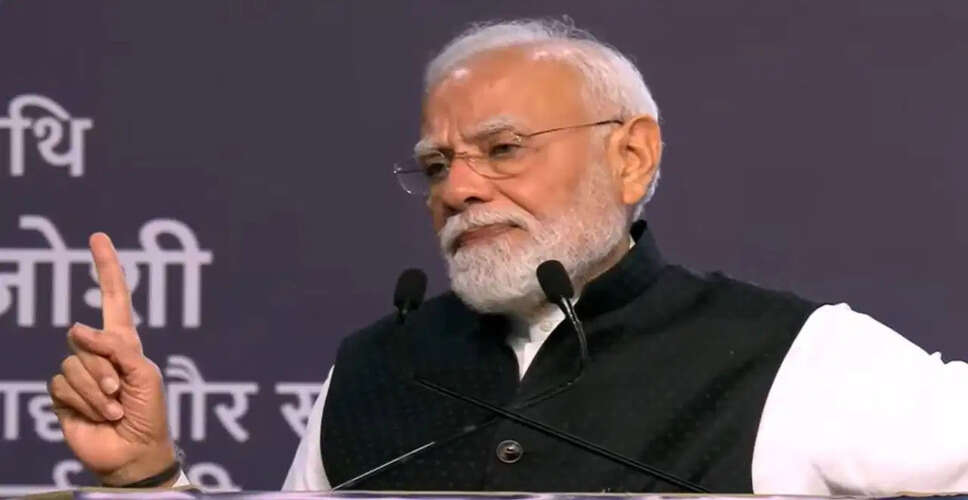

Prime Minister Modi's Address at SRCC
During the centenary celebration of the Shri Ram College of Commerce (SRCC) in New Delhi, Prime Minister Narendra Modi delivered a pointed speech aimed at the opposition. He reminisced about his visit to SRCC in 2013 and articulated his government's stance on national development, economic growth, self-reliance, and governance.
Critique of the 'Maa-Bap Culture'
The Prime Minister criticized a long-standing political model that fostered dependency among citizens on the government, labeling it the 'Maa-Bap Culture.' He emphasized that his administration focuses on empowering individuals.
Using the example of connecting millions to the banking system, he noted that some individuals oppose such initiatives, often finding faults in the nation's achievements.
Targeting the Opposition with 'Angry Uncle' Analogy
In his address, Modi used the analogy of an 'Angry Uncle' to illustrate his point about the opposition. He described two types of people in society: those who transform positive thoughts into national strength and those who question every new initiative.
He pointed out that the common question from such critics is, 'What is the need for this?' He cited projects like the Statue of Unity, high-speed trains, UPI, the new Parliament, and memorials for brave soldiers as examples that faced skepticism.
Reflecting on His 2013 SRCC Speech
Modi recalled his 2013 speech at SRCC, where he urged the nation to view itself as 'a glass half full' rather than 'half empty.' He stressed that evaluating a country's status should consider its potential, not just its problems.
He contrasted the economic challenges of 2013, such as low growth, inflation, corruption, and policy hurdles, with the current positive indicators of economic activity and development.
Highlighting 'Make in India' and Mobile Manufacturing
The Prime Minister referenced the 'Make in India' initiative, stating that when he first proposed such ideas in 2013, many doubted their feasibility. He claimed that today, smartphones manufactured in India are reaching various global markets.
He noted that in 2014, India was heavily reliant on mobile phone imports, but now there has been a significant increase in mobile phone exports, reflecting the growth of the manufacturing ecosystem in the country.
Government's Report Card on Defense Production
In his speech, Modi also addressed defense production, stating that India previously depended on foreign sources for its defense needs. However, he asserted that domestic defense production has significantly increased.
He claimed that India's defense production has reached approximately ₹2 lakh crore, with defense exports also seeing substantial growth compared to previous years.
Emphasizing Youth and Future of India
Addressing the students of SRCC, the Prime Minister expressed confidence in the youth's ability to guide the nation towards a new direction. He discussed ambitious goals for India in sectors like manufacturing, research, innovation, agriculture, space, and sports.
He encouraged students to adopt a positive mindset and transform societal strength into national strength, asserting that the upcoming generation will play a crucial role in building a developed India.
Opposition's Response
Following Modi's speech, the Congress party responded, accusing him of using an academic platform like SRCC to deliver political messages. Congress leader Kanhaiya Kumar highlighted issues such as unemployment, inflation, education, and examination systems in his critique of the Prime Minister.
Thus, the centenary celebration of SRCC transcended mere commemoration of the college's 100-year journey, as Modi's speech brought 'Maa-Bap Culture,' 'Angry Uncle,' development, and opposition politics to the forefront.
Conclusion
Overall, PM Modi attempted to connect his past SRCC speech with the present, presenting a report card of his government's performance, while the opposition framed his address as political rhetoric, raising various issues.