
PM Modi Advocates for Women's Quota: A Call for Unity in Politics
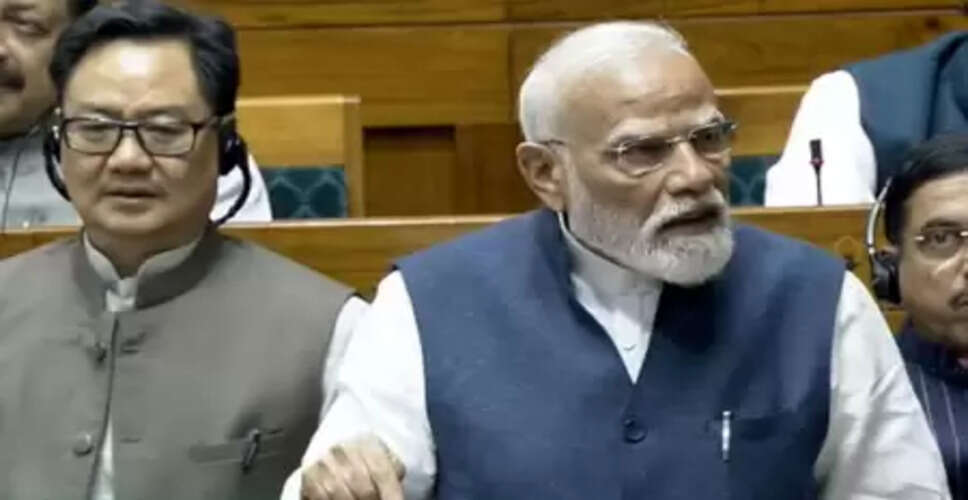

Prime Minister Modi's Vision for Women's Representation
New Delhi: During a recent session in the Lok Sabha, Prime Minister Narendra Modi emphasized the need for a non-partisan approach regarding the proposed delimitation process, which is set to precede the implementation of the women's reservation bill. He expressed his readiness to use terms like 'guarantee' and 'promise' to alleviate any concerns from Members of Parliament about potential biases against any state.
Modi articulated that a 'nation-first' mentality should take precedence over all other considerations, asserting that the delimitation process would be fair to all states, regardless of their size. He stated, 'I can assure you that no injustice will be done to anyone.'
He cautioned lawmakers against the misconception that they are providing any favors to women, emphasizing that the intention behind the women's quota bill is clear and should not be politicized.
The Prime Minister warned that if the Opposition chooses to resist the women's quota initiative, it could inadvertently benefit him politically, urging them to refrain from turning the matter into a political battleground.
'You can take the credit for this initiative. I am ready to promote it with your images. I offer you a 'blank cheque' to claim the credit for the women's quota,' he remarked.
While discussing the Constitution (One Hundred and Thirty-First Amendment) Bill, 2026, which aims to facilitate women's reservation and delimitation, Modi highlighted that this bill could transform the political landscape by involving women in decision-making processes.
He pointed out that the women's reservation would contribute to the vision of a developed India by 2047, noting that those who have opposed this initiative have faced repercussions from women voters.
'We are fortunate to have the chance to redirect the nation's political dynamics and enhance democracy,' he stated, urging political parties to view this initiative as a national benefit rather than a political issue.
Modi encouraged all parties to recognize the importance of women's leadership emerging from grassroots levels and to support their inclusion in policy-making roles.
'At the very least, let them participate in legislative bodies,' he urged, calling for unity in granting women their rightful place.
'Today, women's empowerment is enhancing the nation's prestige across various sectors. Their involvement in politics is poised to bring about significant changes,' he added.
'The nation and women will witness our commitment today. Any ill intentions will not be forgiven by women,' he warned.
He recalled that in 2023, the Nari Shakti Vandan Adhiniyam was passed with consensus, questioning how long the implementation should be delayed.
Modi reiterated that the consensus in 2023 was to expedite the women's quota's implementation. 'If we do not act by 2029, we will struggle to convince women of our seriousness regarding their participation in decision-making,' he cautioned.
'This is about women's rights that have been overlooked for decades. We now have the chance to fulfill this noble cause,' he reminded, referencing previous 'technical excuses' that hindered the women's quota.
He noted that over 300 women are currently making decisions in panchayats, and more than 900 women are involved in urban local governance, asserting that it is time to extend their influence to national policy-making.
Earlier, the Lok Sabha approved the introduction of three bills following a division of votes, a process initiated after the Opposition requested a recorded vote.