
Piyush Goyal Denies Claims of Trade Agreement Delays with the US
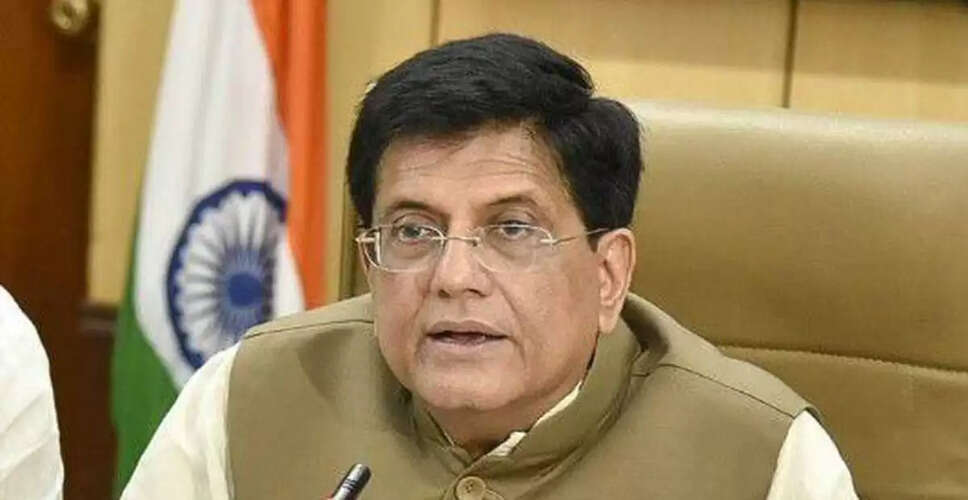

Union Minister Refutes Trade Agreement Report
On Monday, Union Commerce Minister Piyush Goyal dismissed a report from a news agency that suggested India had turned down a swift trade agreement with the United States during discussions in June, asserting that the nation is seeking a more favorable deal.
In a post on social media, Goyal labeled the report as 'entirely false, unfounded, and misleading.'
He highlighted the positive discussions held with US Trade Representative Jamieson Greer during his visit to Delhi in June, stating that both parties reaffirmed their dedication to a trade agreement that is equitable, commercially significant, and beneficial for businesses, farmers, workers, and consumers in both nations.
Goyal noted, 'Our teams are actively engaged in working towards this goal.'
The delay in finalizing the agreement has been attributed to the Modi administration gaining confidence from new trading partners, which has mitigated economic risks and provided political advantages domestically, according to unnamed officials and analysts.
Additionally, an unidentified Indian government official mentioned that the interim trade agreement was not finalized during Greer's visit due to the US not meeting key Indian demands, which included a tariff advantage over competitors like China and assurances against new levies post-agreement.
'Our stance is straightforward,' the official stated. 'We are not looking to rush into a deal that does not offer favorable terms or compromise on critical issues such as agriculture.'
The report also referenced Goyal's comments from June 25, where he indicated that an agreement had been reached in February, but its execution hinges on establishing a competitive edge for India over nations like Vietnam, Thailand, and others.
He explained that negotiations have focused on reducing tariffs from 50% to 18%, which he believes would provide India with a competitive advantage.
Goyal also mentioned that changes in the US tariff structure following a Supreme Court ruling and the introduction of a temporary 10% tariff, set to expire on July 24, necessitate further discussions before the bilateral agreement can be enacted.
A US official confirmed on Monday that discussions with India are ongoing to finalize the agreement, but did not provide a specific timeline. The official remarked that New Delhi has occasionally been 'slow, bureaucratic, and challenging' during negotiations.
Uncertainty Surrounding Trade Deal
Following the interim trade deal agreed upon on February 2, US tariffs on Indian goods were expected to decrease to 18% from a combined rate of 50%. The previous rate included a punitive 25% levy imposed in August due to India's acquisition of Russian oil.
However, discussions regarding the final deal were delayed after the US Supreme Court ruled on February 20 that global tariffs imposed by former President Trump were invalid, stating he had overstepped his authority.
In response, Trump enacted a temporary 10% tariff on imports into the US, citing his authority under the 1974 Trade Act. This new tariff is applicable for a maximum of 150 days unless Congress approves an extension.
On February 21, Trump announced an increase in tariffs to the legally permissible level of 15% from 10%, effective immediately. However, the timeline for this increased tariff rate remains uncertain.
This situation has left the status of US trade agreements with various countries, including India, ambiguous.