
Pharmaceutical Traders Plan Nationwide Shutdown Over Rising Medicine Prices
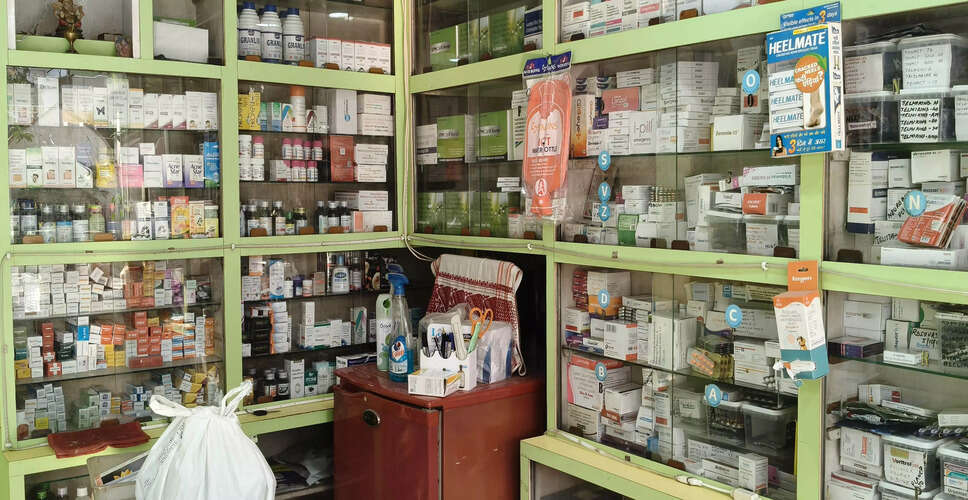

Nationwide Shutdown Announced by Pharmaceutical Traders
In protest against issues related to online medicine platforms and regulatory concerns, pharmaceutical traders and medicine establishments announced a nationwide shutdown on May 20.
Jorhat, May 15: There is growing concern regarding the escalating costs of essential medicines, as the Jorhat District Medicine Traders Association has accused pharmaceutical companies of surreptitiously raising prices across various categories, thereby increasing the financial burden on patients and the general public.
Association president Sanjeev Kumar Bora highlighted that the costs of medications for conditions such as fever, liver issues, kidney diseases, and cancer have seen significant increases in recent months.
Bora noted that these price hikes have been implemented gradually, often going unnoticed by consumers. He explained, “The prices of life-saving medications have been increasing subtly. If there were a sudden spike, it would attract immediate attention. Instead, companies opt for gradual increases, sometimes by five percent or even more.”
He pointed out that the noticeable rise in prices began after the recent Assembly elections in four states, drawing parallels with the rising costs of essential goods like petrol, diesel, and food items.
“Typically, after elections, the prices of various commodities tend to rise. Significant expenditures occur during elections, and ultimately, the financial burden shifts to the average citizen,” he remarked.
Bora emphasized that nearly every category of medicine has been impacted by these price increases. “From common fever medications to those for liver and kidney treatments, nearly all medicines have become more expensive. No specific category has been exempt,” he stated.
He also mentioned that global geopolitical tensions, particularly the ongoing instability in the Middle East, might indirectly influence the rising costs of medicines, although he acknowledged the difficulty in quantifying this impact.
Calling for government action, Bora asserted that the central government possesses the authority and mechanisms necessary to regulate the prices of life-saving medications for the public's benefit. “The government can certainly impose price controls if it chooses to. There are sufficient systems and legal frameworks in place to manage unreasonable price hikes,” he added.
Additionally, the traders’ association leader expressed concerns regarding the continuation of online medicine delivery systems that were established during the COVID-19 pandemic. He argued that while these provisions were necessary during the pandemic, they continue to disadvantage traditional medicine retailers now that normalcy has returned.
“The emergency conditions that warranted these measures no longer exist, yet the system remains in place, creating challenges for local medicine shops and traders,” Bora stated.
In response to the issues surrounding online medicine platforms and regulatory matters, pharmaceutical traders and establishments nationwide have declared a shutdown on May 20.
Furthermore, Bora questioned the lack of collective pressure on the government to tackle the issue of rising medicine prices. “With millions involved in the pharmaceutical trade, we must vocally advocate for reduced medicine prices to benefit the public,” he concluded.