
PETA India Advocates for Nationwide Ban on Meat Advertisements

Call for Action on Meat Advertising
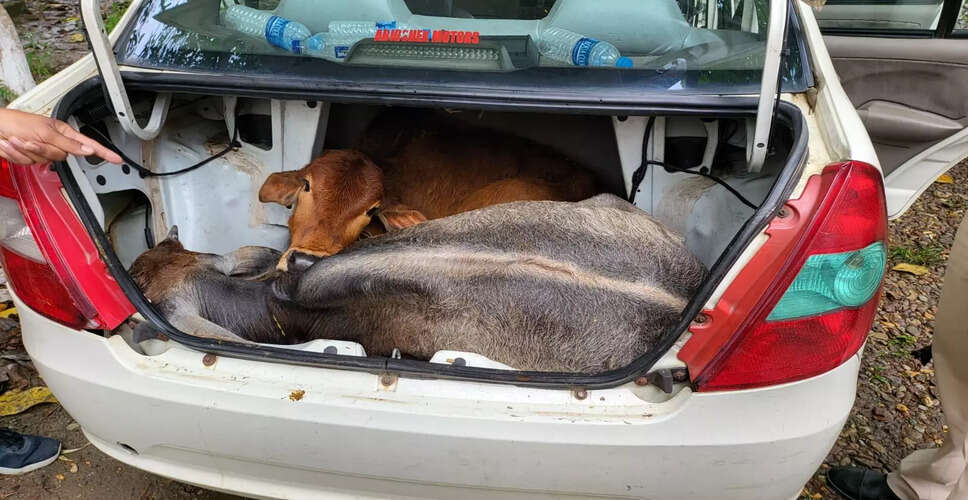
File image of cattle being transported illegally in a vehicle. (AT Photo)
New Delhi, Sep 28: PETA India has made a formal request to the central government to ban advertisements promoting meat across various platforms, including billboards, television, and online media, starting October 2. This initiative is aimed at honoring Mahatma Gandhi's principle of ahimsa.
In a letter addressed to Union Information and Broadcasting Minister Ashwini Vaishnaw, PETA India emphasized the need for a nationwide prohibition on meat advertisements, highlighting issues related to animal welfare, public health, and environmental impact.
Dr. Kiran Ahuja, Senior Manager of Vegan and Corporate Projects at PETA India, stated, "We urge that Gandhiji's legacy of non-violence be respected by ceasing meat advertising in our nation and promoting the compassionate, healthy, and sustainable meat-free culinary traditions that India has long embraced."
The organization pointed to similar restrictions on meat advertising that have been implemented in various European cities, such as Amsterdam and Utrecht, which were enacted due to environmental concerns.
Additionally, PETA India noted that during the recent BRICS Summit, Prime Minister Narendra Modi served a traditional meat-free menu to world leaders, further supporting their stance.
The organization also raised alarms regarding the treatment of animals in slaughter and transportation processes, claiming that chickens are often slaughtered while still conscious, and that cattle and buffaloes are transported in overcrowded conditions, with goats, sheep, and pigs facing cruel treatment.
Moreover, PETA India expressed concerns about antimicrobial resistance, diet-related health issues, and the potential for pandemics like H5N1 bird flu, asserting that intensive animal farming and poultry markets can facilitate the spread of infectious diseases.
They highlighted that approximately 73% of global antimicrobial usage is in livestock raised for food, with projections indicating that antimicrobial resistance could lead to around two million fatalities in India by 2050.
PETA India is advocating for the proposed ban to encompass all forms of meat advertising, including billboards, television, and online platforms, commencing on October 2, coinciding with Gandhi Jayanti.