
Parliament's Budget Session: Key Discussions on National Issues and Challenges
Overview of the Budget Session
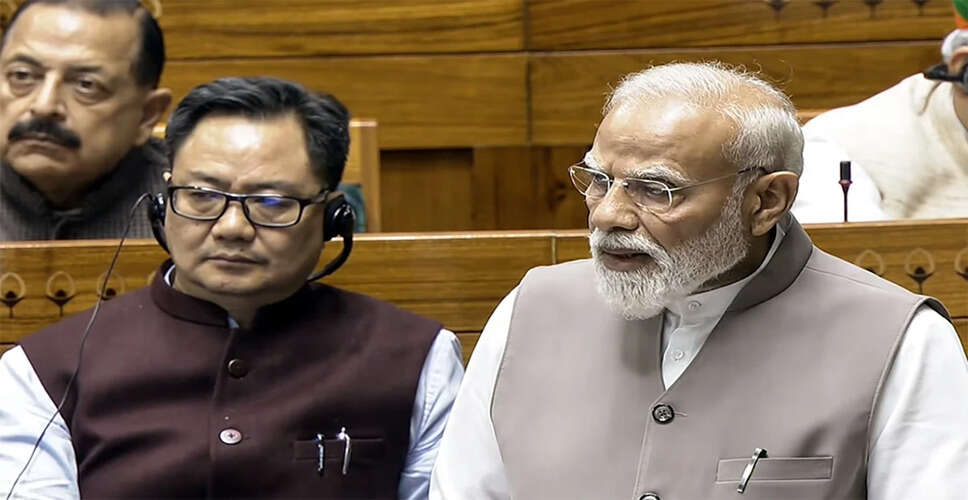
The second phase of the Parliament's budget session is currently underway. Today, Prime Minister Narendra Modi addressed the situation in West Asia during a session in the Lok Sabha. Additionally, both houses paid tribute to freedom fighters Bhagat Singh, Sukhdev, and Rajguru on their martyrdom day. As the Lok Sabha session commenced, Speaker Om Birla highlighted the bravery and patriotism of these martyrs, emphasizing their role in laying the foundation for a free and strong nation. In the Rajya Sabha, Chairman C.P. Radhakrishnan remarked that the freedom fighters' sacrifices are a significant reason why citizens can breathe freely today. A demand was raised in the Rajya Sabha for the establishment of transparent regulations to curb annual fee hikes in private schools.
Lok Sabha Proceedings
During the Lok Sabha session, Prime Minister Modi stated that the ongoing conflict in West Asia has posed unexpected challenges for India, but the government is prepared to address these issues. He assured the house that there would be no shortage of petrol, diesel, or LPG for citizens. Modi informed the members that India has a strategic petroleum reserve of 5.3 million metric tons. He also mentioned that the government has taken several measures over the past decade to protect farmers from such crises, including ensuring the availability of fertilizers and increasing domestic production of DAP and NPK fertilizers.
Congress member Amar Singh accused the National Democratic Alliance (NDA) government of providing tax exemptions to corporations, claiming that private companies are currently paying less tax than the general public. While initiating a discussion on the Finance Bill 2026, he asserted that many concessions have been granted, but they primarily benefit the wealthy. He pointed out that the Gift City has received exemptions without any conditions attached, benefiting large financial and technology firms.
Home Minister Amit Shah stated that if Punjab State Warehousing Corporation's officer's suicide case is brought to him by local MPs, he would order a CBI investigation. This issue was raised during Zero Hour by Congress MP Gurjeet Singh Aujla and Union Minister Ravneet Singh Bittu.
Finance Minister Nirmala Sitharaman introduced the Corporate Laws (Amendment) Bill 2026 in the Lok Sabha, aimed at amending the Limited Liability Partnership Act of 2008 and the Companies Act of 2013. Following its introduction, the house decided to send the bill to a joint committee of Parliament upon the Finance Minister's recommendation.
Union Minister of State for Education Jayant Chaudhary clarified that the central government is not imposing Hindi or any other language on states under the National Education Policy. He made this statement in response to a supplementary question from DMK MP Kalanidhi Veeraswamy during the question hour.
Rajya Sabha Proceedings
Senior Congress leader and Rajya Sabha member Digvijay Singh expressed concerns regarding India's data security in light of its membership in the US-led strategic alliance 'Pax Silica.' He sought clarification from the government, stating that while India has signed this agreement, it could potentially impact the data privacy of Indian citizens and compromise the country's independent policy-making capabilities.
Raghav Chadha from the Aam Aadmi Party raised the issue of mobile phone data plans in the Rajya Sabha, advocating for a system that allows users to utilize unused data later. He emphasized that this matter pertains not only to data but also to consumer rights, noting that when individuals recharge their mobile phones, they receive data according to their plans.
Former Prime Minister H.D. Deve Gowda referred to Prime Minister Modi as a 'mature political leader' in the Rajya Sabha, recalling that he had initially decided to resign after winning the Lok Sabha elections in 2014 at Modi's request. During a discussion on supplementary demands for grants, Gowda stated that Modi has conveyed a clear message that development will drive consumption.