
Parliament to Reconvene for Key Bills Amid Controversy
Upcoming Parliamentary Session
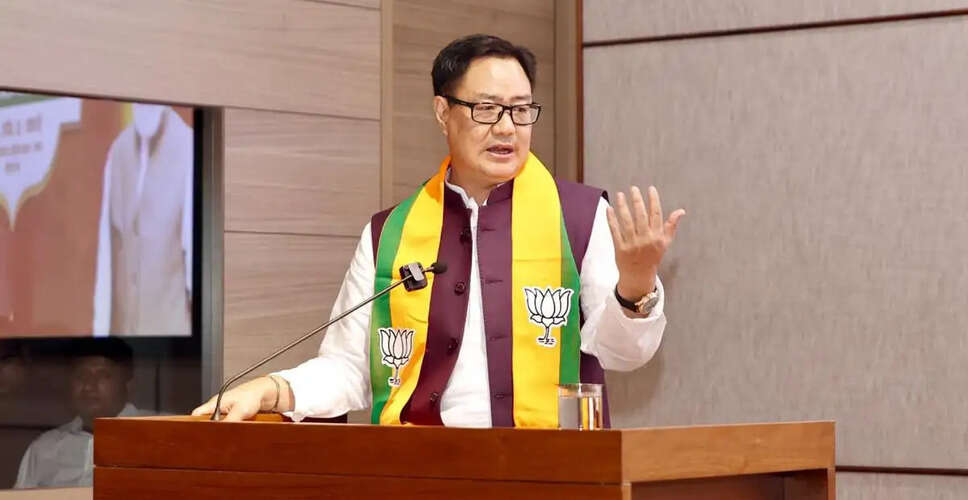
On Thursday, Kiren Rijiju, the Union Minister for Parliamentary Affairs, announced that the Budget Session of Parliament will reconvene on April 16 for a duration of three days. This session aims to introduce significant legislation.
Sources suggest that the extension of the current session, which was originally scheduled to conclude on Thursday, is intended to address amendments to the 2023 Women’s Reservation Act.
Although the government has not provided specific reasons for this extension, Rijiju previously mentioned in the Rajya Sabha that there is a commitment to the women of India that Parliament must uphold.
Opposition's Concerns
Opposition parties have criticized the government's motives, alleging that the timing of the amendments is strategically aimed at gaining electoral advantages during the upcoming Assembly elections.
Polling in Assam, Kerala, and Puducherry is set to conclude on April 9, while election campaigns in Tamil Nadu and West Bengal will be active on April 16.
Tamil Nadu will conduct its elections in a single phase on April 23, and West Bengal will have voting in two phases on April 23 and April 29, with vote counting scheduled for May 4.
Details of the Women’s Reservation Act
The 2023 Act mandates that 33% of seats in the Lok Sabha and state Assemblies be reserved for women, but these reservations will only take effect after a population census and subsequent delimitation.
Delimitation involves defining the boundaries of electoral constituencies, as stipulated in Article 82 of the Constitution, which requires adjustments to Lok Sabha seat allocations based on population changes after each census.
Currently, the Lok Sabha's composition is based on the 1971 census, and the 84th Amendment Act of 2001 has frozen constituency boundaries until the first census after 2026.
The ongoing population census, which commenced on Wednesday, is expected to wrap up in 2027.
Proposed Amendments and Political Tensions
#WATCH Delhi: Union Parliamentary Affairs Minister Kiren Rijiju says, "We have extended the Budget Session till the 16th April because we are going to introduce important bills. When the CAPF Bill was passed, and the Congress party staged a walkout during this process, they… pic.twitter.com/o89hMs0yYc
— ANI (@ANI) April 2, 2026
During the reconvened session, the government plans to propose amendments to the 2023 Act, which would separate the 33% quota for women from the 2027 census and instead initiate a delimitation process.
Congress leader Jairam Ramesh has indicated that the government intends to increase the number of Lok Sabha seats by 50%, which would also raise the number of constituencies in each state by the same percentage.
If this delimitation occurs, the Lok Sabha's total strength could rise from 543 to 816, with approximately 270 seats reserved for women, although the proportion of seats per state would remain unchanged.
Debate in the Rajya Sabha
The extension of the session sparked intense discussions in the Rajya Sabha, with Rijiju stating that the government would propose an adjournment for a specific period to address known matters.
He emphasized that an important bill is expected to be introduced in the coming weeks.
In response, Ramesh accused the government of seeking political gain from the bill's passage, claiming it violates the election Model Code of Conduct.
Ramesh also mentioned that the Leader of Opposition, Mallikarjun Kharge, had requested that any all-party meetings regarding the bill be postponed until after the elections.
Rijiju countered that the decision to reconvene was unrelated to state elections, citing the government's timeline constraints and the upcoming general election in 2029.
He reiterated the importance of fulfilling commitments made to the public regarding women's reservation in Parliament.