
Parliament Adjourns Indefinitely After Productive Budget Session
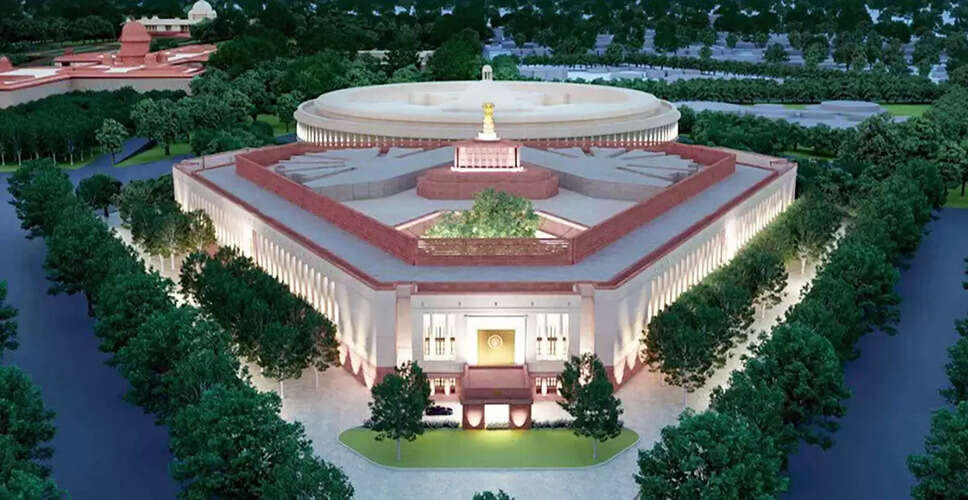

Parliament Concludes Budget Session
Both houses of Parliament have been adjourned indefinitely today, marking the end of the budget session that commenced on January 28 this year. Lok Sabha Speaker Om Birla announced that there were a total of 31 meetings during this session, which lasted for 151 hours and 42 minutes. He noted that the productivity of the session was an impressive 93 percent. Key leaders including Prime Minister Narendra Modi, Home Minister Amit Shah, and Defence Minister Rajnath Singh were present in the house.
The budget session began with a joint address to both houses by President Droupadi Murmu on January 28. Initially, this session was scheduled to conclude on April 2, but it was extended to facilitate discussions and the passage of the Women’s Reservation Bill, known as the Constitution (131st Amendment) Bill 2026, along with two other related bills. A special three-day session was called from April 16 to 18, but the constitutional amendment bill was not passed.
Voting Results and Legislative Actions
During the voting on the bill, 298 votes were cast in favor while 230 were against. A two-thirds majority is required in the Lok Sabha to pass a constitutional amendment bill. A total of 528 members participated in the voting process, with 352 votes needed for the bill's approval. Birla reported that 12 government bills were introduced during this session, of which nine were passed. Notable among the passed financial bills were the Andhra Pradesh Reorganization Amendment Bill and the Jan Vishwas Amendment Bill.
Significance of the Budget Session
Rajya Sabha Chairman C.P. Radhakrishnan emphasized the importance of the budget session in his traditional address before adjourning the 270th session indefinitely. He stated that this session is not only the longest but also plays a crucial role in determining the direction of the country's development. The session commenced with a discussion on the motion of thanks for the President's address, which lasted four days and involved 79 members. Prime Minister Modi responded to the discussion, and there was also an extensive four-day discussion on the Central Budget for 2026-27, with participation from 97 members.
Additionally, discussions were held regarding the operations of two major government ministries. The Chairman noted that Commerce and Industry Minister Piyush Goyal spoke about the India-U.S. bilateral trade agreement, while External Affairs Minister S. Jaishankar addressed the situation in West Asia. Prime Minister Modi informed the house about the ongoing conflict in West Asia and its implications for India's energy needs, stressing the importance of national unity in addressing these challenges. According to the Chairman, the budget session saw a total of 157 hours and 40 minutes of work, achieving a productivity rate of 109.87 percent. During this period, 117 questions were raised, 446 zero-hour mentions were made, and 207 special mentions were recorded.