
Panjab Faces New Threats from ISI Ahead of Independence Day 2026
As Punjab approaches Independence Day 2026, the region faces renewed threats from Pakistan's ISI, which has shifted its tactics to include petrol bombs and IEDs. Recent intelligence reports reveal plans for coordinated attacks aimed at destabilizing law and order. Security agencies have already thwarted several plots, arresting numerous suspects and seizing dangerous weapons. With heightened security measures in place, authorities are determined to counter these threats and ensure peace in the state. The situation remains critical as investigations continue into the involvement of international networks and local operatives.
| Jul 29, 2026, 12:19 IST

Emerging Threats in Punjab
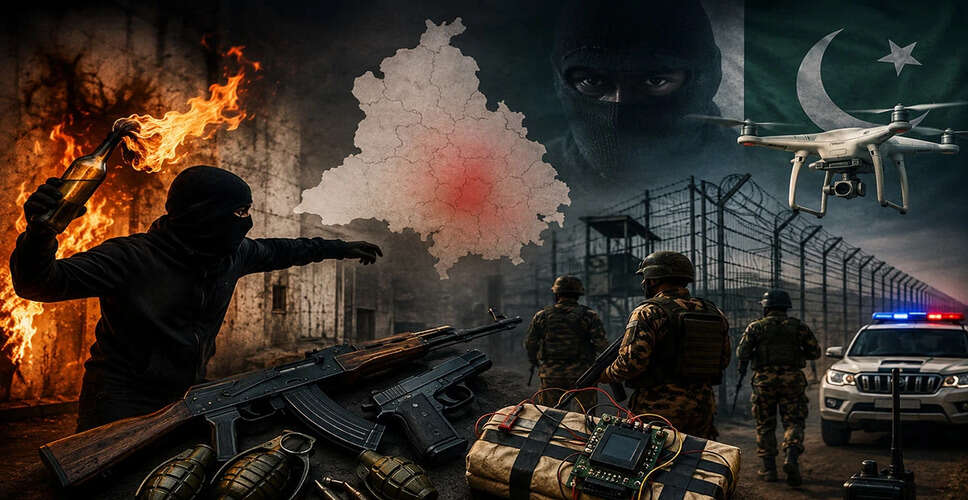
Punjab is once again under the radar of Pakistan's intelligence agency, ISI, as we approach Independence Day 2026. Recent intelligence reports from security agencies have unveiled a dangerous plot involving not only expensive and complex explosives but also inexpensive and easily made petrol bombs designed to instill widespread fear. Authorities believe that multiple coordinated attacks are being planned in Punjab around August 15, aimed at destabilizing the state's law and order as well as communal harmony.
Recent Incidents Highlighting the Threat
The seriousness of this threat was underscored by an incident on the night of July 25-26, when two petrol bombs were thrown at the BJP district office in Sangrur. One bomb struck the outer wall near the kitchen, igniting a fire and leaving burn marks, while the other fell outside. Punjab police claim this attack was orchestrated under the direction of Shehzad Bhatti, a gangster turned terrorist believed to be a proxy for the ISI.
Shift in ISI's Strategy
According to intelligence agencies, following Operation Sindoor in May 2025, the ISI has significantly altered its strategy. It is no longer limited to RDX-based tiffin bombs, hand grenades, or modern weaponry; instead, it is now employing a mix of remote-controlled pre-fabricated RDX IEDs, petrol bombs, and small arms to create maximum terror at a lower cost.
International Involvement in the Threat
Investigative agencies have found that this campaign involves not just Pakistan-based terrorist organizations but also pro-Khalistan networks active in countries like Germany, France, Portugal, the UK, Canada, the USA, and Malaysia. Notably, Babbar Khalsa International (BKI) is reportedly being supplied with weapons on a large scale. Furthermore, the ISI is using its operatives under the guise of fake pro-Khalistan organizations to deny involvement in any attacks.
Expanded Target List for Terrorists
Police officials indicate that the targets for terrorists have broadened significantly. Previously focused on police, central security forces, and defense establishments, the list now includes current and retired police officers involved in anti-terror operations, offices and leaders of right-wing political parties, railway networks, critical infrastructure, crowded public places, and on-duty police personnel. The aim is not just to attack but to create an atmosphere of fear and insecurity among the general public.
Counteractions by Security Agencies
Despite the ongoing threats, security agencies have thwarted several ISI plans. By July 27, 2026, Punjab police had dismantled ten terrorist modules based on intelligence inputs and arrested 137 suspects. During this period, they seized seven automatic rifles, 76 pistols and revolvers, 12 RDX-based pre-fabricated IEDs, 3.756 kilograms of RDX, nine detonators, 49 hand grenades, one RPG launcher, and seven walkie-talkies. Additionally, six cases of technical espionage involving solar-powered CCTV cameras sending live footage to Pakistan were uncovered, along with the recovery of 183 drones sent from across the border.
Foiling Major Conspiracies
Recent operations have also led to the failure of several significant conspiracies. On July 26, counter-intelligence teams from Jalandhar and Jalandhar rural police arrested Satbir Singh from Padiyana village, linked to an ISI-sponsored BKI module. He was found in possession of a high-capacity IED weighing 1.3 kilograms, filled with explosives, shrapnel, and ball bearings for maximum damage. Earlier in July, a plot targeting the Firozpur-Jammu train was uncovered, resulting in the arrest of 17 individuals and the recovery of an IED and a pistol, with connections to a handler based in the UK.
Central Figure in the Conspiracy
Shehzad Bhatti, based in Pakistan, is reportedly at the center of this entire conspiracy. Security agencies consider him a trusted operative of the ISI. He recruits unemployed youth through social media and encrypted platforms, enticing them with money to conduct reconnaissance on police stations, public places, and political offices, while facilitating the delivery of weapons and explosives to their networks via drones. The National Investigation Agency (NIA) and Punjab police have already linked him to grenade attacks near influencer Roger Sandhu's residence in Jalandhar in March 2025, an attack on the Gurdaspur police station in November 2025, and activities promoting extremism through front organizations like 'Tehrik-e-Taliban Hindustan.'
Dangerous New Tactics
Intelligence reports indicate that Bhatti's current model is extremely perilous. It includes targeted attacks on security forces, petrol bomb and IED assaults on police establishments and political leaders, utilizing funds from drug trafficking, and employing Punjab as a transit corridor for arms to other states.
Heightened Security Measures
Currently, security agencies are on high alert. The Punjab police have stated that they are conducting continuous operations to dismantle the nexus between terrorist networks and organized crime. Security measures have been tightened ahead of Independence Day, with agencies confident that they will thwart ISI's nefarious plots and maintain peace and social harmony in Punjab.