
Pakistan's Passport Ranked Among the World's Weakest
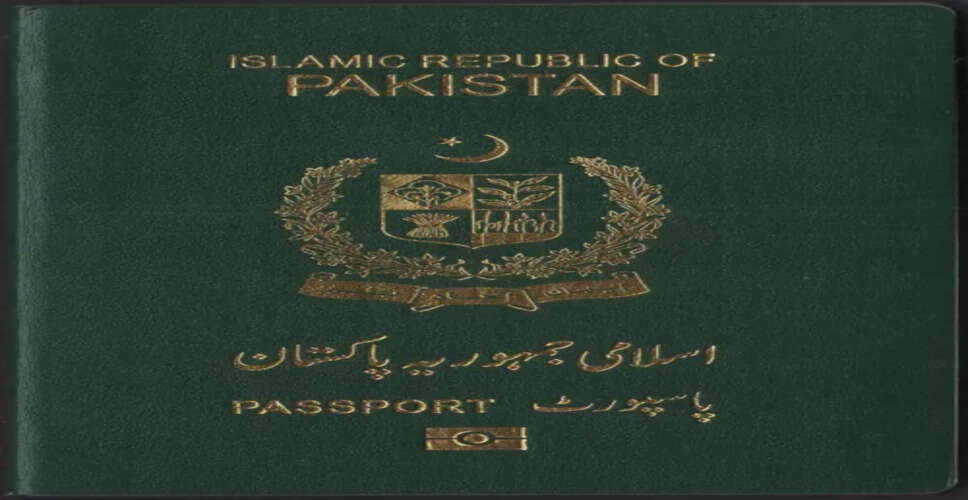

Pakistan's Passport Ranking
Representational Image(Photo: @bishwa55900127/X)
Islamabad, July 29: The latest Henley Passport Index has placed Pakistan's passport as the fourth weakest globally, with only Iraq, Syria, and Afghanistan ranking lower. Out of 199 passports evaluated, Pakistan's passport is positioned at 101st.
According to the recent rankings, Pakistani passport holders can travel to just 29 destinations without needing a visa or can obtain a visa upon arrival. The UK-based advisory firm assesses passports based on access to 227 travel locations, evaluating the number of places accessible without prior visa arrangements.
The countries with passports weaker than Pakistan's include Iraq, Syria, and Afghanistan. As reported by Geo News, Pakistani citizens can enter Dominica, St Vincent and the Grenadines, Vanuatu, Trinidad and Tobago, Barbados, Haiti, Cook Islands, Rwanda, Micronesia, Montserrat, and The Gambia without a visa.
Additionally, visa-on-arrival options are available in Mozambique, Cambodia, Madagascar, Guinea-Bissau, Burundi, Senegal, Comoro Islands, Djibouti, Maldives, Sierra Leone, Nepal, Niue, Palau Islands, Samoa, Timor-Leste, and Tuvalu. Moreover, electronic travel authorizations can be obtained for Seychelles, Sri Lanka, and Kenya.
In a significant development last November, it was reported that the United Arab Emirates (UAE) had halted visa issuance for Pakistani citizens. This information was shared by Pakistan's Additional Interior Secretary Salman Chaudhry during a Senate Functional Committee on Human Rights meeting.
Chaudhry indicated that if a ban is enforced, it would be challenging to lift it, as quoted by the leading daily Dawn. He noted that the UAE was only issuing visas to holders of blue and diplomatic passports.
Senator Samina Mumtaz Zehri, who chairs the Senate committee on human rights, corroborated Chaudhry's statements, explaining that the restrictions were due to concerns over Pakistani travelers engaging in criminal activities upon arrival in the UAE.
Zehri mentioned that the committee was informed that the UAE had not issued visas to Pakistanis, with only a few granted recently after considerable effort.
Pakistani citizens have encountered visa denials in various Gulf nations, prompting the government to address the matter with officials from those countries during important discussions.
In December 2024, the UAE, Saudi Arabia, and several other Gulf states imposed a blanket ban on visa issuance to individuals from at least 30 cities in Pakistan, following a troubling increase in incidents involving Pakistani nationals in begging, smuggling, drug trafficking, human trafficking, and other criminal activities abroad.