
Pakistan's Defense Minister Acknowledges Hybrid Governance Model
The Reality of Governance in Pakistan
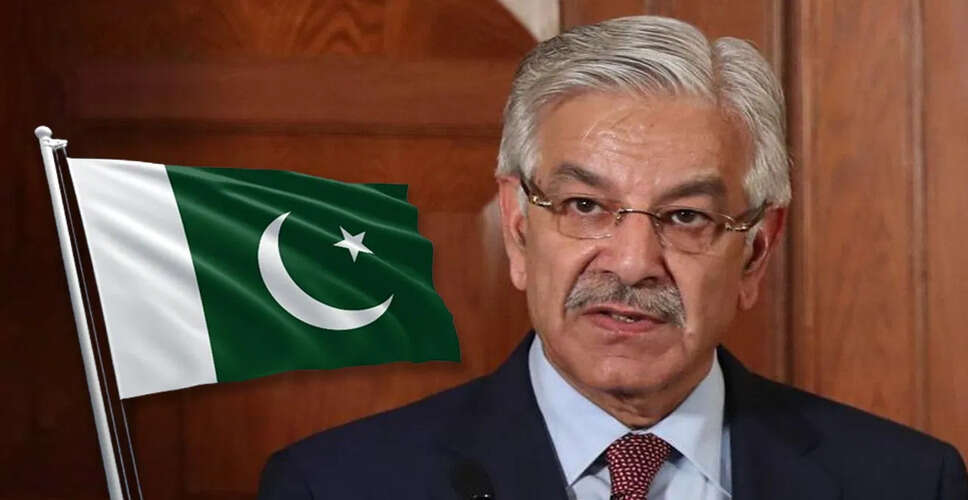
The influence of the military on Pakistan's government is widely recognized, despite the country's claims of democracy and the facade of conducting general elections. The dominance of the military remains evident, as recently acknowledged by Khawaja Asif, the defense minister and a close associate of former Prime Minister Nawaz Sharif. He openly admitted that the country operates under a hybrid governance model, where both the government and military collaborate on policy-making, yet the military retains ultimate power.
This is not the first time Asif has referred to the hybrid model in Pakistan. Analysts have long criticized this arrangement, viewing it as a government serving vested interests rather than a genuine power-sharing framework. In an interview with a news outlet, Asif conceded that Sharif's Pakistan Muslim League-Nawaz (PML-N) operates with the backing of the military.
Hybrid Governance Explained
Asif described the situation as a hybrid model, stating, "This is not an ideal democratic government. It is necessary until Pakistan overcomes its economic and governance challenges." He further remarked that had such a model been in place in the 1990s, it could have prevented political turmoil and military confrontations in Pakistan.
He emphasized that for the PML-N and Sharif, the only realistic option is to negotiate with the military. This statement comes at a time when Pakistan's army chief, Asim Munir, met with Donald Trump at the White House, which Asif termed as a significant turning point in 78 years, highlighting the success of the hybrid model. He characterized this model as one involving both civilian government and military.
The Diminished Value of Votes
Following the adoption of the hybrid model, the PML-N's popular slogan "Respect the Vote" has become merely a catchphrase. Critics argue that the PML-N has aligned itself with the military. Former Prime Minister Imran Khan alleged that the general elections held on February 8 were marred by significant fraud, accusing the PML-N and the People's Party of stealing the mandate.
Dr. Rasul Bakhsh Rais pointed out that it is now clear who truly holds the reins of power in Pakistan. He noted that the return of hybrid governance marks the third instance since Imran Khan's ousting in 2022. Generals Zia-ul-Haq and Pervez Musharraf, who established new parties, have now surrendered to military control. Senior journalist Matiullah Jan remarked on social media that a defense minister who swears to uphold the constitution should not advocate for a hybrid regime, especially since the constitution does not recognize such a system.