
Pakistani Court Orders Review of Screening for Award-Winning Documentary on Ghost Schools
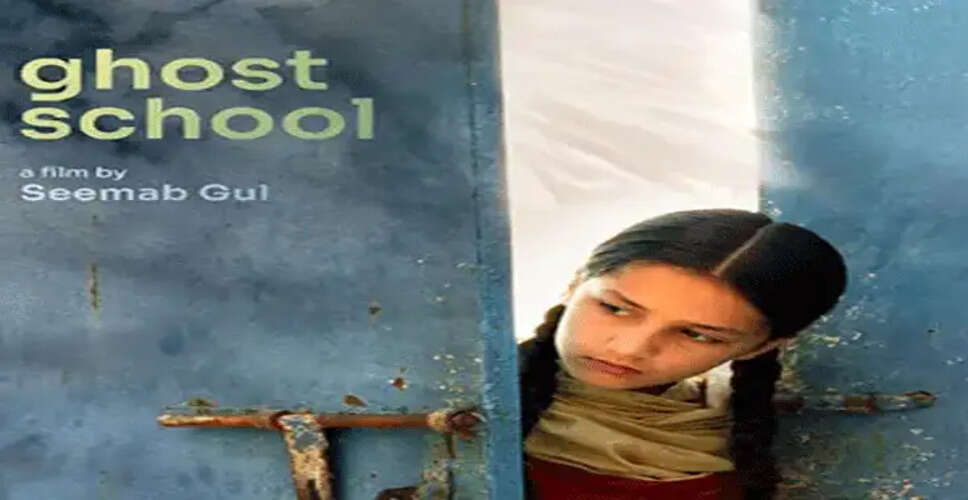

Court Ruling on Ghost Schools Documentary
In Karachi, a Pakistani court has instructed the provincial film censor board to reconsider its decision to deny a screening certificate for an award-winning documentary addressing the issue of 'ghost schools' in Sindh province.
The phenomenon of 'ghost schools' is well-known in Sindh, where numerous schools exist only on paper, yet salaries are regularly disbursed to teaching staff associated with these institutions.
According to reports, a two-member constitutional bench of the Sindh High Court, led by Justice Yusuf Ali Saeed, issued an order on Wednesday mandating the censor board to reassess the certification of the 'Ghost Schools' film within ten days. The court also rejected the board's previous decision to remove certain scenes and expressions from the film.
The documentary, which was self-funded, produced, and directed by British-Pakistani filmmaker Seemaab Gul, prompted legal action after the board denied it a screening certificate in August. On Thursday, Gul expressed that seeking judicial intervention was her only option.
She stated, 'This is a well-researched documentary about the hundreds of ghost schools operating in Sindh, which are affecting our children's education.'
Gul's attorney informed the court that the documentary is based on the story of a 10-year-old girl who discovers that her village's only school was closed due to rumors of it being haunted. The lawyer argued that the Sindh censor board had ordered eight cuts before granting a public screening certificate, while the same film had been approved for unrestricted screening by the central film censor board and the Punjab Board of Film Censors.
Gul highlighted that the documentary is based on research identifying hundreds of such schools in the province. She previously questioned why the film was not cleared in Sindh when other censor boards in Pakistan had approved it.
This controversy surrounding the documentary arises amid growing concerns about the state of schools in Pakistan. Recently, an official from the education department in the neighboring Khyber Pakhtunkhwa province reported that approximately 37,000 classrooms in government schools are in dilapidated condition. These figures emerged shortly after a school building collapse in Peshawar resulted in the deaths of 35 individuals, including 34 children.