
Pakistan Tops Global Air Pollution Rankings, India Ranks Sixth
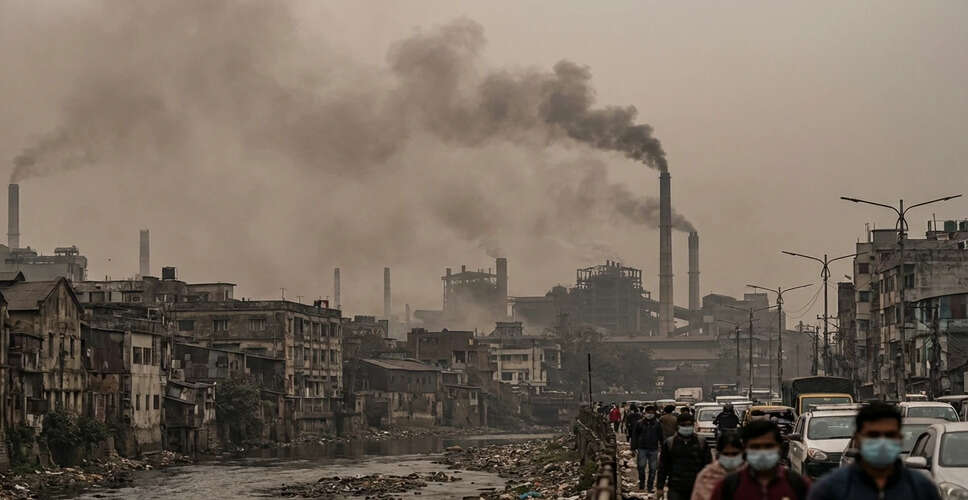
Global Air Quality Report Highlights
According to the World Air Quality Report 2025, Pakistan has been identified as the most polluted country in terms of fine particulate matter, with India following closely in sixth place. This information was revealed in the eighth report published by the Swiss air quality technology firm IQAir, which analyzed data from monitoring stations across 9,446 cities in 143 countries, regions, and territories.
The report ranks Pakistan as the leading polluted nation, followed by Bangladesh, Tajikistan, Chad, and Congo. India holds the sixth position in this alarming list.
Most Polluted Cities in India
Focusing on polluted cities in India, Loni in Uttar Pradesh has been reported as the most polluted city globally. Additionally, Delhi ranks as the fourth most polluted city in the world. Notably, five out of the ten most polluted cities worldwide are located in India, including Loni, Birnihat, Delhi, Ghaziabad, and Ula.
Comparative Analysis of Air Quality
When comparing this year's report to last year's findings, an increase in the annual average of PM2.5 was observed in 54 countries, while 75 countries reported a decrease. Two countries showed no change, and 12 countries were newly included in this year's data. The report indicates that only 14% of global cities met the World Health Organization's annual PM2.5 guideline of five micrograms per cubic meter, a decline from 17% the previous year.
Only thirteen countries or regions met the WHO's annual average PM2.5 guidelines, including French Polynesia, Puerto Rico, the U.S. Virgin Islands, Barbados, New Caledonia, Iceland, Bermuda, Réunion, Andorra, Australia, Grenada, Panama, and Estonia.
Impact of Climate Change on Air Quality
The report also highlights that climate change has exacerbated wildfires, significantly contributing to the decline in global air quality in 2025. Record biomass emissions from Europe and Canada contributed approximately 1,380 megatons of carbon.
For the second time in eight years, Canada was noted as the most polluted country in North America due to severe wildfires affecting air quality across Canada, the U.S., and parts of Europe. In Europe, 23 countries recorded an increase in annual average PM2.5 concentrations, while 18 countries saw a decrease, with one new country added to the list.