
Pakistan Steps Up as Mediator Amid US-Iran Tensions

Pakistan's Role in US-Iran Mediation
Pakistan has announced that both the United States and Iran have shown trust in its potential as a mediator, with discussions anticipated in the near future due to rising tensions in the Middle East. On Sunday, Foreign Minister Ishaq Dar stated that Pakistan is gearing up to facilitate talks between Washington and Tehran. However, it remains uncertain whether these discussions will occur directly or through indirect channels. Dar expressed satisfaction that both nations have confidence in Pakistan's mediation efforts, noting that conversations could commence shortly. As of now, neither the US nor Iran has officially acknowledged the proposal.
Support from Regional Leaders
Regional Backing Builds
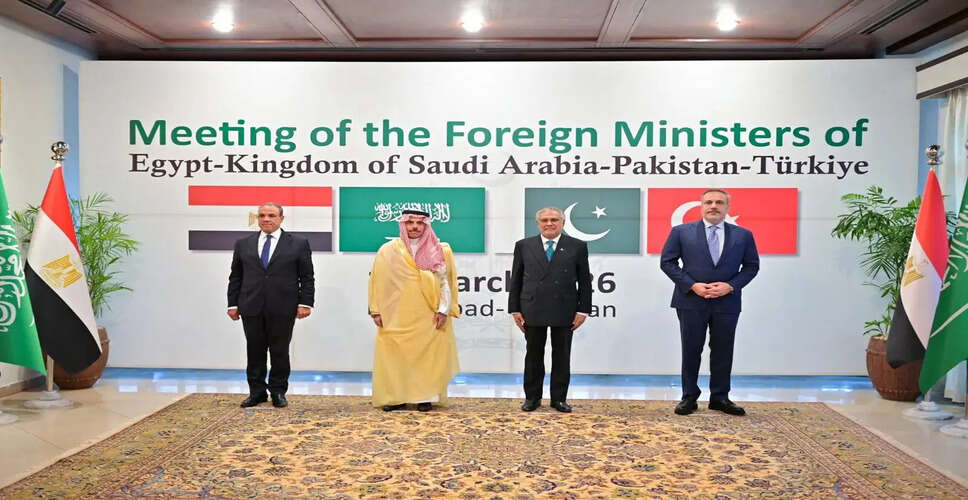
The mediation initiative gained momentum following a meeting of foreign ministers from Turkey, Egypt, and Saudi Arabia in Islamabad, where they addressed the escalating conflict and its repercussions on the global economy. Another round of discussions is anticipated on Monday. Dar mentioned that there is a consensus that the ongoing conflict benefits no one. He emphasized the need for unity among the Muslim community during these trying times, stating that visiting leaders have shown full support for Pakistan's mediation efforts. Officials disclosed that Islamabad has been quietly engaging in diplomatic outreach for several weeks before making the initiative public. Dar also confirmed ongoing dialogues with US officials aimed at de-escalating tensions and seeking a resolution.
Challenges from Iran and Israel's Military Moves
Iran Pushback, Israel Signals Escalation
Despite Pakistan's mediation attempts, Iran's resistance is apparent. Mohammad Bagher Qalibaf, the speaker of Iran's parliament, rejected the idea of negotiations, issuing a stern warning in light of the increasing US military presence in the region. His comments came after the deployment of approximately 2,500 US Marines to the Middle East, a move that has heightened tensions further. Concurrently, Israeli Prime Minister Benjamin Netanyahu hinted at a potential escalation of military actions in Lebanon, suggesting that Israel might extend its current security measures in the south, targeting the Iran-supported Hezbollah group, although no specific operational details were provided.
Economic Implications and Ongoing Standoff
Strait of Hormuz Remains Flashpoint
Pakistan's mediation efforts emerge as direct talks between the US and Iran remain stalled, with growing global economic concerns. A ceasefire proposal consisting of 15 points sent by Washington to Tehran through Islamabad has already been turned down by Iran. Central to the ongoing standoff is the Strait of Hormuz, a crucial passage for global oil and gas shipments. Disruptions in this region have led to increased crude prices and gas shortages in various parts of Asia, with limited tanker movements currently allowed for countries such as India, China, and Pakistan.