
Pakistan Nominates Donald Trump for 2026 Nobel Peace Prize Amidst India-Pakistan Tensions
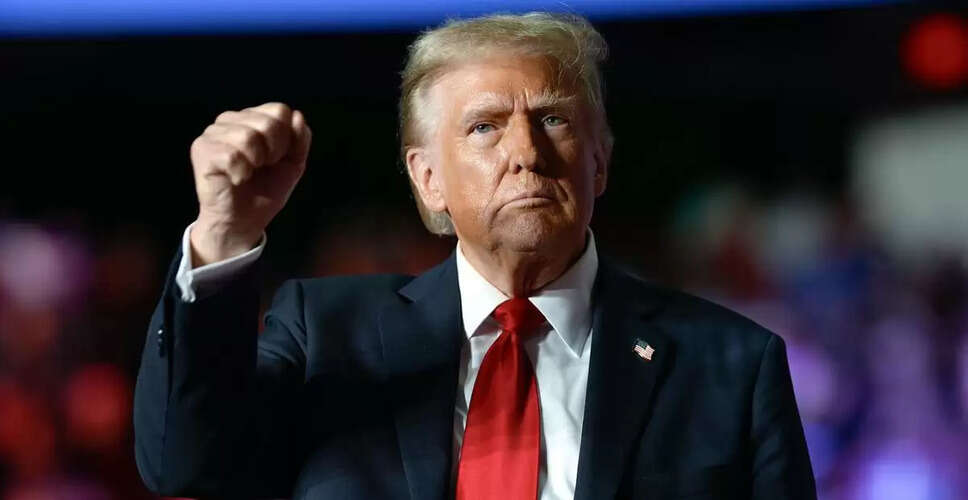
Pakistan's Nomination of Trump
On Saturday, Pakistan declared that it has put forward a nomination for United States President Donald Trump for the 2026 Nobel Peace Prize, citing his significant diplomatic efforts and leadership during the recent tensions with India.
In a statement shared on social media, the Pakistani government expressed its appreciation for Trump's genuine attempts to mediate the long-standing Jammu and Kashmir conflict, which is central to regional instability.
They referred to Trump as a “true peacemaker.”
The announcement regarding the Nobel Peace Prize winner is anticipated in October 2026.
Pakistan to recommend US President Donald Trump for the Nobel Peace Prize 2026: Pakistan statement pic.twitter.com/i32rd5CClC
— Sidhant Sibal (@sidhant) June 21, 2025
This announcement from Pakistan followed Trump's assertion that he deserved the Nobel Peace Prize for various global peace initiatives, as reported by a news outlet.
Trump claimed, “I should have received it four or five times,” adding that he believes the prize is typically awarded to liberals.
In a recent social media update, Trump reiterated his belief that he would never be awarded the Nobel Peace Prize, regardless of his actions, and maintained that he played a role in “stopping the war” between India and Pakistan. However, New Delhi has dismissed Trump's claims.
On Wednesday, Indian officials stated that Prime Minister Narendra Modi had informed Trump that India would not accept any mediation regarding its issues with Pakistan.
It was also conveyed to Trump that India had agreed to a ceasefire solely at Pakistan's request, according to India's Foreign Secretary.
Shortly after this statement, Trump welcomed Pakistan's Chief of Army Staff, Field Marshal Asim Munir, to the White House. Following their meeting, Trump expressed gratitude to both Munir and Modi for their contributions to “ending the war” and mentioned ongoing trade discussions with both nations.
The conflict between India and Pakistan intensified on May 7 when the Indian military conducted strikes, dubbed Operation Sindoor, targeting what it claimed were terrorist camps in Pakistan and Pakistan-occupied Kashmir.
This military action was a response to a terrorist attack in Jammu and Kashmir's Pahalgam that resulted in 26 fatalities on April 22.
In retaliation, the Pakistan Army engaged in shelling Indian villages along the Line of Control, leading to the deaths of at least 22 Indian civilians and eight military personnel.
On May 10, both nations reached an agreement to cease hostilities after four days of conflict.
India's announcement to halt military actions came shortly after Trump claimed on social media that both countries had agreed to a ceasefire.
However, India clarified that the decision to stop firing was made independently and that there was no US involvement in the negotiations.
The Nobel Peace Prize is awarded by the Norwegian Nobel Committee, which consists of five members appointed by the Norwegian Parliament.
According to the Nobel Prize's official website, nominations for the Peace Prize are valid if submitted by qualified individuals, including government officials, judges, professors, former laureates, or members of recognized peace organizations.
This includes members of national assemblies and governments of sovereign states, as well as current heads of state. Self-nominations are not permitted.