
Pakistan Faces Severe Economic Crisis Amid IMF Pressure
Economic Turmoil in Pakistan
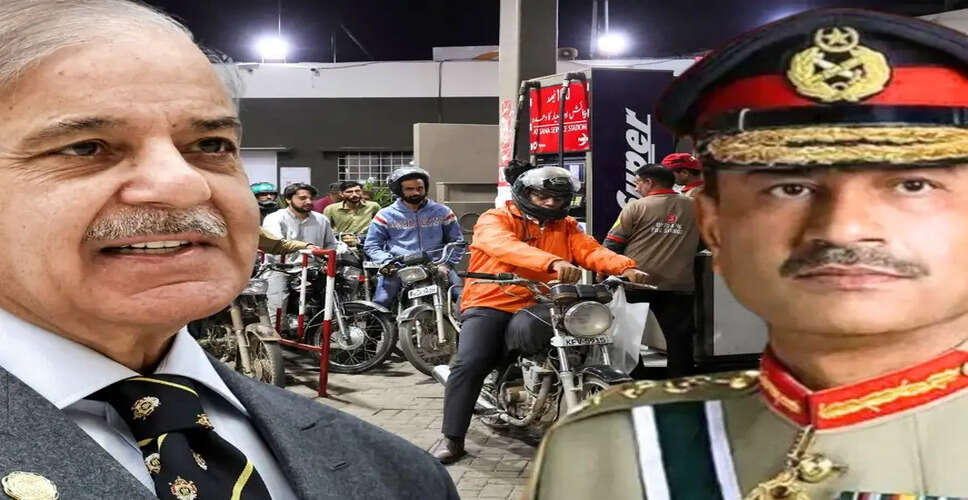
Pakistan is currently grappling with an acute economic crisis. The Army Chief, Field Marshal Asim Munir, is under immense pressure regarding the repayment of the IMF's installments, prompting the government to implement stringent measures. Recently, Prime Minister Shehbaz Sharif approved salary cuts ranging from 5% to 30% for government employees and those working in state-owned enterprises (SOEs). Additionally, strict fuel restrictions have been imposed, the number of government vehicles has been reduced by 60%, and significant cuts have been made to the salaries and allowances of ministers and legislators. These actions are directly impacting the general public, pushing the country back into a period reminiscent of the 'Lantern Era' characterized by load shedding and darkness.
IMF's Stringent Conditions and Economic Strain
Pakistan has sought assistance from the IMF under a $7 billion Extended Fund Facility (EFF), but this aid comes with tough conditions. These include increasing tax collection, reforming the power sector, reducing subsidies, and cutting government expenditures. In recent discussions with the IMF review mission, Pakistan has been assigned even stricter targets, including salary reductions and fuel restrictions. Sources indicate that both Asim Munir and Prime Minister Shehbaz Sharif are reliant on the next tranche from the IMF, as the nation's economy teeters on the brink of bankruptcy. Over the past years, Pakistan has repeatedly turned to the IMF for bailouts, but the situation has worsened due to a circular debt exceeding 5 trillion rupees in the power sector and a balance of payments crisis.
Return of the 'Lantern Era': Load Shedding Crisis
Due to the lack of reforms in the power sector as mandated by the IMF, load shedding has resumed. Cities like Karachi, Lahore, Peshawar, Quetta, and rural areas are experiencing power outages lasting between 6 to 12 hours. Power distribution companies such as K-Electric and IESCO have announced both scheduled and unscheduled shutdowns for March 2026. Reports indicate that Sindh, Khyber Pakhtunkhwa, and Balochistan are facing load shedding of 12 to 24 hours. Residents express that life has come to a standstill due to power cuts even before the summer season, affecting water supply as tube wells remain inactive. Many are now relying on lanterns and candles, giving rise to the term 'Lantern Era.'
Public Distress and Political Reactions
The salary cuts are impacting millions of government employees and SOE workers. The elimination of fuel allowances has created difficulties for government officials. Citizens are voicing their concerns, stating, "In the pursuit of paying the IMF, the country has been plunged into darkness." Social media hashtags like #LanternYug and #LoadSheddingPakistan are trending. Supporters of opposition leader Imran Khan are attributing this situation to Asim Munir's failure in 'power consolidation.' Meanwhile, the government claims these are temporary measures and that assistance from the IMF will stabilize the economy.
What Lies Ahead?
Experts warn that if the next IMF installment does not arrive on time or if power sector reforms are not implemented, load shedding could worsen. Pakistan's economy is now heavily reliant on loans from the IMF, China, and Gulf countries. Pressure is mounting on Asim Munir, as the army's image is also at stake. The public is hoping for relief soon; otherwise, the 'Lantern Era' may extend indefinitely.
Conclusion
The crisis in Pakistan has transcended mere economics, significantly affecting daily life. Will the IMF's conditions save the country or plunge it deeper into crisis? Only time will tell.