
Pakistan Declared the Most Polluted Country in 2025 Due to Severe Smog
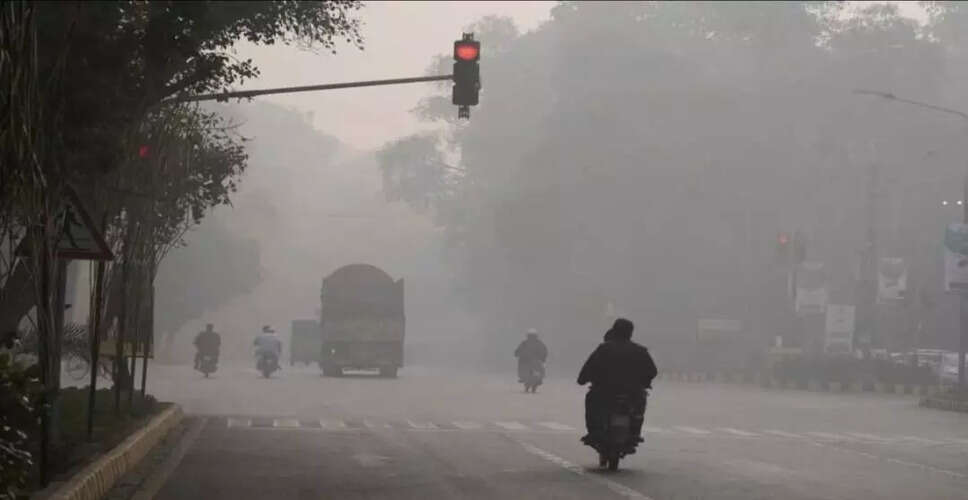
Pakistan's Air Quality Crisis
Islamabad, March 24: A recent study has identified Pakistan as the country with the highest levels of smog globally in 2025, with PM2.5 particle concentrations soaring to levels 13 times above the World Health Organization's (WHO) recommended limits, according to local media reports.
According to the annual assessment by Swiss air quality monitoring organization IQAir, only 13 countries and territories maintained average PM2.5 levels below the WHO guideline of 5 micrograms per cubic meter last year, an increase from seven in 2024, as reported by Pakistan's prominent daily, Dawn.
The findings indicated that out of 143 countries and territories monitored, 130 failed to meet the WHO air quality standards. Bangladesh and Tajikistan followed Pakistan as the second and third most polluted nations, respectively. Chad, which held the title of the most polluted country in 2024, dropped to fourth place in 2025.
Globally, only 14 percent of cities achieved the WHO air quality standard in 2025. Countries such as Australia, Iceland, Estonia, and Panama were among those that met the guidelines. Meanwhile, Laos, Cambodia, and Indonesia experienced a reduction in PM2.5 levels compared to the previous year, attributed to the wetter and windier conditions of La Nina, as noted by Dawn. The IQAir report also highlighted that 75 countries recorded lower PM2.5 levels in 2025 than in 2024, while 54 countries saw an increase in average concentrations.
In 2024, Pakistan was already recognized as one of the most polluted nations, with PM2.5 levels exceeding the WHO's safe limit of 5 micrograms per cubic meter. Only 17 percent of cities worldwide met the WHO air quality standards that year, according to another leading daily, The Express Tribune.
The ongoing smog crisis in Pakistan poses significant health risks and hampers the country's efforts to enhance air quality. Major cities like Lahore and Karachi are grappling with severe pollution, particularly during winter months when fog and industrial emissions further compromise air quality.