
P. Chidambaram Critiques Article 370 Abrogation on Its Seventh Anniversary
On the seventh anniversary of the abrogation of Article 370, P. Chidambaram, a senior Congress leader, questions the constitutional validity of the decision and the government's timeline for restoring Jammu and Kashmir's statehood. He emphasizes that the judiciary has not yet addressed critical legal questions surrounding the division of the state into Union Territories. Chidambaram's remarks highlight ongoing concerns about the implications for India's federal structure and the government's repeated assurances regarding statehood restoration. This article delves into the political ramifications and the historical context of this significant constitutional change.
| Aug 5, 2026, 15:04 IST
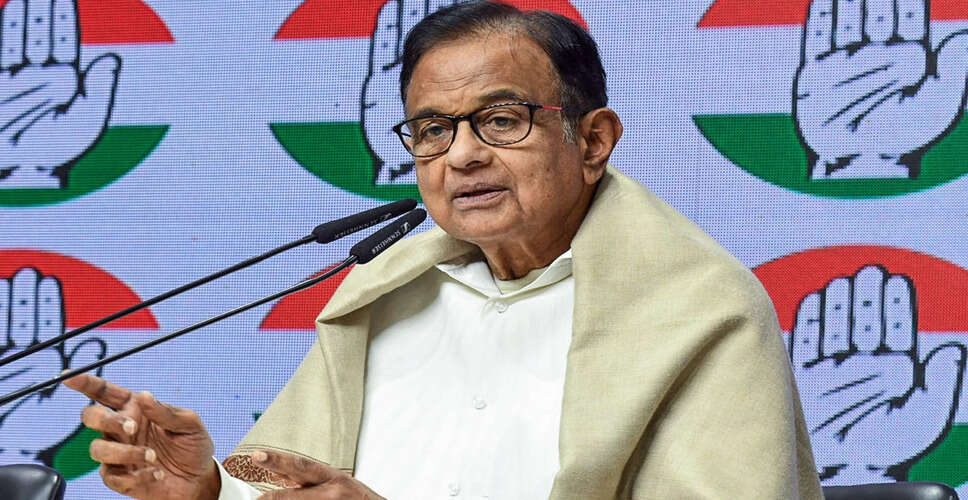

Chidambaram Questions Constitutional Validity of Article 370 Removal
On Wednesday, senior Congress leader and former Union Minister P. Chidambaram expressed that the abrogation of Article 370 and the subsequent reorganization of Jammu and Kashmir were constitutionally flawed. He also raised concerns regarding the government's timeline for restoring the state's status. Marking the seventh anniversary of the historic decision that revoked the region's special status and divided it into two Union Territories, Chidambaram emphasized that the narrative does not end here.
In a post on the social media platform X, Chidambaram highlighted that the judiciary has yet to address a fundamental legal question. He pointed out that seven years ago, on this very day, the constitutional norms were violated by splitting Jammu and Kashmir into two Union Territories. He noted that this issue is still unresolved. The Supreme Court had been asked whether a state could be divided to create Union Territories, but it refrained from making a ruling, citing the government's assurance that statehood would soon be restored.
Chidambaram criticized the repeated assurances from the central government regarding the restoration of statehood, questioning the meaning of 'soon.' He expressed concern that the precedent set in Jammu and Kashmir poses an ongoing threat to the federal structure of other states in India. He further stated that the government's power to divide any state into Union Territories still looms over the states of India, and the Supreme Court has yet to deliver a verdict on this crucial constitutional matter.
In August 2019, the central government, led by Prime Minister Narendra Modi, revoked Article 370 of the Indian Constitution, which ended the special status of Jammu and Kashmir and bifurcated the state into two Union Territories: Jammu and Kashmir, and Ladakh. Earlier on Tuesday, former Chief Minister of Jammu and Kashmir and President of the Jammu and Kashmir National Conference, Farooq Abdullah, urged the central government to honor the assurances made to the local populace and the nation.
Stay updated with the latest political developments and major news across the country.