
Orissa High Court Rejects SIT Inquiry into Student's Tragic Self-Immolation Case
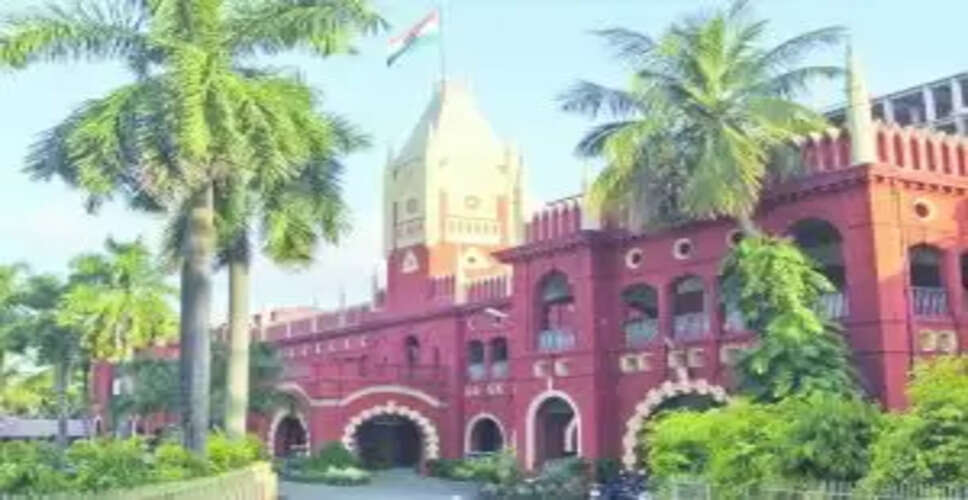
Court's Decision on SIT Investigation
Cuttack: On Tuesday, the Orissa High Court decided against initiating a special investigation team (SIT) inquiry into the self-immolation of a college student, which followed her claims of sexual harassment by a faculty member in Balasore.
The division bench, led by Chief Justice Harish Tandon, also issued notices to the opposition parties, including the Biju Janata Dal (BJD) and Congress, highlighting that their protests and strikes were disrupting daily life.
The incident involved a second-year Integrated BEd student from Fakir Mohan (Autonomous) College, who tragically set herself on fire on July 12 after leaving the principal's office, alleging that her complaints against the professor were ignored. The 20-year-old succumbed to her injuries at AIIMS-Bhubaneswar on the night of July 14.
An advocate had filed a public interest litigation (PIL) requesting the formation of a high court-monitored SIT to investigate the case, while the Odisha Police's Crime Branch is currently handling the investigation.
During the proceedings, the bench, which included Justice Manas Ranjan Pathak, expressed confidence in the Crime Branch's ongoing investigation.
The Advocate General, Pitambar Acharya, presented a status report indicating that a senior IPS officer is overseeing the inquiry and assured the court that the state is committed to delivering justice for the victim.
He confirmed that both the accused teacher and the former principal of the college have been arrested.
The bench criticized the political parties and organizations for attempting to politicize the tragedy, noting that their strikes and protests have disrupted public life, violating Supreme Court directives.
The Advocate General informed the court that some political factions are exploiting the situation, leading to undemocratic strikes and demonstrations, even within hospitals like AIIMS-Bhubaneswar, which have paralyzed public transport and affected government operations.
The petitioner's lawyer mentioned that he was unable to reach the court on July 17 due to the protests. The court took notice of these actions and directed the BJD and Congress to respond to the PIL within three weeks.
The bench remarked that such strikes are a clear violation of Supreme Court rulings that prohibit hindering normal life under the pretext of protests.
The case is scheduled for further hearings once the responses are submitted.