
Opposition Voices Concerns Over Women's Reservation Bill in India

Opposition's Stand on Women's Reservation Bill
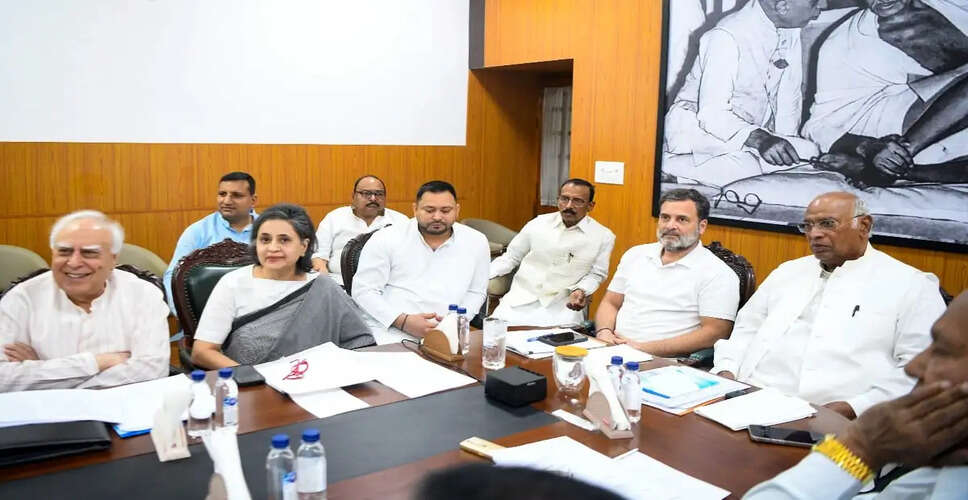
Following a meeting of opposition parties, Congress President Mallikarjun Kharge stated on Wednesday that the opposition is not against the Women's Reservation Bill, but is protesting the manner in which the government is presenting it. He described the government's approach as politically motivated. After the India Block meeting, Kharge emphasized that all parties support the Women's Reservation Bill, but they object to its presentation, which they believe is politically driven. He accused the government of attempting to suppress opposition parties. While the opposition has consistently backed the Women's Reservation Bill, they insist that previous amendments should be implemented first, claiming that the government is maneuvering around the delimitation process.
Kharge urged all parties to unite in Parliament against the bill, clarifying that their opposition is not to women's reservation itself. He criticized the inclusion of delimitation in the bill, pointing out that no census has been conducted. He expressed concern that the executive is usurping powers that should belong to institutions and Parliament, allowing for potential changes to delimitation at any time. He noted that the government has already deceived them in Assam and Jammu & Kashmir.
I.U.M.L. MP E.T. Mohammed Basheer remarked that they oppose the delimitation bill, viewing it as a trap. He mentioned that reservation could have been granted in 2023, and they would still support it. However, he labeled the constitutional amendment as a dangerous step, asserting that they have decided to vehemently oppose it as it contradicts the principles of justice. R.S.P. MP N.K. Premachandran highlighted that the delimitation and constitutional amendment bills are set to modify Section 3 of Article 81, introducing a new provision that allows Parliament to legislate and determine census and population. This implies that the government could control the entire country with a simple majority. He warned that this would lead to a significant increase in seats in Northern India while reducing them in Southern states, which have scientifically implemented the government's population control program. He deemed this move anti-democratic and expressed opposition to the constitutional amendment bill that would facilitate delimitation.
The Nari Shakti Vandan Act, 2023, provides for 33% reservation for women in assemblies and is linked to the delimitation process. Reports suggest that the central government is considering implementing this reservation through constitutional amendments and changes to the existing framework ahead of the 2029 general elections. According to government sources, the proposal includes increasing the current 543 Lok Sabha seats to 850, with 815 allocated to states and 35 to Union territories.