
Opposition Protests Against VB-G RAM G Bill in Parliament
Opposition's Stand Against the VB-G RAM G Bill
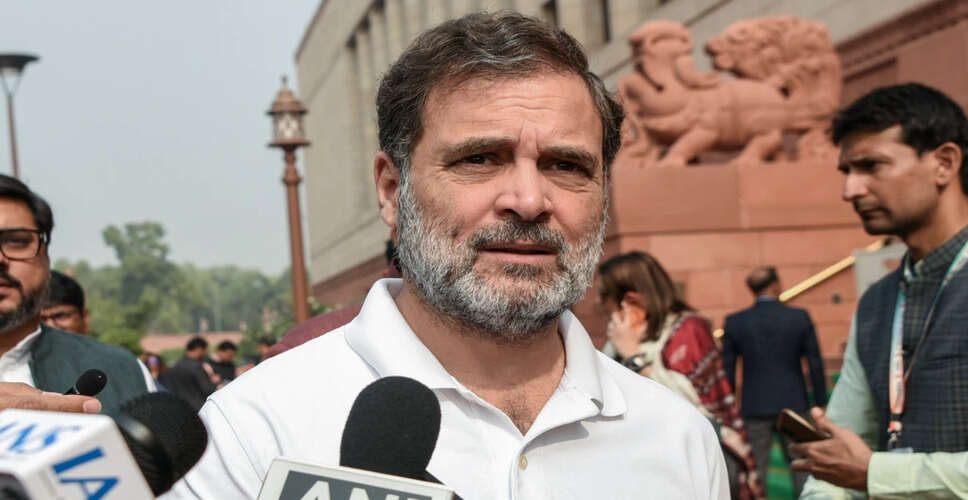
The opposition has been vocally opposing the passage of the Developed India Guarantee for Employment and Livelihood Mission (Rural) (VB-G RAM G) Bill in Parliament. On Friday, a united front of opposition members staged protests outside Parliament, while members of the Trinamool Congress continued their demonstrations on the steps leading into the House. Rahul Gandhi, the leader of the opposition in the Lok Sabha, who is currently in Germany, also raised his voice against the bill, asserting that it is inherently "anti-state" and "anti-village."
Concerns Over the New Legislation
Following the approval of the 'Developed India - G RAM G Bill, 2025' by Parliament on Thursday, Rahul Gandhi criticized the proposed law as being detrimental to states and villages. He announced plans to form a nationwide front to compel the government to withdraw the bill. The legislation was passed in both the Lok Sabha and the Rajya Sabha on the same day.
Criticism of the Bill's Structure
In a post on X, Rahul Gandhi stated, "Last night, the Modi government dismantled two decades of MGNREGA in a single day. The G RAM G Bill is not a 'restructuring' of MGNREGA; it abolishes the rights-based, demand-driven guarantee and transforms it into a limited scheme controlled from Delhi." He accused the bill's framework of being anti-state and anti-village.
Impact on Rural Workers
The leader of the opposition emphasized that MGNREGA empowered rural workers by providing them with bargaining power. He noted that the availability of real alternatives reduced exploitation and forced migration, increased wages, improved working conditions, and revitalized rural infrastructure. He argued that the G RAM G Bill undermines this vital support for the rural poor by limiting work opportunities.
Historical Significance of MGNREGA
Rahul Gandhi highlighted the importance of MGNREGA during the COVID-19 pandemic, stating that it saved millions from hunger and debt when the economy was shut down. He pointed out that women benefited the most, contributing over half of the total person-days of work year after year. He warned that limiting employment programs would first push women, Dalits, Adivasis, landless laborers, and the poorest OBC communities out of the workforce.
Call for Proper Scrutiny
He criticized the government for forcing the bill through Parliament without adequate scrutiny, stating that the opposition's demand to send the bill to a permanent committee was rejected. He insisted that a law affecting millions of workers should never be imposed without thorough committee review, expert consultation, and public hearings.
Allegations Against the Government
Rahul Gandhi accused Prime Minister Modi of having clear objectives: to weaken labor rights, diminish the bargaining power of rural India—especially for Dalits, OBCs, and Adivasis—centralize power, and then market it as a 'reform.' He asserted that MGNREGA is one of the world's most successful poverty alleviation and empowerment programs. He vowed, "We will not allow this government to destroy the last line of defense for rural poor. We will stand with workers, panchayats, and states to defeat this move and create a nationwide front to repeal this law."