
Opposition Leader Questions BJP's Promises to Women in Delhi Assembly

Concerns Raised Over BJP's Financial Promises
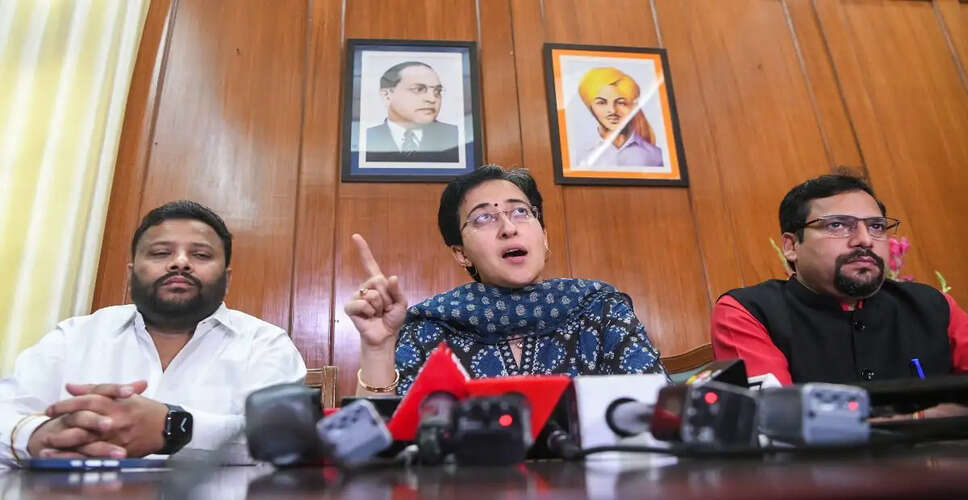
In the Delhi Assembly, the Leader of the Opposition, Atishi, criticized the Bharatiya Janata Party (BJP) government on Tuesday regarding their electoral promise to provide women with ₹2,500 per month. She labeled the recent inclusion of seven Rajya Sabha members from the Aam Aadmi Party (AAP) into the BJP as 'unconstitutional.'
During a press conference, Atishi recalled that prior to the Delhi Assembly elections last year, the BJP had pledged in January that women in the national capital would start receiving ₹2,500 in their bank accounts every month from March 8 of that year.
She mentioned that women were instructed to link their bank accounts with their mobile numbers, assuring them that they would receive a confirmation message once the funds were deposited. The former Chief Minister pointed out, “March 8, 2025, has passed, and now March 8, 2026, has also gone by, yet the ₹2,500 has not been credited to the accounts of Delhi's women.”
Atishi accused the BJP of securing votes from women based on this promise and stated that women in the city are still waiting for this financial assistance. She further claimed that women are facing challenges in accessing public services. According to her, women who previously traveled easily on DTC buses now have to stand in line for the 'Pink Card,' and the availability of free medicines, treatments, and tests has also been affected.
Regarding the issue of the seven AAP Rajya Sabha members joining the BJP, she asserted that this decision contradicts constitutional provisions and anti-defection laws. She explained that, according to the Constitution, a merger must involve the original political party, requiring the support of at least two-thirds of the legislative party members.
Atishi emphasized that there is no provision allowing two-thirds of MPs to join another party without the merger of the original party. AAP leaders have also stated that this action violates the anti-defection framework, and they will continue to raise this issue through constitutional and legal channels.