
Opposition Critiques Assam's Uniform Civil Code Bill as Political Agenda
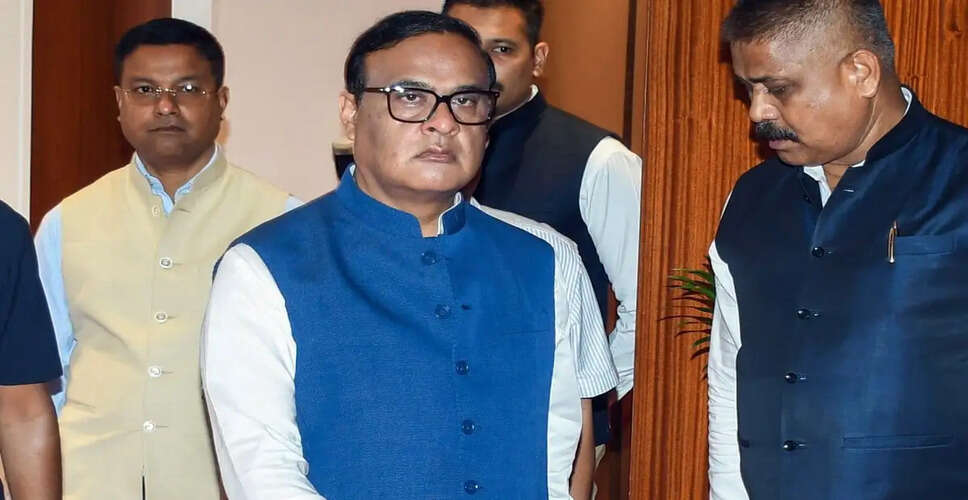

Opposition Voices Concerns Over UCC Bill in Assam Assembly
During a session in the Assam Assembly on Wednesday, opposition members labeled the Uniform Civil Code (UCC) bill as a "political agenda of the BJP" and called for extensive consultations with all stakeholders before passing the proposed legislation. The discussion surrounding the 'Uniform Civil Code, Assam, 2026 Bill' saw opposition legislators express concerns that it could infringe upon the rights of specific societal groups.
Wajed Ali Chowdhury, the leader of the Congress legislative party, pointed out that the issues addressed in the UCC are already governed by various existing laws. He questioned, "If matters like child marriage, polygamy, marriage and divorce registration, and alimony are already regulated by different laws, why is there a need for the UCC?"
Chowdhury emphasized that this initiative does not simplify laws but complicates the legal framework further. He raised concerns about the BJP's motives, stating, "Interfering in people's personal matters is undemocratic. How can a law that excludes indigenous people be termed as uniform?" He accused the government of using the UCC to divert attention from pressing issues like unemployment, floods, and the state of government schools.
Details of the Proposed UCC Legislation
The Assam government introduced a bill on Monday aimed at establishing a uniform law for personal matters such as marriage, divorce, inheritance, and live-in relationships. The bill proposes a ban on polygamy and mandates the registration of live-in relationships. However, it specifies that the law will not apply to Scheduled Tribe communities residing in Assam.
The legislation includes several punitive measures, such as a seven-year prison sentence for engaging in polygamy or having two marriages, and a three-month jail term for failing to register a live-in relationship. Supporting Chowdhury, Congress legislator Zakir Hussain Sikdar noted that the Law Commission had previously stated in 2018 that there was no need for a UCC. According to the commission, if the government intends to implement it, comprehensive consultations with all stakeholders are essential.
Sikdar criticized the Assam government for presenting the bill without discussions with various religious organizations, highlighting that many religions and social groups lack representation in the assembly. He stated, "Our identity is rooted in 'unity in diversity.'" Sikdar urged the assembly to conduct thorough consultations before passing the bill and requested the assembly speaker to halt the legislative process.
Political Implications and Community Inclusion
Sikdar also referenced Prime Minister Narendra Modi's statement in 2023 during a BJP booth meeting, asserting that there cannot be two laws for two members of the same household, advocating for a single law for all. He suggested that the title of the UCC should be reconsidered as it does not encompass all citizens of the state.
He questioned why the government is excluding certain groups from the law, asserting, "This bill is merely a political agenda of the BJP, as existing laws already cover these issues. We do not need a UCC."
Another Congress legislator, Nurul Hoda, proposed an amendment to include all tribes and communities within the scope of the UCC. He emphasized, "Our Constitution states that there should be no discrimination based on caste, creed, or religion. We cannot exclude any groups from the purview of a law."
AIUDF legislator Majibur Rahman pointed out that the Constitution provides various provisions for minority rights, and the Assam government has introduced the UCC under Article 44, which is part of the directive principles of state policy. He argued, "However, fundamental rights cannot be sacrificed in the name of directive principles. There is an ongoing process that threatens the rights of certain groups." Rahman also noted that all points included in the proposed UCC are already present in Muslim personal law, which is primarily based on Sharia.