
Opportunities for Indian Firms in Gaza Reconstruction Efforts
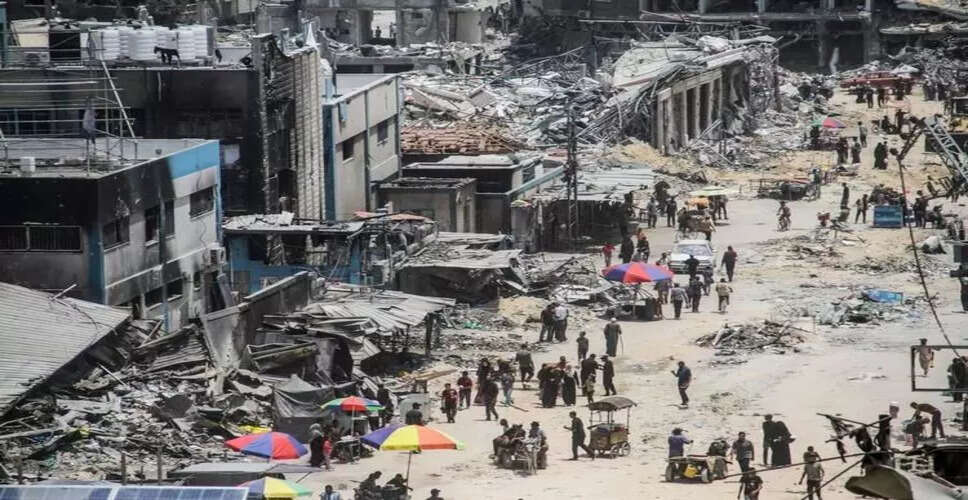
Gaza's Future Under Technocratic Administration
Washington, Jan 15: The recent decision by the United States to implement a technocratic Palestinian administration in Gaza and initiate reconstruction efforts may open doors for Indian companies in the civilian sector. However, officials have emphasized that rebuilding will commence only once security and governance conditions are adequately stabilized.
On Wednesday, senior officials from the US administration detailed the second phase of President Donald Trump’s Gaza strategy, which involves the establishment of the National Committee for the Administration of Gaza (NCAG). This phase shifts the focus from merely managing ceasefires to addressing demilitarization, governance, and reconstruction.
Although India was not specifically mentioned during the briefing, and no formal role has been designated for New Delhi or its firms, the framework being developed resembles post-conflict scenarios where Indian companies have previously engaged through international and donor-supported initiatives.
Officials indicated that the reconstruction process would follow a structured approach. The dismantling of armed infrastructure must occur first, followed by the establishment of basic security. Only after these steps can large-scale rebuilding efforts commence. They noted that commercial involvement would likely be facilitated through multilateral channels rather than direct political arrangements.
For India, potential opportunities would primarily lie within civilian sectors. Indian firms have a proven history of executing infrastructure projects abroad, including housing, roads, power, water, and sanitation, often in challenging environments under the supervision of the UN or other donors.
The initial focus of reconstruction in Gaza is expected to prioritize essential services. Key areas include housing, electricity, clean water, waste management, and healthcare facilities—domains where Indian companies typically excel, especially in cost-sensitive and time-sensitive projects.
Officials clarified that foreign participation would not extend to security roles. Demilitarization and policing will be managed separately, thereby excluding military or enforcement functions and confining involvement to civilian tasks.
India's broader regional stance may also play a significant role. New Delhi has maintained cooperative relationships throughout West Asia, generally refraining from taking sides in regional disputes while emphasizing development and humanitarian efforts. This approach has historically enabled Indian firms to operate in sensitive environments.
At this stage, officials advised caution in interpreting future participation. Gaza is still in a transitional phase, and the technocratic administration must first establish its authority and credibility. A sustained period of calm is crucial.
Only after these conditions are fulfilled are reconstruction contracts expected to materialize. Until then, discussions regarding private-sector involvement, including that of Indian companies, remain speculative rather than immediate.